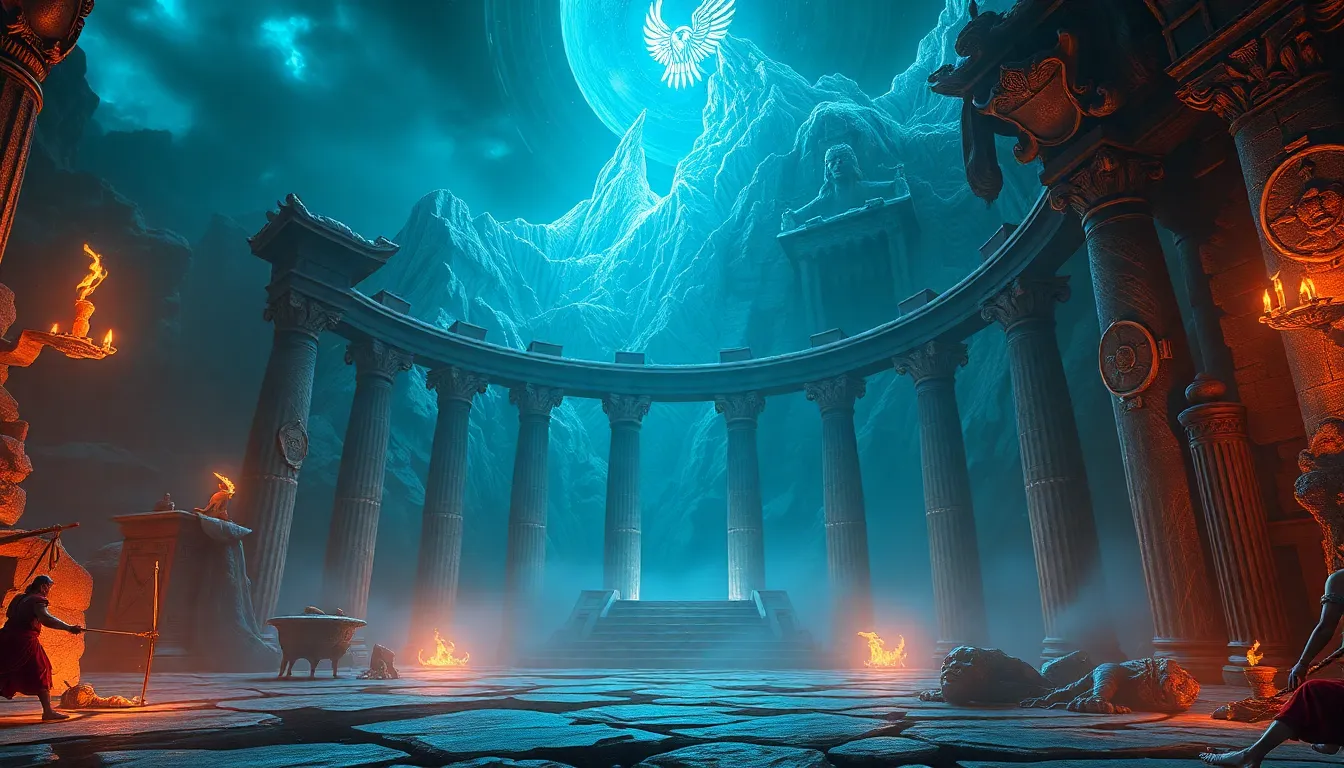
The Trials of the Underworld: Heroes Who Faced Hades’ Realm
I. Introduction
Greek mythology is a rich tapestry of stories that explore the human experience through the lens of gods, heroes, and mythical creatures. One significant aspect of these myths is the Underworld, a shadowy realm where the souls of the deceased reside. This enigmatic world is ruled by Hades, the god of the Underworld, who plays a crucial role in the mythology surrounding life, death, and the afterlife.
The purpose of this article is to delve into the trials faced by various heroes who ventured into Hades’ realm. These stories not only highlight the nature of heroism but also reflect the complexities of human emotions and the inevitable fate that awaits all mortals.
II. Hades: The Enigmatic God of the Underworld
Hades is a prominent figure in Greek mythology, often portrayed as a stern and imposing deity. He is the brother of Zeus and Poseidon, and after the defeat of the Titans, he was given dominion over the Underworld. This realm is not merely a place of punishment; it is a complex structure with various regions, including Elysium (the paradise for the virtuous), the Asphodel Meadows (for the indifferent), and Tartarus (the abyss for the wicked).
The dual nature of Hades is evident in his characterization. While he is often feared as a god of death, he is also misunderstood. Hades does not seek to instill terror; rather, he maintains order in the afterlife. This complexity makes him a compelling figure in Greek mythology, as he embodies both the inevitability of death and the hope of immortality through legacy.
III. The Heroic Trials: A Call to the Underworld
In Greek mythology, heroic trials refer to the challenges faced by heroes that test their strength, courage, and resolve. Many heroes ventured into Hades’ realm for various reasons, including:
- Retrieving a lost loved one
- Completing a quest or fulfilling a prophecy
- Facing personal demons and seeking redemption
The challenges in the Underworld are formidable, often involving encounters with powerful entities and navigating treacherous landscapes. The stakes are high, as failure could result in eternal suffering or the loss of one’s soul. These trials serve as metaphors for the human struggle against mortality and the quest for understanding and acceptance of fate.
IV. Orpheus: The Power of Music and Love
One of the most poignant tales of heroism in the Underworld is that of Orpheus, a gifted musician whose love for Eurydice transcended death. After Eurydice died from a snake bite, Orpheus was heartbroken and determined to bring her back. Armed with his lyre and enchanting music, he descended into Hades.
Upon reaching the Underworld, Orpheus played his music, which moved Hades and Persephone, the queen of the Underworld. They allowed him to take Eurydice back to the living world on the condition that he must not look back at her until they reached the surface.
However, unable to resist the urge, Orpheus looked back before they had fully emerged, causing Eurydice to vanish forever. This tragic ending highlights themes of love, loss, and the limits of mortal power. Orpheus’ journey into the Underworld serves as a reminder of the fragility of life and the depths of human emotion.
V. Heracles: The Twelve Labors and the Underworld
Heracles, known for his incredible strength and heroic feats, faced many trials throughout his life, but one of the most significant was his descent into the Underworld as part of his Twelve Labors. As punishment for a crime, he was tasked with completing twelve seemingly impossible labors, one of which involved capturing Cerberus, the three-headed guard dog of Hades.
To complete this labor, Heracles entered the Underworld and confronted Cerberus. Using his immense strength and courage, he subdued the beast without the use of weapons, showcasing his heroic nature. This labor not only demonstrated Heracles’ physical prowess but also his ability to navigate the complexities of the Underworld.
The significance of this trial lies in Heracles’ transformation. By facing Hades and his monstrous guardian, Heracles proved that true heroism entails facing one’s fears and confronting the unknown, ultimately solidifying his legacy as one of Greece’s greatest heroes.
VI. Theseus and Pirithous: The Quest for Persephone
Theseus, the legendary king of Athens, and his friend Pirithous embarked on a misguided quest to abduct Persephone, the daughter of Demeter, from the Underworld. Fueled by their bravado, they believed they could outsmart Hades and claim Persephone as their own.
Their journey to the Underworld was fraught with danger. Upon their arrival, they were initially welcomed by Hades, but soon, their intentions became clear. Hades imprisoned them in his realm, where they were condemned to sit on the infamous “Chair of Forgetfulness,” which would cause them to forget their motives and desires.
This tale serves as a cautionary lesson about hubris and the consequences of underestimating the power of the Underworld. The fate of Theseus and Pirithous illustrates the importance of respect for the divine and the acknowledgment of the boundaries set by the gods.
VII. Other Notable Heroes and Their Encounters with Hades
In addition to Orpheus, Heracles, and Theseus, several other notable figures ventured into the Underworld, each with unique motivations and outcomes:
- Aeneas: In Virgil’s “Aeneid,” Aeneas descends into the Underworld to seek guidance from his father, Anchises. His journey emphasizes themes of fate, destiny, and the importance of legacy.
- Odysseus: In Homer’s “Odyssey,” Odysseus travels to the Underworld to consult the prophet Tiresias. His encounter reveals insights into his journey home and the sacrifices required to achieve his goals.
- Persephone: As a central figure in the myth of the Underworld, her story reflects the duality of life and death, as well as the changing seasons.
These encounters illustrate the varying motivations—whether for love, guidance, or understanding—behind journeys into Hades. They also highlight broader themes of fate, destiny, and the inevitable mortality that all heroes must confront.
VIII. Conclusion
The trials faced by heroes in the Underworld serve as profound narratives that reveal the essence of heroism. They explore the depths of human emotion, the complexities of life and death, and the search for meaning in a world governed by fate. The stories of Orpheus, Heracles, Theseus, and others remind us of the enduring significance of these themes in both ancient mythology and modern storytelling.
As we reflect on the lessons learned from these heroes who faced Hades’ realm, we see the timeless struggle against mortality and the quest for understanding that resonates with every generation. The Underworld, with its rich symbolism and intricate narratives, continues to captivate our imagination, offering insights into the human condition and the eternal journey of the soul.