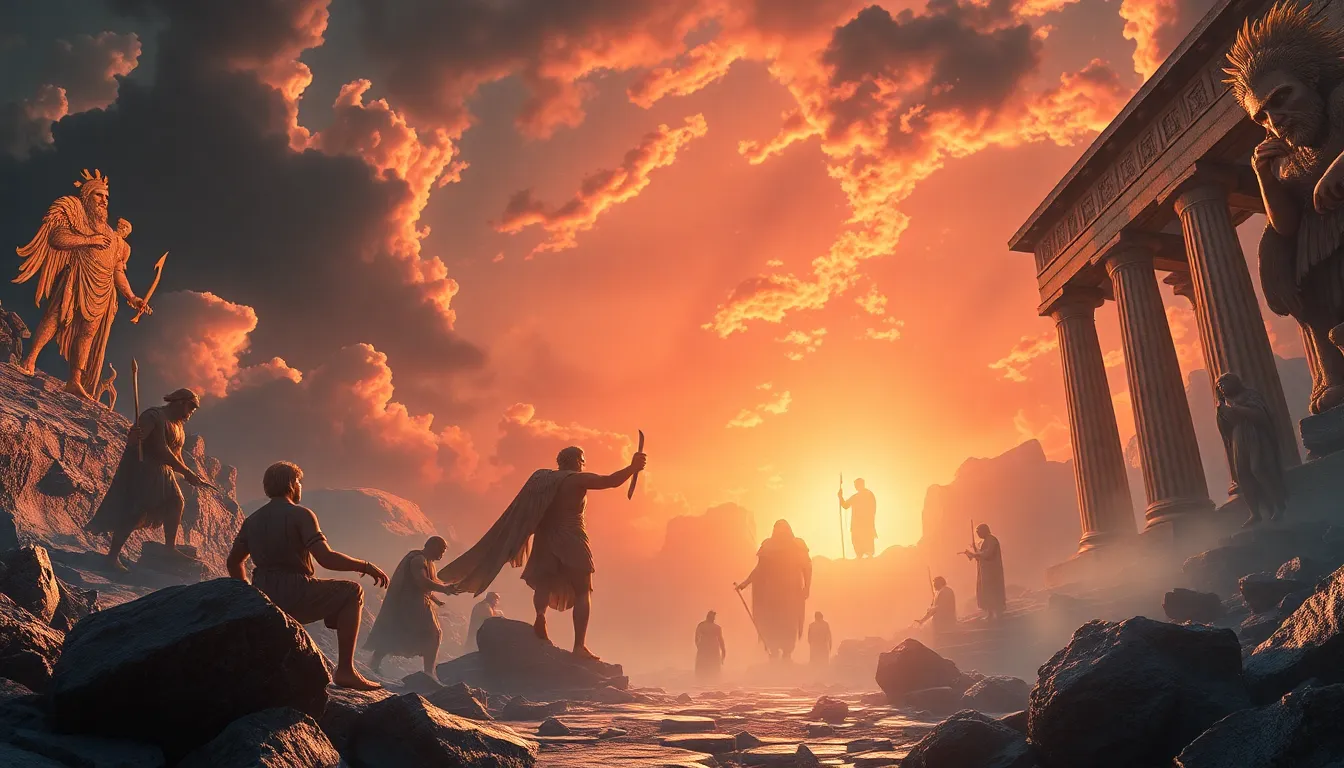
The Trials of the Titans: The Rise and Fall of Ancient Beings
I. Introduction
Greek mythology is rich with tales of powerful beings, and among them, the Titans stand out as monumental figures that shaped the cosmos. These ancient entities were not merely gods; they were the primordial forces of nature and civilization. The significance of their trials and tribulations resonates through time, providing profound insights into power, ambition, and the consequences of hubris. This article aims to explore the rise and fall of the Titans, their lasting legacy, and the lessons that can be drawn from their stories.
II. The Origins of the Titans
The Titans originated from the earliest creation myths, emerging from the primordial deities that preceded them. According to Hesiod’s Theogony, the Titans are descendants of Gaia (the Earth) and Uranus (the Sky). This union bore twelve original Titans, each representing various aspects of the natural world and human experience.
A. Creation myths and the birth of the titans
The creation myths of the Titans are varied, but they generally revolve around the themes of order arising from chaos. The Titans represent a transitional phase in the Greek mythological timeline, where the universe evolves from formlessness into structured existence.
B. Key figures among the titans and their roles
- Chronos: Often confused with time, he is the leader of the Titans and represents the destructive and devouring aspects of time.
- Rhea: The mother of the Olympian gods, she symbolizes fertility and motherhood.
- Oceanus: The Titan god of the ocean, representing the vastness of water.
- Tethys: Partner of Oceanus, she embodies the nourishing aspect of the sea.
- Hyperion: The Titan of light, often associated with the sun.
- Theia: The Titaness of sight and the shining sky, mother of the sun, moon, and dawn.
C. Cultural significance across various civilizations
The Titans were not only significant in Greek culture but also appeared in various forms in other civilizations’ mythologies. Their themes of power and chaos resonate across different cultures, reflecting humanity’s struggle against the forces of nature and time.
III. The Golden Age of the Titans
The period known as the Golden Age was marked by the Titans’ rule over the cosmos. This era is often depicted as a time of prosperity, peace, and abundance, where the Titans fostered harmony and order in the universe.
A. Titans as rulers of the cosmos
During this age, the Titans governed the natural and cosmic elements. They were seen as the architects of the world, responsible for the creation of landforms, rivers, and the cycles of life.
B. Their contributions to the natural order and human civilization
The Titans played a pivotal role in establishing the foundations of human civilization. Their contributions included:
- Teaching humanity agricultural practices.
- Bestowing knowledge of the stars and navigation.
- Creating laws and order among people.
C. The cultural impact of their reign in ancient societies
The reverence for the Titans is evident in ancient Greek literature, art, and religious practices. They were often invoked in prayers and rituals, symbolizing the deep connection between humanity and the divine forces that govern existence.
IV. The Trials Faced by the Titans
As the Titans reigned, their power began to wane with the rise of the next generation of gods—the Olympians. This transition marked the beginning of significant trials and conflicts that would ultimately lead to their downfall.
A. The rise of the Olympian gods
The Olympian gods, led by Zeus, were the children of the Titans Cronus and Rhea. Determined to overthrow their father and his generation, they represented a new order that threatened the Titans’ dominion.
B. Key conflicts: Titanomachy and other battles
The most significant conflict between the Titans and the Olympians was the Titanomachy, a ten-year war that resulted in the Titans’ defeat. Key battles included:
- The strategic use of Gaia, who supported her children, the Olympians, against Cronus.
- The Titans’ alliance with monstrous beings, which ultimately led to their downfall.
C. The challenges of power and hubris among titans
The Titans’ trials were not solely external; internal conflicts also played a critical role. Many Titans exhibited hubris, believing themselves invincible, which ultimately led to their tragic ends. This hubris set the stage for their downfall as they underestimated the resolve and cunning of the younger gods.
V. The Fall of the Titans
The defeat in the Titanomachy marked the end of the Titans’ reign and the beginning of a new era under the Olympians. This section explores the consequences of their fall and the fates that befell the once-mighty beings.
A. The defeat in the Titanomachy
The Titanomachy culminated in the Titans’ defeat, leading to a seismic shift in the balance of power in the cosmos. The Olympians, with their new strategies and alliances, managed to overthrow the Titans, relegating them to a state of powerlessness.
B. Consequences of their downfall
The consequences of the Titans’ downfall were severe. The Olympians took control of the heavens, earth, and underworld, while the Titans faced imprisonment and exile. This shift also altered the relationships between gods and mortals, as the Olympians established new laws and moral codes.
C. Imprisonment in Tartarus and other fates
After their defeat, many Titans were imprisoned in Tartarus, a deep abyss used for the torment of the wicked. Others faced different fates, such as:
- Prometheus, who was punished for his defiance against Zeus by being bound to a rock where an eagle would eat his liver daily.
- Themis, who remained neutral, representing justice and order.
VI. Legacy of the Titans in Mythology
The legacy of the Titans is profound, influencing countless myths, stories, and artistic representations throughout history. Their tales continue to resonate in modern culture.
A. How the stories of titans influenced later myths
The narratives of the Titans shaped subsequent myths in various cultures, often serving as cautionary tales about power, pride, and the consequences of defiance against divine order.
B. The portrayal of titans in literature and art
Titans have been depicted in numerous works of literature and art, inspiring poets, playwrights, and artists. Their stories have been reimagined in:
- Classical literature such as Hesiod’s Theogony and Ovid’s Metamorphoses.
- Renaissance art, where they were often portrayed in grand frescoes and sculptures.
- Modern adaptations, including films and novels that reinterpret their myths.
C. Modern interpretations and adaptations
Today, the Titans are often reinterpreted in contemporary media. They appear in comic books, movies, and television shows, reflecting ongoing interest in their stories and their symbolic meanings.
VII. Lessons Learned from the Titans’ Trials
The trials of the Titans offer valuable lessons about power dynamics, pride, and the cyclical nature of rise and fall. Their narratives provide moral implications that continue to resonate with contemporary society.
A. Themes of power, pride, and downfall
The stories of the Titans emphasize the dangers of overwhelming pride and the abuse of power. Their ultimate downfall serves as a reminder that no being, no matter how powerful, is immune