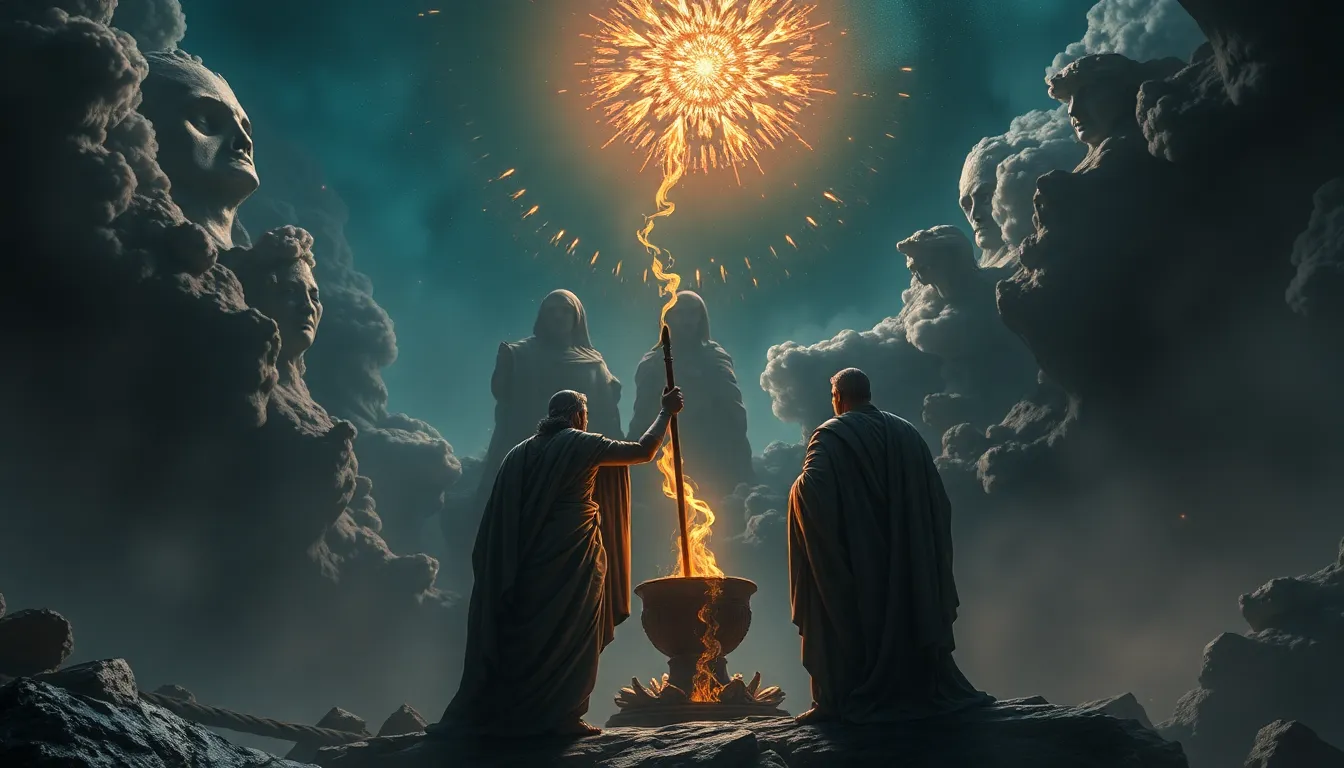
Sacrifice and the Afterlife: What Greek Myths Teach Us About Death
I. Introduction
Greek mythology is a rich tapestry of stories, beliefs, and traditions that have shaped Western culture for centuries. These myths delve into the complexities of human experience, particularly concerning life’s ultimate certainty: death. In ancient Greece, the concept of the afterlife was intricately linked to the practices of sacrifice, which were believed to have significant implications for the deceased’s journey beyond this world.
This article aims to explore the lessons imparted by Greek myths regarding death and the afterlife, emphasizing the role of sacrifice as a means of connecting the living with the divine and the departed.
II. The Concept of the Afterlife in Greek Mythology
In Greek mythology, the afterlife is primarily represented by the underworld, known as Hades. This realm is not merely a place of punishment but a complex domain where souls journey after death, reflecting the nuances of Greek beliefs about mortality.
A. Description of the Greek underworld (Hades)
Hades, named after its ruling god, is depicted as a shadowy place where the souls of the dead reside. It is divided into several regions, including:
- Elysium: The final resting place for heroes and the virtuous, characterized by bliss and eternal happiness.
- Tartarus: A deep abyss used as a dungeon of torment for the wicked and a place of punishment.
- The Fields of Asphodel: A neutral zone for ordinary souls who lived neither virtuous nor wicked lives.
Souls traverse the River Styx, ferried by Charon, who requires payment for his services, often provided in the form of an obol—a small coin placed in the mouth of the deceased.
B. Variations in beliefs about the afterlife across different regions
While the core concepts of the afterlife remained relatively consistent, regional variations existed. For example, some communities emphasized the importance of ancestor worship, believing that the souls of the deceased remained actively involved in the lives of their descendants. Others focused on the notion of reincarnation and the soul’s journey through multiple lives.
C. Importance of the soul’s journey after death
The journey of the soul was seen as a passage filled with trials and tribulations. The Greeks believed that how one lived their life would significantly affect their experience in the afterlife, making ethical living paramount.
III. The Role of Sacrifice in Greek Rituals
Sacrifice was a cornerstone of ancient Greek religious practice, deeply intertwined with their beliefs about the afterlife. It served as a means to communicate with the divine and ensure favorable conditions for the deceased.
A. Definition and significance of sacrifice in ancient Greek culture
In ancient Greece, sacrifice was not merely an act of devotion but a vital ritual that reinforced the relationship between humans and gods. It was believed that sacrifices could appease deities, ensuring their favor and protection.
B. Types of sacrifices: animal offerings, libations, and funerary rites
Different types of sacrifices were performed, including:
- Animal offerings: Livestock, such as sheep or goats, were often sacrificed during religious festivals.
- Libations: Liquid offerings, typically wine or olive oil, poured out to honor the gods.
- Funerary rites: Special rituals performed for the dead, which included sacrifices to ensure safe passage to the afterlife.
C. Connection between sacrifice and appeasing deities
By offering sacrifices, the Greeks believed they could appease the gods, gaining their favor for themselves and their deceased loved ones. This connection was crucial in ensuring that the souls received a favorable judgment and could find peace in the afterlife.
IV. Myths of Sacrifice: Key Stories and Their Meanings
Greek mythology is replete with stories that highlight the themes of sacrifice, love, and the afterlife. These narratives serve as powerful illustrations of the moral dilemmas faced by individuals in the context of duty and devotion.
A. The tale of Orpheus and Eurydice
The tragic love story of Orpheus and Eurydice exemplifies the profound bond between love and sacrifice. Orpheus, a gifted musician, descends into the underworld to retrieve his beloved wife, Eurydice, after her untimely death.
1. Exploration of love, loss, and the power of sacrifice
Orpheus’s journey is a testament to the lengths one will go to for love. He sacrifices his own safety and comfort, enchanting Hades with his music to plead for Eurydice’s return. However, his ultimate sacrifice comes when he disobeys the command not to look back at her until they are both safely out of the underworld, leading to her permanent loss.
B. The story of Iphigenia and Agamemnon
This myth highlights the complex interplay of duty, honor, and sacrifice. King Agamemnon is faced with a dire situation when his fleet is trapped by unfavorable winds on their way to Troy.
1. The moral dilemmas faced in the name of duty and honor
To appease the goddess Artemis, Agamemnon is compelled to sacrifice his daughter, Iphigenia. This heartbreaking decision reflects the harsh realities of leadership and the sacrifices made in the name of honor and duty. It raises questions about the ethics of sacrifice and the cost of war.
C. The myth of Prometheus
Prometheus, the Titan who defied Zeus, represents the ultimate sacrifice for humanity. He steals fire from the gods and gives it to mankind, an act of rebellion that has long-lasting consequences.
1. Sacrifice for humanity and the consequences of defiance
As punishment for his transgression, Prometheus is eternally bound to a rock where an eagle devours his liver daily. His story underscores the theme of selflessness and the sacrifices made for the greater good, illustrating the tension between divine authority and individual agency.
V. The Symbolism of Sacrifice in the Journey After Death
In Greek mythology, the act of sacrifice holds significant symbolism concerning the journey of the soul after death. It was believed that how one was honored in life affected their experience in the afterlife.
A. How sacrifices were believed to influence the fate of the soul
It was commonly believed that the sacrifices made on behalf of the deceased could influence their fate in the afterlife. Proper offerings ensured that souls could navigate the underworld safely and attain a favorable judgment.
B. The role of Charon and the payment of fare
Charon, the ferryman of the dead, plays a crucial role in this journey. The payment of fare, usually in the form of an obol, was necessary for the soul to cross the River Styx. Without this payment, souls were said to wander the shores for eternity, reflecting the importance of sacrifice in ensuring a smooth passage.
C. The concept of judgment and the significance of offerings
Upon entering the underworld, souls faced judgment by Minos, Rhadamanthus, and Aeacus. The sacrifices and offerings made during their lifetime were crucial in determining their fate. Those who lived justly and made appropriate sacrifices were rewarded, while the wicked faced punishment.
VI. Cultural Reflections: Sacrifice and Death in Modern Contexts
The themes of sacrifice and death found in Greek mythology continue to resonate in contemporary culture, influencing modern views and practices surrounding loss and mourning.
A. The influence of Greek myths on contemporary views of death
Greek myths have shaped our understanding of death as a journey rather than an end. This perspective encourages a reflection on the afterlife, promoting the idea that our actions and sacrifices can have lasting implications.
B. Modern interpretations of sacrifice in relation to loss and mourning
In contemporary contexts, sacrifice is often interpreted through the lens of personal loss. Acts of remembrance, such as memorial services and rituals, serve as modern sacrifices, honoring those who have passed and ensuring their legacy lives on.
C. The legacy of Greek beliefs in modern spiritual practices
The legacy of Greek beliefs persists in various spiritual practices today, including the concept of honoring ancestors and the importance of rituals in processing grief. These practices reflect the timeless human desire to connect with the