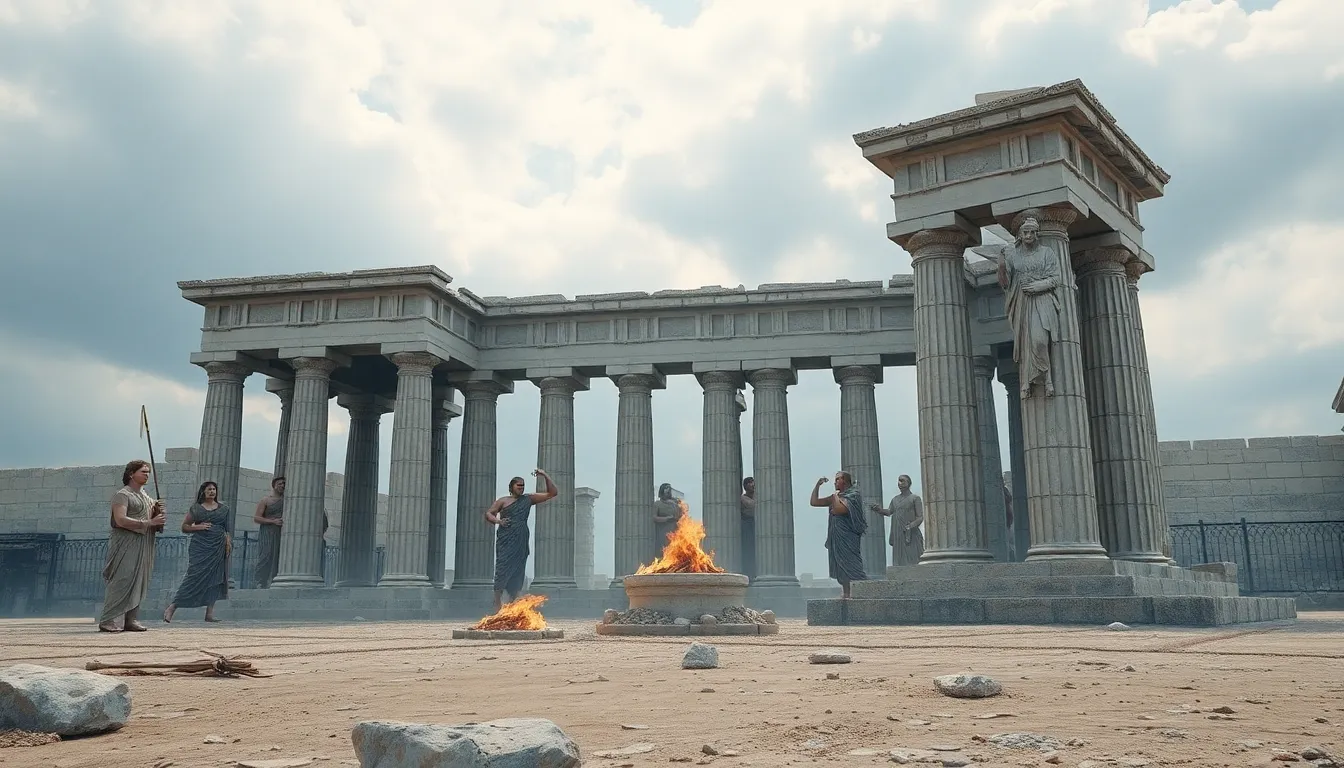
The Sacrificial Rites of Ancient Greek Festivals: A Closer Look
I. Introduction
Ancient Greek festivals played a crucial role in the religious and social life of the Greek city-states. These festivals were not only opportunities for celebration but also significant occasions for worship and communal identity. At the heart of many of these festivals were sacrificial rites, which were considered essential to appease the gods, seek their favor, and reinforce social bonds among community members.
This article aims to explore the sacrificial rites associated with ancient Greek festivals, examining their historical context, types, ritual processes, and the broader implications of these practices within Greek culture.
II. Historical Context of Sacrificial Practices
A. Origins of Sacrificial Rites in Ancient Greece
The origins of sacrificial rites in ancient Greece can be traced back to prehistoric times, where evidence suggests that early Greeks engaged in offerings to appease natural forces and divine entities. As Greek religion evolved, so too did the complexity and significance of these sacrifices.
B. Evolution of Sacrifices Through Different Periods
Throughout various periods of Greek history, sacrificial practices evolved, reflecting changes in societal norms, religious beliefs, and the political landscape. Key periods include:
- Mycenaean Period: Early forms of animal sacrifice and offerings.
- Classical Period: Institutionalized rituals with defined roles for priests and participants.
- Hellenistic Period: Increased syncretism and incorporation of foreign deities and practices.
C. Key Festivals Involved in Sacrificial Practices
Numerous festivals featured sacrificial rites, including:
- The Panathenaea
- The Dionysia
- The Olympic Games
III. Types of Sacrifices in Ancient Greek Festivals
A. Animal Sacrifices: Common Practices and Species
Animal sacrifices were perhaps the most prominent feature of Greek sacrificial rites. Common animals included:
- Sheep: Frequently sacrificed for various deities.
- Goats: Often associated with Dionysus and fertility rites.
- Bulls: Reserved for significant festivals and major deities.
B. Offerings of Agricultural Produce and Libations
In addition to animal sacrifices, offerings of agricultural produce such as grain, fruits, and wine were also common. Libations, or liquid offerings, were poured out to the gods as a gesture of respect and devotion.
C. Symbolic Gestures and Their Significance
Symbolic gestures, such as the burning of incense or the lighting of sacred fires, formed an integral part of the sacrificial rites, enhancing the spiritual atmosphere and signifying the connection between the worshippers and the divine.
IV. The Ritual Process of Sacrificial Rites
A. Preparations Leading Up to the Sacrifice
Preparation for a sacrifice involved meticulous planning, including:
- Selecting the appropriate animal
- Cleansing rituals for participants
- Setting up altars and gathering offerings
B. The Role of Priests and Participants
Priests held a central role in the sacrificial process, performing the rites and ensuring that the rituals adhered to established protocols. Participants, often members of the community, would engage in prayers, hymns, and other forms of worship during the ceremony.
C. The Act of Sacrifice: Ritual Steps and Significance
The act of sacrifice typically followed a structured sequence:
- Purification of the participants.
- Presentation of the animal to the altar.
- Invocation of the deity’s name.
- Slaughtering the animal.
- Offering the best parts of the animal to the fire.
- Distribution of the remaining meat among participants.
This ritual not only symbolized the offering to the gods but also reinforced communal ties as participants shared in the feast that followed.
V. The Role of Sacrifices in Religious and Social Contexts
A. Connection Between Sacrifices and the Divine
Sacrifices were perceived as a means of communication with the divine, allowing worshippers to express gratitude, seek guidance, and ask for blessings. The success of a sacrifice was often believed to be a reflection of the deity’s favor.
B. Community Involvement and Collective Identity
Participation in sacrificial rites fostered a sense of community and collective identity among the members. Festivals were occasions where individuals set aside personal differences to come together in worship, thus strengthening social bonds.
C. Social Hierarchies and the Distribution of Sacrificial Meat
The distribution of sacrificial meat often reflected social hierarchies within the community. Those of higher status might receive the prime cuts, while others received lesser portions, reinforcing existing social structures.
VI. Case Studies of Prominent Festivals
A. The Panathenaea: A Celebration of Athena
The Panathenaea was one of the most significant festivals in Athens, dedicated to the goddess Athena. It featured a grand procession, culminating in a large-scale sacrifice of cattle, which emphasized the city’s devotion to its patron goddess.
B. The Dionysia: Sacrifices in Honor of Dionysus
The Dionysia was a festival celebrating the god Dionysus, characterized by dramatic performances and communal revelry. Sacrifices of goats were central, symbolizing fertility and the life force associated with the vine.
C. The Olympian Games: Sacrifices as Part of Athletic Competitions
The Olympic Games were not solely athletic events but also included sacrificial rites to honor Zeus. Winning athletes often offered sacrifices, reinforcing the connection between athletic success and divine favor.
VII. Interpretations and Symbolism of Sacrificial Rites
A. Thematic Analysis of Sacrificial Symbolism
Sacrificial rites in ancient Greece are rich with symbolic meaning, representing themes of life, death, fertility, and renewal. The act of offering an animal can be seen as a metaphor for the cycle of life and human dependence on the divine.
B. Philosophical and Theological Perspectives
Philosophers like Plato and Aristotle offered interpretations of sacrifices, viewing them through lenses of ethics and metaphysics, questioning the morality and necessity of such practices in the pursuit of knowledge and virtue.
C. Modern Interpretations of Ancient Sacrificial Practices
Today, scholars continue to explore the meanings behind ancient Greek sacrificial rites, drawing parallels to contemporary religious practices and examining their relevance in understanding human behavior and social structures.
VIII. Conclusion
A. Summary of Key Points
In conclusion, sacrificial rites were fundamental to the fabric of ancient Greek festivals, reflecting the complex interplay between religion, community, and identity. They served as vital expressions of devotion to the gods while reinforcing social cohesion among participants.
B. The Legacy of Sacrificial Rites in Contemporary Understanding
The legacy of these sacrificial practices continues to influence modern religious rituals and cultural celebrations, providing insight into humanity’s enduring quest for connection with the divine.
C. Future Research Directions and Areas of Interest
Future research could explore the nuances of sacrificial practices across different Greek city-states, the impact of socio-political changes on these rites, and comparative studies with contemporary sacrificial traditions worldwide.