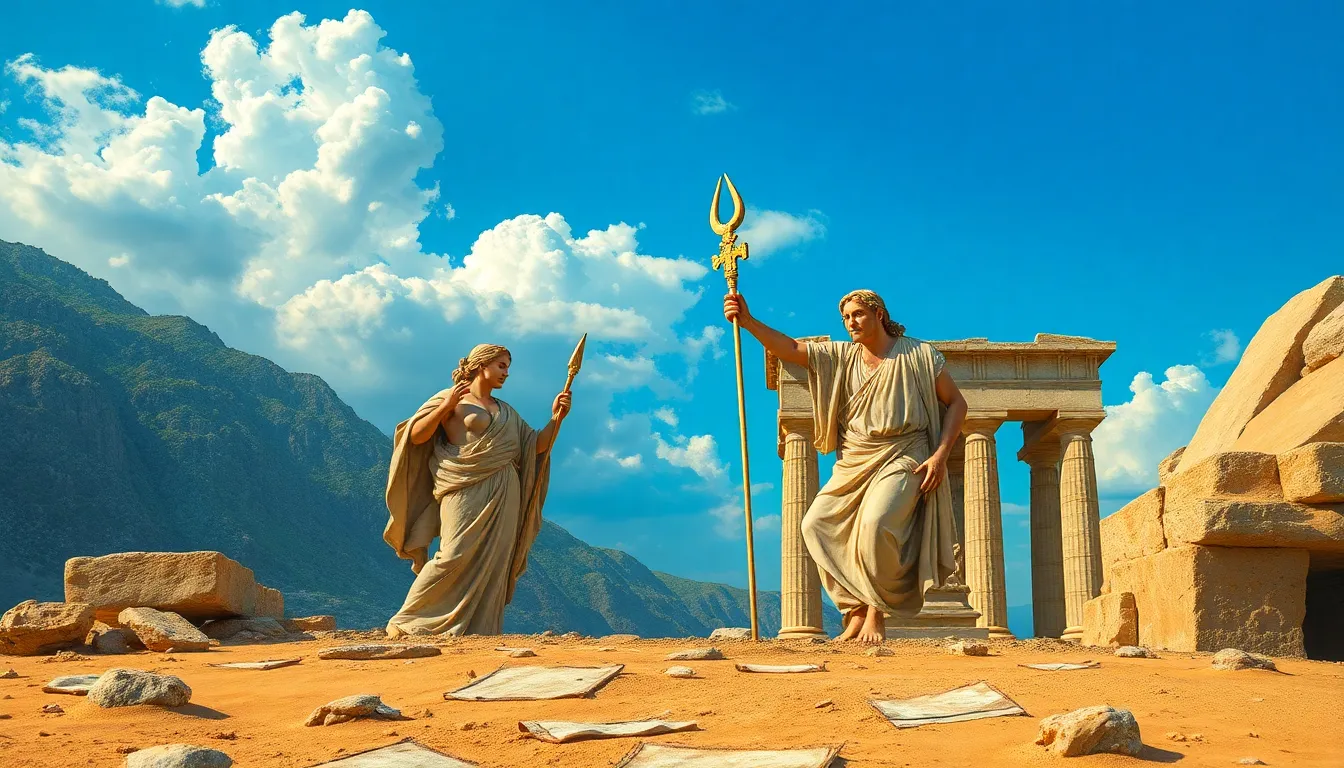
The Myths of Sacrifice: How Ancient Greeks Interpreted Divine Will
I. Introduction
The concept of sacrifice holds a profound significance in Ancient Greek culture, intricately woven into the fabric of both daily life and religious practice. The Greeks believed that sacrifices were essential for maintaining favor with the gods, ensuring harmony between the divine and mortal realms.
This article aims to explore the common myths surrounding sacrifice and how they illuminate the Ancient Greeks’ understanding of divine will. By examining various aspects of sacrificial practices, we can gain insight into the values and beliefs that shaped this ancient civilization.
II. The Concept of Sacrifice in Ancient Greece
A. Definition and types of sacrifices: animal, libation, and grain offerings
In Ancient Greece, sacrifice was a multifaceted practice that involved offerings made to the gods in hopes of securing their favor or appeasing their wrath. The primary types of sacrifices included:
- Animal Sacrifice: This was perhaps the most significant form, involving the ritual slaughter of animals such as sheep, goats, and cattle, which were offered to the gods.
- Libation: The pouring of liquids, typically wine or oil, onto the ground or an altar, symbolizing a gift to the gods.
- Grain Offerings: These included the presentation of grains and bread, often part of larger rituals, to honor the deities associated with agriculture and harvest.
B. The role of sacrifice in religious and civic life
Sacrifice played a crucial role not only in religious observance but also in the civic life of Greek city-states. Public sacrifices were often performed during festivals, marking important events or honoring deities, and were integral to community identity. They served to:
- Strengthen communal bonds through shared rituals.
- Reinforce the social hierarchy by designating who could perform certain sacrifices.
- Demonstrate civic pride and devotion to the gods.
III. Myths Surrounding Sacrifice
A. The myth of Prometheus and divine retribution
The myth of Prometheus is a powerful narrative that encapsulates the themes of sacrifice and divine retribution. Prometheus, a Titan, defied Zeus by stealing fire from the gods and giving it to humanity. As punishment for this act, Zeus ordered Prometheus to be bound to a rock where an eagle would eat his liver daily, only for it to regenerate each night.
This myth illustrates the consequences of disregarding divine authority and the complexities of sacrificial offerings. Prometheus’s sacrifice of his own well-being for the sake of humanity raises questions about the nature of sacrifice itself and its implications for human existence.
B. The story of Agamemnon and Iphigenia: Sacrifice for the greater good
Another significant myth involving sacrifice is the story of Agamemnon and Iphigenia. In preparation for the Trojan War, Agamemnon angered the goddess Artemis by killing a sacred deer. To appease her and ensure favorable winds for his fleet, Agamemnon was compelled to sacrifice his daughter, Iphigenia.
This tragic tale highlights the moral dilemmas faced by individuals in the pursuit of greater goals. Agamemnon’s decision is fraught with tension, demonstrating the often heartbreaking nature of sacrifices made in the name of duty and honor.
IV. Divine Will and Human Interpretation
A. How the Greeks understood the gods’ desires and intentions
The Ancient Greeks perceived their gods as powerful yet capricious beings whose favor was essential for success in various aspects of life. Understanding the will of the gods was crucial, and this was often interpreted through various means:
- Rituals and Sacrifices: Regular offerings were made to ensure divine favor and prevent wrath.
- Omens and Signs: Natural phenomena and animal behaviors were seen as indicators of divine intent.
- Mythological Narratives: Stories about gods and heroes served as moral lessons on the importance of listening to the divine will.
B. The influence of oracles and prophecies on sacrificial practices
Oracles played a significant role in how the Greeks understood divine will. The most famous oracle, the Oracle of Delphi, provided guidance on sacrificial offerings and decisions. Individuals and city-states would consult oracles before undertaking significant actions, such as war or major construction projects.
Prophecies often dictated specific types of sacrifices, reinforcing the belief that the gods had predetermined paths for mortals to follow. This interplay between divine guidance and human action shaped the sacrificial landscape of Ancient Greece.
V. The Role of Heroes and Demigods in Sacrifice
A. The relationship between heroic deeds and sacrificial offerings
Heroes and demigods occupied a unique place in Greek mythology, often embodying the values of courage, honor, and sacrifice. Their deeds were frequently celebrated through sacrifices, as these offerings were believed to invoke divine favor and ensure the hero’s legacy.
For example, the hero Heracles, known for his incredible strength and numerous labors, was often honored with sacrifices in recognition of his accomplishments and in hopes of receiving his blessings. This relationship between heroism and sacrifice reflects the cultural importance of valor and the belief in divine reward.
B. Case studies: Heracles and Achilles in the context of divine favor
Two prominent figures in Greek mythology, Heracles and Achilles, exemplify the connection between heroic sacrifice and divine favor:
- Heracles: His twelve labors were seen as acts of sacrifice, both to atone for his past misdeeds and to prove his worthiness. In turn, he was worshipped as a demigod, and sacrifices were made to honor him.
- Achilles: The Trojan War hero, whose wrath and eventual death highlight the tragic consequences of individual desires versus communal sacrifices. His story also emphasizes the notion of glory attained through sacrifice, as he was venerated posthumously.
VI. Contradictions and Conflicts in Sacrificial Beliefs
A. Tensions between individual desires and communal obligations
Ancient Greek society faced inherent contradictions in sacrificial practices. While individual desires often clashed with communal obligations, the societal expectation to sacrifice for the greater good was paramount. This tension is vividly illustrated in myths such as Agamemnon’s decision to sacrifice Iphigenia for the sake of his army.
Such dilemmas raised ethical questions about the nature of sacrifice and the value placed on individual versus collective well-being.
B. The impact of philosophical thought on traditional sacrificial practices
During the classical period, philosophical thought began to influence traditional sacrificial practices. Philosophers such as Socrates and Plato questioned the necessity and morality of sacrifices, promoting a more introspective understanding of piety and virtue.
This philosophical shift led to a reevaluation of sacrifice, challenging the idea that physical offerings were the sole means of pleasing the gods or achieving moral standing.
VII. Modern Interpretations of Ancient Sacrificial Myths
A. How contemporary society views the concept of sacrifice
In contemporary society, the concept of sacrifice continues to resonate, albeit in different forms. People often associate sacrifice with personal achievements, acts of kindness, or moral decisions that require giving up something valuable for a greater cause.
This modern interpretation reflects an evolution of the term, moving away from literal offerings to a more abstract understanding of what it means to sacrifice for others.
B. The legacy of Ancient Greek sacrificial practices in modern rituals
The legacy of Ancient Greek sacrificial practices can still be seen in various modern rituals and traditions. Many cultures have adopted elements of sacrifice in their religious practices, whether through ceremonial offerings, communal feasts, or commemorative events that honor the past.
These modern adaptations serve to remind us of the enduring significance of sacrifice in understanding human relationships with the divine and each other.
VIII. Conclusion
The exploration of sacrifice and divine will in Ancient Greece reveals a complex interplay of cultural beliefs, moral dilemmas, and the quest for understanding divine favor. The myths surrounding sacrifice, from Prometheus to Agamemnon, illustrate the profound impact of these practices on individual lives and communal identity.
As we reflect on these ancient narratives, we find their relevance in contemporary discussions