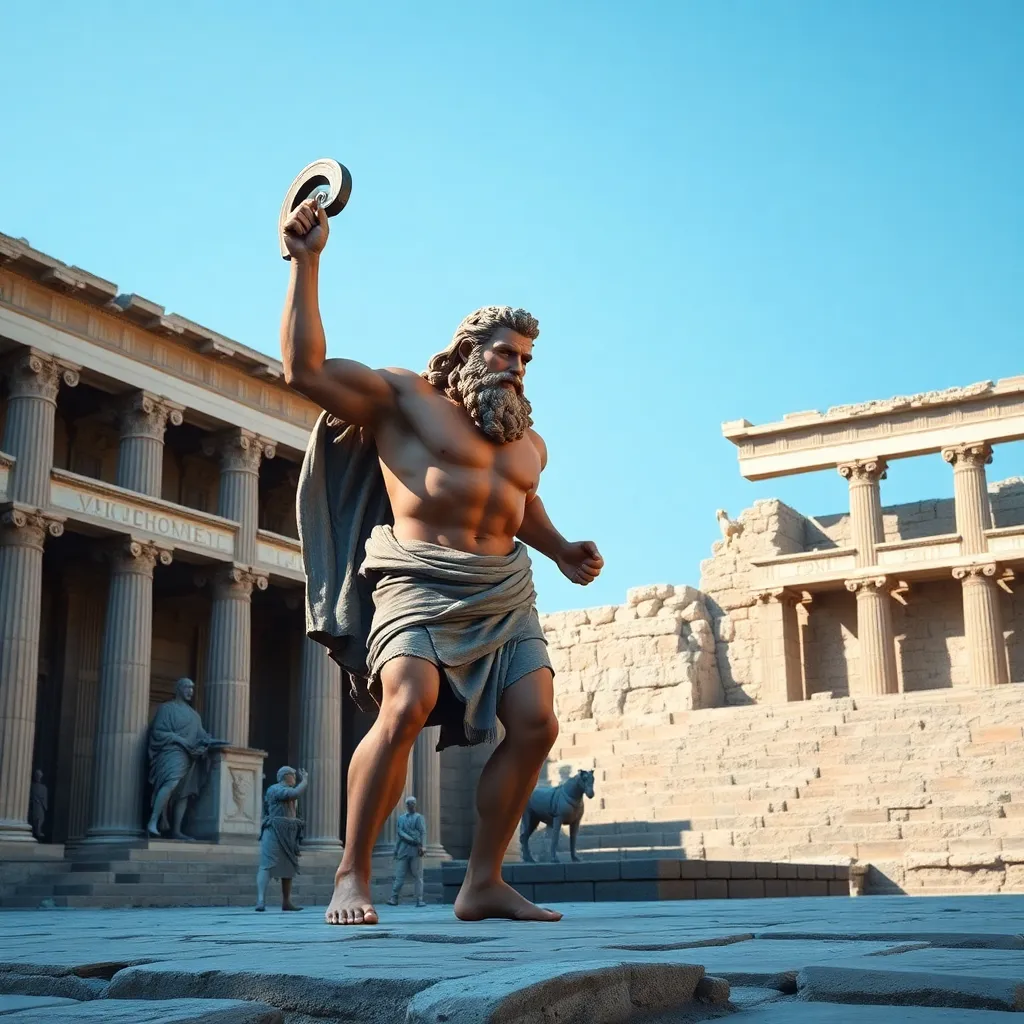
The Representation of Heracles in Ancient Greek Theater
I. Introduction
Heracles, known for his extraordinary strength and heroic deeds, holds a prominent place in Greek mythology. His tales of adventure and struggle resonate deeply within the cultural psyche of ancient Greece and have been immortalized in various forms of art, particularly in theater. The importance of Heracles extends beyond mere storytelling; he embodies the values, challenges, and complexities of the human experience, making him a pivotal figure in ancient Greek theater.
This article explores the representation of Heracles in ancient Greek theater, examining his mythological background, his portrayal in both tragedy and comedy, and the broader implications of his character within the cultural and moral landscape of ancient Greece.
II. Historical Context of Greek Theater
Theater in ancient Greece developed in the 6th century BCE, evolving from religious festivals honoring Dionysus. The performances were not only entertainment but also a means of exploring complex themes of existence, morality, and the divine.
Mythology significantly influenced the narratives presented in these theatrical works. Greek playwrights often drew upon the rich tapestry of myths, crafting stories that resonated with audiences and reflected societal beliefs.
- Aeschylus
- Sophocles
- Euripides
Considered the father of tragedy, Aeschylus introduced profound themes and complex characters.
He expanded the scope of character development and introduced the third actor to the stage.
Known for his psychological insight, Euripides challenged traditional views and explored the human psyche.
III. Heracles: Mythological Background
Heracles, the son of Zeus and Alcmene, was destined for greatness yet faced numerous challenges throughout his life. His birth was marked by Hera’s jealousy, leading to a series of trials that would define his character.
The most famous aspect of Heracles’ mythology is his Twelve Labors. Each labor was a daunting task set by King Eurystheus, designed to test Heracles’ strength and resolve:
- Slay the Nemean Lion
- Slay the nine-headed Lernaean Hydra
- Capture the Golden Hind of Artemis
- Capture the Erymanthian Boar
- Clean the Augean Stables in a single day
- Slay the Stymphalian Birds
- Capture the Cretan Bull
- Steal the Mares of Diomedes
- Obtain the Girdle of Hippolyta
- Capture the Cattle of Geryon
- Steal the Apples of the Hesperides
- Capture Cerberus, the three-headed dog
These labors not only showcase his immense strength but also symbolize perseverance, redemption, and the struggle against fate.
IV. Heracles in Tragedy
Heracles’ character has been explored through various tragic lenses, particularly by playwrights like Aeschylus and Euripides.
A. Analysis of Aeschylus’s “Heracles”
Aeschylus’s play “Heracles” presents the hero in a moment of crisis, grappling with the duality of his nature. Themes of madness, betrayal, and redemption are central to the narrative.
- Themes and character portrayal: Aeschylus illustrates Heracles’ internal struggle, portraying him as a tragic figure caught between his divine heritage and human vulnerabilities.
- Audience reception: The play was received with a mix of admiration and sorrow, as audiences empathized with Heracles’ plight.
B. Euripides’ interpretation in “Heracles”
Euripides offers a more psychologically complex view of the hero. In “Heracles,” the focus shifts to the themes of madness and the fragility of the human mind.
- Psychological complexity of the character: Euripides delves into Heracles’ mental state, portraying him as a victim of divine manipulation and inner turmoil.
- Exploration of madness and heroism: The play challenges the traditional notion of heroism, suggesting that even the strongest can succumb to despair and insanity.
C. Comparison of tragic representations
The tragic representations of Heracles by Aeschylus and Euripides highlight the multifaceted nature of heroism, revealing the vulnerabilities that lie beneath the surface of strength.
V. Heracles in Comedy
In contrast to tragedy, Heracles also appears in comedic works, particularly those of Aristophanes, where he is portrayed in a satirical light.
A. Role of Heracles in Aristophanes’ works
- Satirical portrayals and humor: Aristophanes often depicted Heracles as a bumbling hero, poking fun at his exaggerated masculinity and heroics.
- Reflection of societal norms and values: These comedic portrayals serve to critique societal expectations of heroism and masculinity.
B. Influence of comedy on the perception of Heracles
Through comedy, Heracles is humanized, allowing audiences to engage with his character in a lighter, more relatable context. This duality of portrayal enriches the understanding of his role within the broader spectrum of Greek theater.
VI. Symbolism and Themes
Heracles transcends the role of a mere hero; he symbolizes the human condition, reflecting the struggles between divine influence and mortal experience.
- Heracles as a representation of the human condition: His trials echo the challenges faced by humanity, emphasizing resilience in the face of adversity.
- Exploration of heroism, mortality, and divinity: The juxtaposition of Heracles’ strength against his vulnerabilities raises questions about the nature of true heroism.
- Cultural and moral lessons conveyed through Heracles’ stories: His journeys often impart wisdom about integrity, courage, and the consequences of one’s choices.
VII. Legacy of Heracles in Theater and Beyond
The legacy of Heracles extends far beyond ancient Greece, influencing various artistic expressions throughout history.
- Influence on later theatrical works and adaptations: Heracles’ character has been adapted in numerous plays, films, and operas, showcasing his timeless appeal.
- Heracles in modern interpretations and popular culture: From Disney’s animated films to contemporary literature, Heracles continues to inspire and captivate audiences.
- Continued relevance of Heracles in contemporary discussions: His stories resonate with modern themes of heroism, identity, and the human experience.
VIII. Conclusion
In summary, the representation of Heracles in ancient Greek theater offers profound insights into the complexities of heroism and the human condition. Through both tragic and comedic portrayals, Heracles embodies the struggle against fate, the nature of strength, and the quest for identity.
The enduring legacy of Heracles serves as a reminder of the timelessness of myth and its ability to articulate the human experience across cultures and generations. His stories continue to resonate, inviting reflection on the nature of heroism and the challenges we face in our own lives.