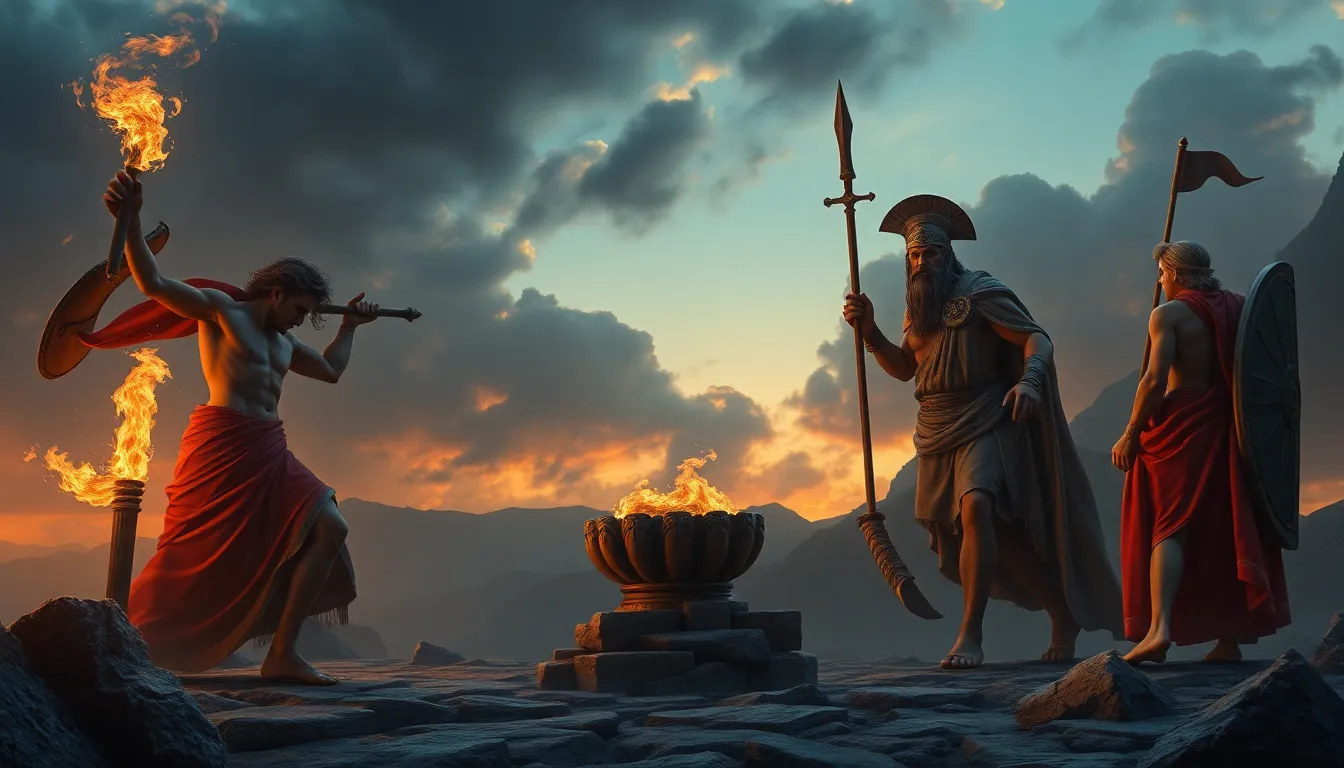
The Sacrificial Themes in the Myths of the Heroes
I. Introduction to Sacrificial Themes in Mythology
In mythology, sacrifice often serves as a profound and transformative element. It encompasses the act of giving up something of great value for the sake of a greater cause, person, or ideal. In the context of hero narratives, sacrifice becomes a pivotal theme that illustrates the cost of heroism and the burdens heroes bear.
The importance of sacrifice in these narratives cannot be overstated. It not only defines the character of the hero but also shapes the journey they undertake. Throughout this article, we will explore the various facets of sacrificial themes, examining their historical context, heroic archetypes, case studies, psychological aspects, transformative power, and modern interpretations.
II. Historical Context of Sacrifice in Myths
To understand the sacrificial themes in myths, it is essential to consider the historical context of sacrifice in ancient cultures. Sacrifice has been a fundamental aspect of numerous civilizations, often intertwined with their religious and cultural practices.
In many ancient cultures, sacrifices were seen as a means of appeasing deities, ensuring prosperity, and maintaining cosmic order. The act of sacrifice could involve offerings of food, animals, or even human lives, depending on the beliefs of the society.
- Mesopotamia: Ritual sacrifices were often conducted to honor gods like Marduk and Ishtar.
- Ancient Egypt: Sacrifices were made to secure favor from the gods, especially during significant festivals.
- Greek Culture: Animal sacrifices were central to worship, symbolizing the connection between the divine and the mortal.
Examples of early myths featuring sacrificial themes include the tale of Prometheus, who defied the gods for humanity, and the story of Agamemnon, whose sacrifice of his daughter Iphigenia was deemed necessary for the success of the Trojan War. These narratives highlight the complex relationship between sacrifice, duty, and the consequences of decisions made by heroes.
III. Heroic Archetypes and Their Sacrificial Journeys
The classic hero’s journey is often marked by significant sacrifices that the hero must make to achieve their goals. This journey typically follows a pattern where the hero is called to adventure, faces trials, and ultimately undergoes a transformation that may require personal sacrifice.
Identifying key heroic archetypes helps illuminate the various ways sacrifice manifests in their stories:
- The Tragic Hero: A character who experiences downfall due to a fatal flaw, often resulting in sacrifice for the greater good (e.g., Oedipus).
- The Anti-Hero: A flawed protagonist who often makes morally ambiguous choices, leading to sacrifices (e.g., Deadpool).
- The Reluctant Hero: A character who initially resists the call to heroism but ultimately makes significant sacrifices (e.g., Frodo Baggins).
Across different cultures, common sacrificial motifs emerge, such as the hero’s journey leading to personal sacrifice, the loss of loved ones, or the relinquishment of personal desires for a larger cause.
IV. Case Studies of Sacrifice in Hero Myths
Examining specific case studies of heroes in various mythologies reveals the profound nature of sacrificial themes.
A. Greek Mythology: Prometheus and the Gift of Fire
Prometheus, the Titan, is renowned for his act of stealing fire from the gods to give it to humanity. This act of defiance symbolizes not only sacrifice but also the pursuit of knowledge and enlightenment. As punishment for his actions, Prometheus endured eternal torment, exemplifying the theme of suffering for the sake of others.
B. Norse Mythology: Odin’s Sacrifice for Wisdom
In Norse mythology, Odin sacrificed himself by hanging on the World Tree, Yggdrasil, for nine days and nights to gain wisdom. This self-sacrifice illustrates the lengths to which a hero will go to acquire knowledge and power, highlighting the connection between sacrifice and enlightenment.
C. Hindu Mythology: Rama’s Exile in the Ramayana
In the epic Ramayana, Rama accepts a 14-year exile to uphold his father’s honor and fulfill his dharma. His sacrifice not only serves as a personal trial but also emphasizes the themes of duty, honor, and the collective good over individual desires.
V. The Psychological Aspects of Sacrifice in Hero Myths
The act of sacrifice in hero myths has profound psychological implications for both the characters and the audience. It plays a crucial role in character development, often acting as a catalyst for growth and transformation.
Heroes who make sacrifices often face internal conflicts, leading to significant character evolution. The relationship between sacrifice and personal growth is evident in how these experiences shape the hero’s identity and their understanding of their role in the world.
Moreover, audiences resonate with sacrificial themes, eliciting emotional responses that can range from empathy to admiration. This connection fosters a deeper understanding of heroism and the complexities of human experience.
VI. Sacrifice as a Catalyst for Change
In many hero myths, sacrifice serves as a driving force for plot progression and societal change. The transformative power of sacrifice extends beyond the individual hero, often impacting the community or society as a whole.
Examples of societal changes prompted by heroic sacrifices include:
- The establishment of justice and order following the sacrifices of figures like Theseus, who defeated the Minotaur.
- The unification of warring factions, as seen in the aftermath of heroes like Arjuna in the Mahabharata, whose sacrifices led to peace.
- The inspiration for future generations, with heroes like Martin Luther King Jr. embodying sacrificial leadership that sparked social movements.
These narratives illustrate how individual sacrifices can lead to broader transformations, echoing the idea that true heroism often involves selflessness and a commitment to the greater good.
VII. Modern Interpretations of Sacrifice in Heroic Narratives
In contemporary literature and media, sacrificial themes continue to resonate, reflecting timeless human experiences and challenges. Modern retellings of classic myths often reinterpret these themes for new audiences, highlighting their relevance.
Examples of sacrificial themes in modern literature and media include:
- Films: Movies like “The Hunger Games” depict characters who make significant sacrifices for freedom and justice.
- Novels: Books such as “The Fault in Our Stars” explore the complexities of love and sacrifice in the face of terminal illness.
- Television: Series like “Game of Thrones” frequently highlight characters making morally ambiguous sacrifices for power and survival.
The ongoing relevance of sacrificial themes in today’s cultural discourse emphasizes their role in shaping our understanding of heroism, morality, and the human condition.
VIII. Conclusion
In conclusion, the exploration of sacrificial themes in the myths of heroes reveals a rich tapestry of meanings and implications. From historical contexts to psychological aspects, these themes underscore the complexities of heroism and the human experience.
The enduring legacy of sacrificial themes reminds us that heroism often comes at a cost, and the sacrifices made by heroes resonate through generations. As we reflect on these narratives, we gain insights into the nature of sacrifice, the struggles for justice, and the profound impact of selflessness in shaping our world.
Ultimately, understanding sacrificial themes deepens our appreciation of heroism, illuminating the paths heroes take and the sacrifices they make for the greater good.