The Mythical Minotaur: Exploring the Symbolism of Duality
I. Introduction
The Minotaur is one of the most iconic creatures in Greek mythology, often depicted as a monstrous being with the body of a man and the head of a bull. This fascinating hybrid not only embodies physical strength and ferocity but also serves as a profound symbol of duality. The concept of duality, which refers to the presence of two opposing elements within a single entity, is central to understanding the Minotaur’s narrative and its implications in both ancient and modern contexts.
This article aims to delve into the myth of the Minotaur, exploring its origins, physical representation, and the labyrinth that serves as its home. We will investigate the themes of conformity and rebellion, the duality inherent in human nature, and the Minotaur’s lasting impact on contemporary culture.
II. Origins of the Minotaur Myth
The Minotaur’s creation is steeped in rich historical context and mythological significance. According to the myths, the Minotaur was born from a cursed union between Pasiphaë, the wife of King Minos of Crete, and a magnificent bull sent by Poseidon. This curse was a punishment for Minos, who had failed to sacrifice the bull in honor of the god.
Key figures in the Minotaur’s story include:
- King Minos: The ruler of Crete who ordered the construction of the labyrinth to contain the Minotaur.
- Pasiphaë: The wife of Minos, whose unnatural passion for the bull resulted in the birth of the Minotaur.
- Daedalus: The brilliant craftsman who designed the labyrinth, a complex maze intended to imprison the creature.
The labyrinth itself is not just a physical structure but also a metaphorical construct representing confusion, entrapment, and the complexity of the human experience. It serves as a backdrop for the struggle between order and chaos, mirroring the internal and external conflicts faced by individuals.
III. The Minotaur’s Physical Representation
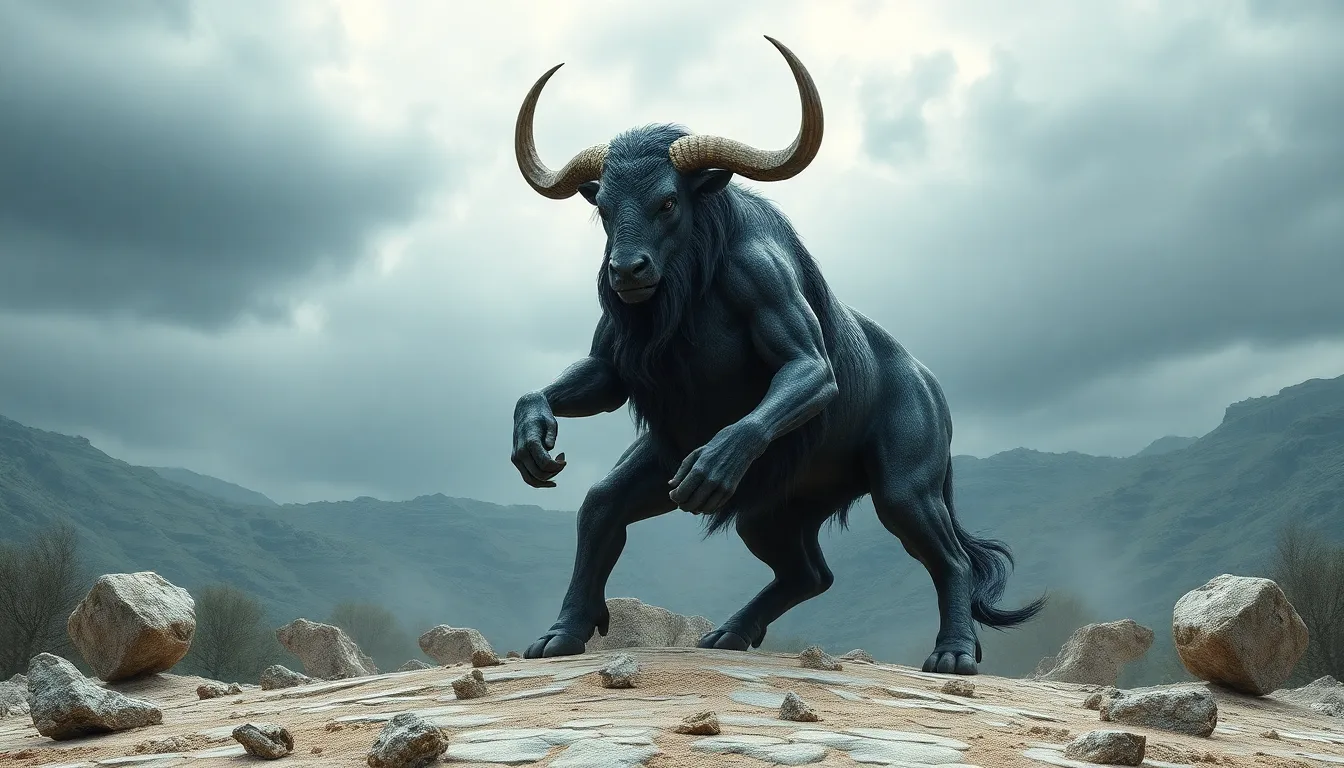
The Minotaur is depicted as a terrifying creature, possessing the body of a robust man and the head of a bull. This unique appearance is rich in symbolism, representing the duality of human and beast, civilization and savagery. The Minotaur embodies the primal instincts that lie beneath the surface of human society.
Analyzing the Minotaur’s appearance reveals deeper insights into the nature of duality:
- Humanity: The Minotaur has a human form, suggesting an inherent connection to humanity’s rational side.
- Bestiality: The bull’s head symbolizes raw power and instinct, representing the untamed aspects of human nature.
Hybrid creatures like the Minotaur are prevalent in mythology and often serve to challenge the boundaries between different realms of existence. They remind us of the complexities within ourselves and the world around us.
IV. The Labyrinth: A Symbol of Conflict and Complexity
The labyrinth, designed by Daedalus, is a complex maze that serves as both a prison for the Minotaur and a symbol of the human psyche. It represents the intricate paths of our thoughts, fears, and desires, often leading us to confront our inner demons.
Exploring the journey through the labyrinth can be seen as a metaphor for self-discovery. Just as Theseus navigates the maze to confront the Minotaur, individuals must often confront their own fears and insecurities in their quest for understanding and growth.
The Minotaur’s role within the labyrinth exemplifies an internal struggle. It serves as the manifestation of the darker aspects of the self, which must be confronted and understood in order to achieve personal liberation.
V. Themes of Conformity and Rebellion
The Minotaur can be interpreted as a representation of societal expectations and norms. Existing within the confines of the labyrinth, the creature symbolizes the constraints imposed by society that often stifle individuality and freedom.
The conflict between human nature and societal norms is a recurring theme in the Minotaur’s narrative. The Minotaur is a product of unnatural circumstances, reflecting the struggle between conformity and the desire for authenticity.
Moreover, the Minotaur’s rebellion against confinement in the labyrinth can be seen as a metaphor for the longing for liberation from societal constraints. It represents the instinctual drive to break free from limitations, urging individuals to embrace their true selves.
VI. Duality in Human Nature: Good vs. Evil
The actions of the Minotaur can be analyzed as a reflection of moral ambiguity, embodying the dual nature of humanity. The Minotaur is not purely evil; rather, it represents the predator-prey dynamic inherent in human relationships and society.
This duality is evident in various aspects:
- Predator vs. Prey: The Minotaur preys on the youths sent into the labyrinth, reflecting the darker instincts within humanity.
- Victim vs. Villain: The Minotaur, born of a curse, can be seen as a victim of circumstances, evoking sympathy despite its monstrous nature.
By examining the Minotaur as a lens through which to explore human desires and fears, we can gain insights into the complexities of our own moral landscapes. It serves as a reminder that within each individual lies a blend of light and dark, good and evil.
VII. The Minotaur in Modern Culture
The Minotaur has transcended its ancient origins, finding new life in literature, film, and art. Contemporary adaptations often explore themes of identity, alienation, and the struggle between the self and societal expectations.
Some notable examples include:
- Literature: Works such as “The Minotaur” by Peter Abrahams and “The Bull from the Sea” by Mary Renault delve into the psychological and emotional aspects of the Minotaur’s story.
- Film: Movies like “The Hunger Games” and “Pan’s Labyrinth” draw on the Minotaur’s symbolism to explore themes of power, resistance, and the human condition.
- Art: Artists such as Pablo Picasso have depicted the Minotaur in various forms, reflecting the creature’s complex nature and its embodiment of duality.
The continued relevance of the Minotaur’s symbolism in contemporary discussions of identity highlights its role as an archetype for exploring personal and societal dualities. The Minotaur serves as a reminder of the internal struggles that many face in an increasingly complex world.
VIII. Conclusion
In conclusion, the Minotaur stands as a powerful symbol of duality within Greek mythology. Its story encapsulates the complexities of human nature, the struggles between conformity and rebellion, and the interplay of good and evil. By understanding the Minotaur’s significance, we can gain valuable insights into the nature of duality in our own lives and society.
This exploration encourages us to reflect on our own internal labyrinths, to confront the Minotaurs within us, and to embrace the complexities that define our existence. The Minotaur remains a timeless reminder that understanding duality is essential for personal growth and societal progress.
As we continue to explore mythological symbols, we uncover layers of meaning that resonate with our contemporary experiences, fostering a deeper appreciation for the narratives that shape our understanding of identity and existence.