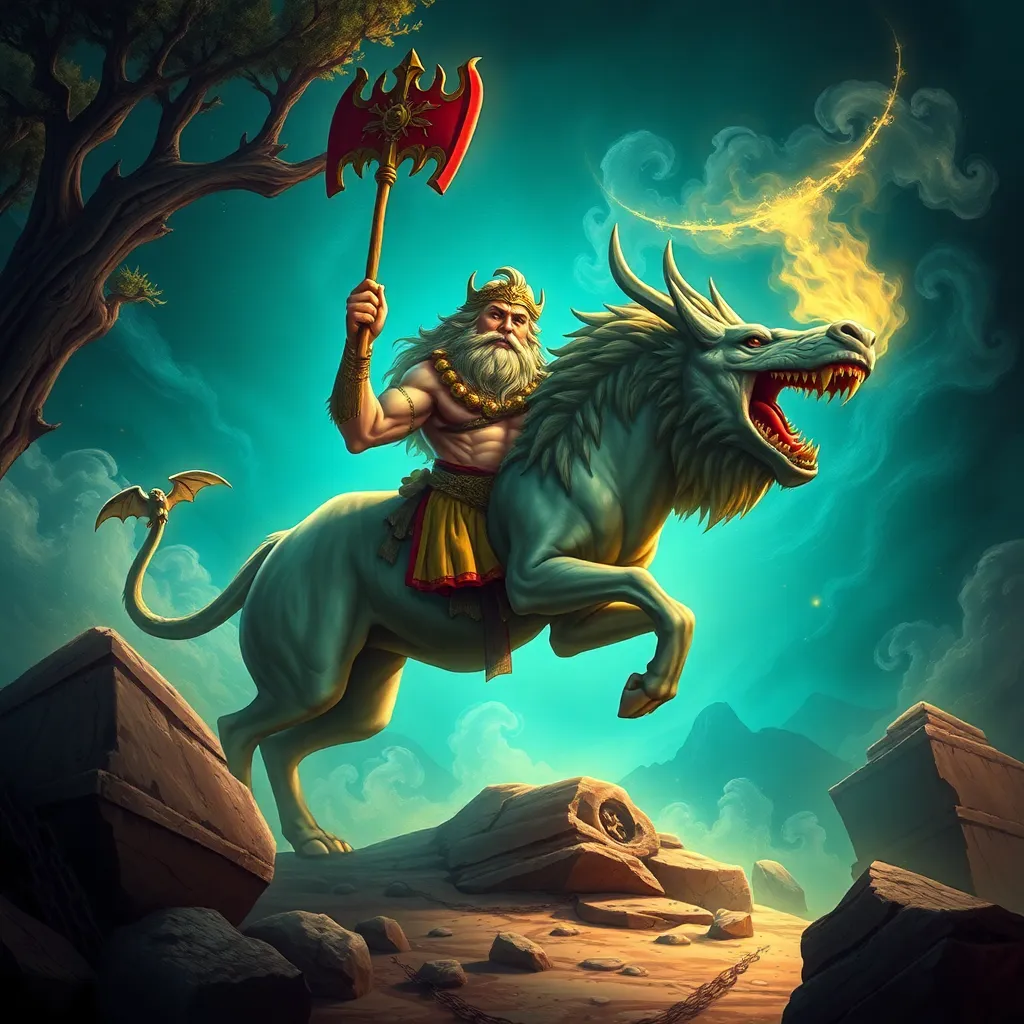
The Role of Mythical Beasts in Heracles’ Adventures
I. Introduction
Heracles, known for his incredible strength and heroic feats, stands as one of the most significant figures in Greek mythology. Born as the son of Zeus and the mortal Alcmene, he embodies the struggle between the divine and human realms. His adventures are marked by his encounters with various mythical beasts, each playing a crucial role in shaping his character and defining his journey.
This article aims to explore the importance of mythical beasts in Heracles’ adventures, highlighting how these encounters not only test his physical prowess but also contribute to his growth as a hero. We will delve into the nature of these creatures, their symbolic meanings, and their impact on Heracles’ legendary Twelve Labors.
II. The Nature of Mythical Beasts in Greek Mythology
Mythical beasts in Greek mythology are often characterized by their extraordinary features, powers, and the roles they play in various narratives. These creatures range from monstrous and fearsome to divine and majestic, each symbolizing different aspects of the human experience.
Characteristics of mythical beasts include:
- Physical abnormalities or hybrid forms, such as the Minotaur (half-man, half-bull).
- Supernatural abilities, like the regenerative powers of the Hydra.
- Symbolic significance, representing fears, moral lessons, or natural phenomena.
In ancient Greek culture, mythical creatures often served as symbols of chaos, challenges, and the unknown. They were integral in mythological narratives, functioning as adversaries that heroes must overcome, thus reinforcing themes of bravery, ingenuity, and moral fortitude.
III. The Twelve Labors of Heracles: An Overview
The Twelve Labors of Heracles are a series of tasks that he was assigned as a penance for killing his wife and children, a madness inflicted upon him by Hera. These labors are not just tests of strength but also of intellect, patience, and perseverance.
Each labor features a mythical beast, highlighting the challenges Heracles faced. The significance of these challenges lies in their ability to transform Heracles from a flawed individual into a legendary hero through his encounters with these formidable creatures. The mythical beasts that he confronts include:
- The Nemean Lion
- The Lernaean Hydra
- The Ceryneian Hind
- The Erymanthian Boar
IV. The Nemean Lion: A Symbol of Strength
The Nemean Lion, known for its impenetrable skin, was a ferocious beast that terrorized the region of Nemea. Its invulnerability made it a formidable foe, symbolizing the ultimate test of strength and courage.
To defeat the lion, Heracles employed a clever strategy. After failing to pierce its skin with his arrows, he resorted to hand-to-hand combat. With his immense strength, he ultimately strangled the beast. This victory not only showcased Heracles’ physical prowess but also his resourcefulness. The skin of the lion became part of his armor, symbolizing his triumph over fear and the embodiment of strength.
V. The Lernaean Hydra: A Test of Ingenuity
The Lernaean Hydra was a multi-headed serpent-like creature residing in the swamps of Lerna. Each time one of its heads was cut off, two more would grow in its place, representing an insurmountable challenge for any hero.
Heracles’ battle against the Hydra required not just strength but also ingenuity. He enlisted the help of his nephew Iolaus, who used fire to cauterize the necks after Heracles decapitated the heads, preventing them from regenerating. This labor illustrates the importance of collaboration and creativity in overcoming obstacles, making the Hydra a powerful metaphor for confronting seemingly unbeatable challenges.
VI. The Ceryneian Hind: The Pursuit of the Elusive
The Ceryneian Hind, a sacred deer with golden antlers, represented grace and beauty. Capturing this elusive creature was not merely a test of strength but also of patience and respect for nature.
Heracles spent a year pursuing the hind, demonstrating his determination and respect for the creature. This labor emphasizes themes of patience, the harmony between man and nature, and the idea that true triumph often requires restraint and understanding rather than brute force.
VII. The Erymanthian Boar and the Concept of Confrontation
The Erymanthian Boar, known for its sheer ferocity and size, posed a different kind of challenge for Heracles. Instead of killing the beast, he was tasked with capturing it alive. This labor highlights the significance of confrontation and control rather than destruction.
Heracles successfully cornered the boar and brought it back to Eurystheus, who was terrified of the creature. This labor underscores the themes of mastery over one’s fears and the ability to confront challenges without resorting to violence, reflecting a deeper understanding of strength and power.
VIII. Conclusion
In conclusion, the mythical beasts encountered by Heracles throughout his Twelve Labors play a vital role in shaping his character and illustrating the complexities of heroism. Each beast serves as a metaphor for different challenges, teaching valuable lessons about strength, ingenuity, patience, and the importance of confronting one’s fears.
These legendary encounters not only define the narrative of Heracles but also leave a lasting impact on modern storytelling and culture. The tales of Heracles and his mythical adversaries continue to resonate, reminding us of the eternal struggle between man and the beasts of our own making.