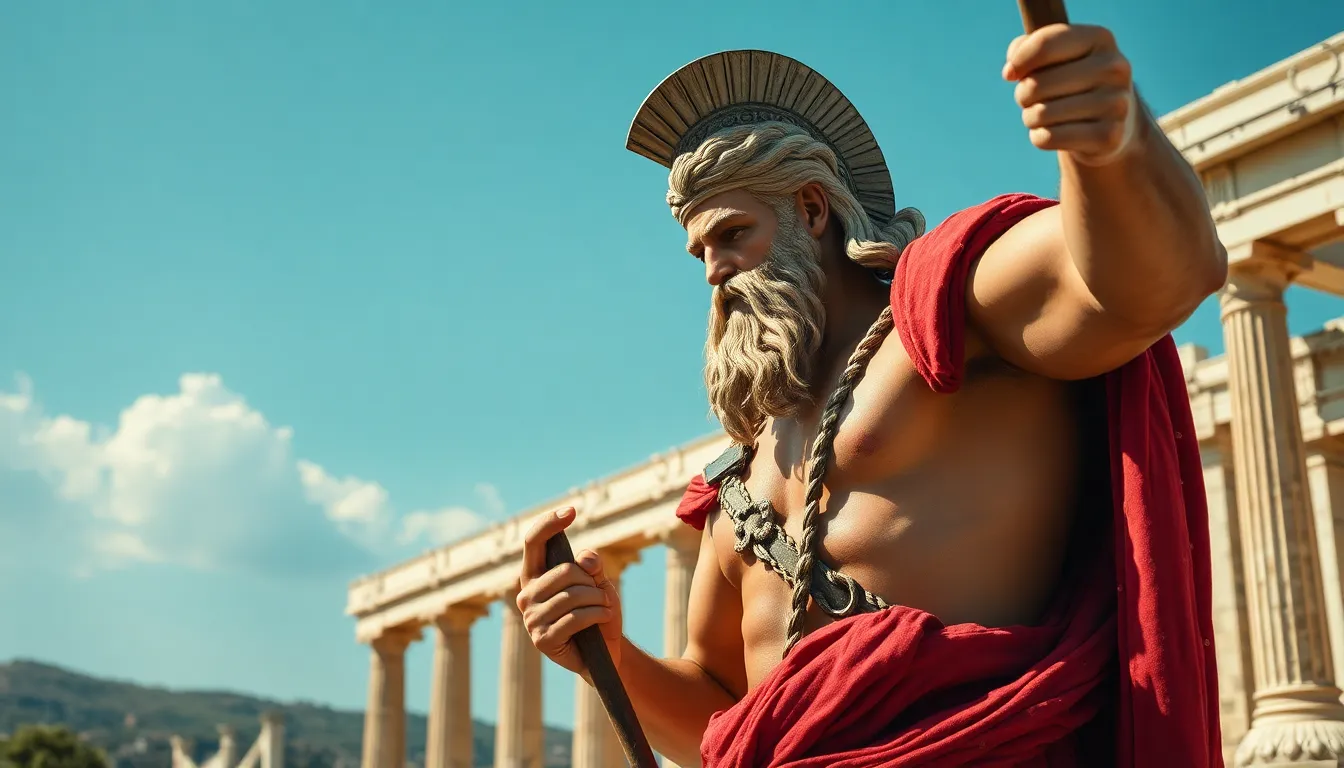
Hercules in Athens: The Myths Behind the Mighty Hero
I. Introduction
Hercules, known as Heracles in Greek mythology, stands out as one of the most celebrated heroes of ancient lore. His tales of strength, bravery, and resilience have captivated audiences for centuries. Often seen as the quintessential hero, Hercules embodies the struggles and triumphs of humanity against overwhelming odds.
Athens, the cultural and intellectual heart of ancient Greece, plays a significant role in the narrative of Hercules. Various myths connect this mighty hero to the city, illustrating not only his strength but also his moral lessons that resonate through Athenian history.
The purpose of this article is to explore the myths surrounding Hercules in relation to Athens, examining his origins, significant adventures, cultural impact, and lasting legacy in both ancient and modern contexts.
II. The Origins of Hercules
A. Birth and parentage
Hercules was born to Zeus, the king of the gods, and Alcmena, a mortal woman. His conception was a result of Zeus’s infidelity, which angered Hera, Zeus’s wife. To punish Hercules, Hera made his life difficult from the very beginning.
B. Early life and challenges
From his infancy, Hercules displayed extraordinary strength. However, Hera’s jealousy manifested in the form of a snake that attacked him in his crib, which he famously defeated. As he grew, Hercules faced numerous trials, including bouts of madness sent by Hera, which led him to unwittingly kill his wife and children. This tragic event propelled him into a quest for redemption.
C. The Twelve Labors: an introduction
In order to atone for his past transgressions, Hercules was tasked with completing the Twelve Labors, a series of nearly impossible feats that would test his strength, courage, and intelligence. These labors include legendary encounters with formidable creatures and daunting tasks that would define his legacy.
III. Hercules and the Athenian Connection
A. Hercules’ role in Athenian mythology
In Athenian mythology, Hercules was not just a distant hero; he was a protector and a figure of great reverence. The Athenians often invoked his name in times of need, looking to his legendary strength for inspiration and guidance.
B. Key myths involving Hercules in Athens
- The capture of the Erymanthian Boar, which was notable for its connection to the mountains surrounding Athens.
- His involvement in the Argonauts’ quest, which had significant ties to Athenian lore.
- His role in the battle against the Amazons, where he is depicted as a champion of both strength and justice.
C. The significance of the Acropolis and the Temple of Hercules
The Acropolis, a symbol of Athenian power and culture, features various structures dedicated to Hercules. The Temple of Hercules was a site where Athenians would pay homage to him, celebrating his achievements and seeking his favor.
IV. Hercules’ Trials and Triumphs in Athens
A. Notable stories: the Nemean Lion and the Erymanthian Boar
The Nemean Lion, one of the first labors, showcased Hercules’ unparalleled strength and cunning. The lion’s skin was impervious to weapons, but Hercules ultimately strangled it with his bare hands. This labor not only demonstrated his physical prowess but also symbolized overcoming fear and adversity.
The Erymanthian Boar presented another challenge, where Hercules was tasked with capturing the beast alive. This story emphasizes the importance of control and strategy, as brute force alone would not suffice.
B. Interactions with Athenian figures: Theseus and others
Hercules’ adventures often intersected with those of other heroes, particularly Theseus. Their camaraderie is celebrated in various myths, where they fought side by side against common foes, exemplifying themes of friendship, loyalty, and shared destiny.
C. Lessons and morals from Hercules’ adventures
- Resilience: Hercules teaches the importance of perseverance in the face of challenges.
- Redemption: His journey illustrates that mistakes can be corrected through effort and determination.
- Strength of character: Beyond physical power, Hercules embodies virtues such as courage, humility, and justice.
V. Cultural Impact of Hercules in Athens
A. Influence on Athenian art and literature
Hercules’ influence permeated Athenian art and literature, inspiring countless works that depicted his legendary feats. Playwrights such as Euripides and Sophocles wove his stories into their tragedies, exploring themes of heroism and human suffering.
B. Depictions in sculptures and pottery
Artists portrayed Hercules in various forms, from heroic statues in public spaces to intricate pottery designs. These depictions often highlighted his physical attributes and the dramatic moments of his labors, reinforcing his status as a cultural icon.
C. Role in Athenian festivals and rituals
Hercules was celebrated in various Athenian festivals, where rituals and competitions honored his strength and virtues. These events were not only a form of entertainment but also a means of fostering community and reinforcing cultural values.
VI. The Legacy of Hercules in Modern Athens
A. Contemporary references and adaptations
Hercules continues to resonate in modern culture, appearing in films, literature, and other forms of media. His stories have been adapted to suit contemporary audiences while retaining the core themes of heroism and moral integrity.
B. Educational significance in Greek culture
In Greece, Hercules serves as an educational figure, illustrating important life lessons for children and adults alike. His tales are often used in classrooms to teach values such as bravery, empathy, and the importance of making amends for one’s actions.
C. Tourism and heritage sites related to Hercules
Modern Athens boasts various sites connected to Hercules, attracting tourists and mythology enthusiasts. The ruins of ancient temples, statues, and museums dedicated to Hercules provide insights into his lasting impact on Athenian culture and heritage.
VII. Comparing Hercules to Other Mythological Heroes
A. Similarities and differences with Theseus and Perseus
While Hercules, Theseus, and Perseus share the commonality of being heroic figures, their stories and characteristics set them apart. Hercules is known for his immense strength and physical challenges, while Theseus is often celebrated for his intelligence and diplomacy. Perseus, on the other hand, is recognized for his cunning and resourcefulness, particularly in his quest to defeat Medusa.
B. The archetype of the hero in Greek mythology
Hercules represents the archetype of the hero, embodying the struggle between human frailty and divine strength. His narrative reflects the complexities of the human experience, making him a timeless figure in mythology.
C. Hercules’ unique traits and attributes
- Physical strength: His unmatched ability to perform incredible feats.
- Emotional depth: His journey of redemption adds layers to his character.
- Symbol of perseverance: Hercules is a paragon of resilience, inspiring countless generations.
VIII. Conclusion
Hercules’ significance in Athenian culture cannot be overstated. His stories of strength, moral lessons, and heroic adventures are woven into the very fabric of Greek mythology. As a symbol of resilience and redemption, Hercules continues to inspire not only the people of Athens but also the world at large.
His enduring legacy in modern society is a testament to the timeless nature of his character, inviting individuals to explore the depths of Greek mythology and the values it holds. The tales of Hercules remind us that, like the hero himself, we too can overcome our own trials and emerge victorious.
For those interested in delving deeper into Greek mythology, the stories of Hercules offer a rich tapestry of lessons, adventures, and insights that are as relevant today as they were in ancient times.