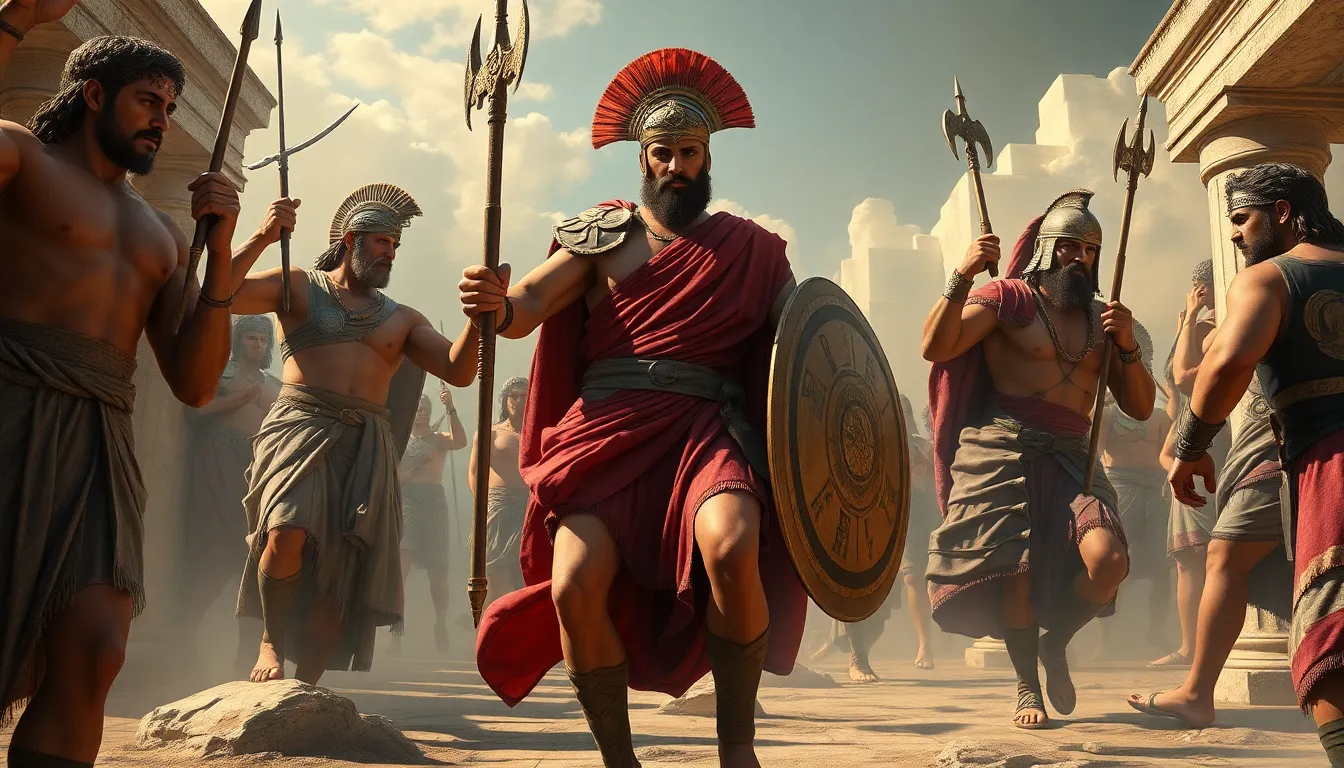
Athens’ Greatest Warriors: A Deep Dive into Heroic Legends
I. Introduction
Ancient Athens was not only a center of philosophy, art, and democracy but also a significant hub of warfare and heroism. The Athenian warriors, steeped in myth and history, played pivotal roles in the defense and expansion of their city-state. Their valor and strategic prowess have echoed through time, shaping not only their own society but also influencing cultures far beyond the borders of Greece.
In Athenian culture, warriors were revered figures, embodying the spirit of the city. They represented ideals such as bravery, honor, and sacrifice, and their stories were woven into the very fabric of Athenian identity. This article aims to explore some of the most legendary figures in Athenian history, delving into their exploits and the profound impact they had on the trajectory of Athens.
II. The Historical Context of Warfare in Ancient Athens
The military structure of ancient Athens was characterized by a unique blend of citizen-soldiers and professional armies. The Athenian hoplite, a heavily armed foot soldier, was a symbol of Athenian military might. Hoplites were typically middle-class citizens who could afford their own armor and weapons, and they played a crucial role in the city’s military endeavors.
Key conflicts that defined Athenian warfare include:
- The Persian Wars: A series of conflicts between the Greek city-states and the Persian Empire, culminating in significant battles such as Marathon and Salamis.
- The Peloponnesian War: A protracted conflict between Athens and Sparta that ultimately led to the downfall of Athenian power.
The concept of citizen-soldiers was central to Athenian democracy, as military service was seen as a civic duty. This involvement of ordinary citizens in military affairs fostered a sense of unity and collective identity among the Athenians, setting the stage for numerous legendary exploits.
III. Theseus: The Mythical Hero of Athens
Among the most celebrated heroes of Athens is Theseus, a figure whose exploits blend myth and history. According to legend, Theseus was born to Aethra and Poseidon, and he grew up to become a symbol of Athenian strength and bravery.
Theseus is renowned for several major feats, including:
- Defeating the Minotaur: Theseus ventured into the labyrinth of Crete, armed with only a ball of thread provided by Ariadne, to slay the fearsome Minotaur, a creature that was half-man, half-bull.
- Unifying Attica: He is credited with the political unification of the region of Attica under Athenian rule, establishing him as a foundational figure in Athenian mythology.
- Rescue of the Youths: Theseus saved Athenian youths from being sacrificed to the Minotaur, showcasing his role as a protector of the city.
The symbolism of Theseus in Athenian identity is profound; he represents the city’s values of courage, intelligence, and civic duty. His legend inspired generations of Athenians to embrace these ideals, solidifying his place as a cultural hero.
IV. Miltiades: The Strategist of Marathon
Another legendary figure in Athenian history is Miltiades, known for his strategic brilliance during the Persian Wars. Born into a noble family, Miltiades had a career that spanned both military and political realms.
Miltiades’ most notable achievement was his leadership during the Battle of Marathon in 490 BCE. Facing a formidable Persian army, he employed innovative tactics that would become a blueprint for future military engagements. Key elements of his strategy included:
- Hoplite Phalanx: Miltiades utilized the hoplite formation to maximize the effectiveness of his heavily armored infantry.
- Surprise Attack: He launched a surprise assault on the Persian forces, catching them off guard and capitalizing on their disorganization.
- Moral Boost: The victory at Marathon served as a rallying point for Athenian pride and unity against a common enemy.
The legacy of Miltiades is evident in the evolution of Athenian military doctrine, as his tactics and strategies influenced subsequent generations of leaders and battles. His victory at Marathon remains a symbol of Athenian resilience and determination.
V. Themistocles: Architect of Athenian Naval Power
Themistocles stands out as one of the most influential figures in Athenian history, particularly for his role in transforming Athens into a naval power. Rising from humble beginnings, he became a prominent politician and general.
His foresight in naval strategy was crucial during the Persian Wars, especially at the Battle of Salamis in 480 BCE. Themistocles advocated for the expansion of the Athenian fleet, recognizing that control of the sea was essential for Athenian dominance. Key aspects of his strategies included:
- Building a Strong Navy: Themistocles pushed for the construction of triremes, fast and agile warships that would give Athens a significant advantage in naval warfare.
- Deception and Strategy: At Salamis, he used clever tactics to lure the larger Persian fleet into a narrow strait, where their numbers became a disadvantage.
- Post-War Influence: His strategies laid the groundwork for Athenian naval supremacy in the following decades, enabling Athens to expand its influence across the Aegean Sea.
Themistocles’ innovations had long-term implications for Athenian dominance in the Mediterranean, marking a shift in military power dynamics that would resonate throughout history.
VI. Pericles: The Statesman and Military Leader
Pericles, often regarded as the epitome of Athenian democracy, was not only a skilled politician but also a military leader during the Golden Age of Athens. His leadership was marked by ambitious building projects and military campaigns that solidified Athens’ power.
Under Pericles, Athens experienced significant military engagements, particularly during the Peloponnesian War. His strategies included:
- Defensive Strategies: Pericles advocated for a defensive approach, focusing on protecting the city and its navy rather than engaging in direct land battles against Sparta.
- Use of Naval Power: He emphasized the importance of the Athenian fleet, using it to conduct raids and supply lines while avoiding direct confrontation on land.
- Civic Pride: Pericles fostered a sense of pride among Athenians, linking military service to civic responsibility, which strengthened public support for his strategies.
The intersection of politics and warfare in Pericles’ leadership exemplifies the complexities of Athenian democracy, where military prowess was crucial for political stability and civic identity.
VII. Lesser-Known Warriors and Their Contributions
While figures like Theseus, Miltiades, Themistocles, and Pericles are often celebrated, many other warriors contributed significantly to Athenian victories and legacy. Here are a few notable, yet lesser-known figures:
- Callimachus: A general who played a key role in the Battle of Marathon, Callimachus’ leadership and bravery were instrumental in the Athenian victory.
- Xanthippus: The father of Pericles, Xanthippus was a prominent general during the Persian Wars, known for his contributions to Athenian military campaigns.
- Chabrias: A skilled Athenian general who innovated naval tactics during the 4th century BCE, contributing to Athens’ maritime strength.
These lesser-known warriors exemplify the collective heroism that was essential to Athenian society. Their contributions, often overshadowed by more famous figures, played a crucial role in shaping the military successes and cultural identity of Athens.
VIII. Conclusion
The warriors of Athens, from the legendary hero Theseus to the strategic minds of Miltiades and Themistocles, have left an indelible mark on the annals of history. Their exploits not only shaped the