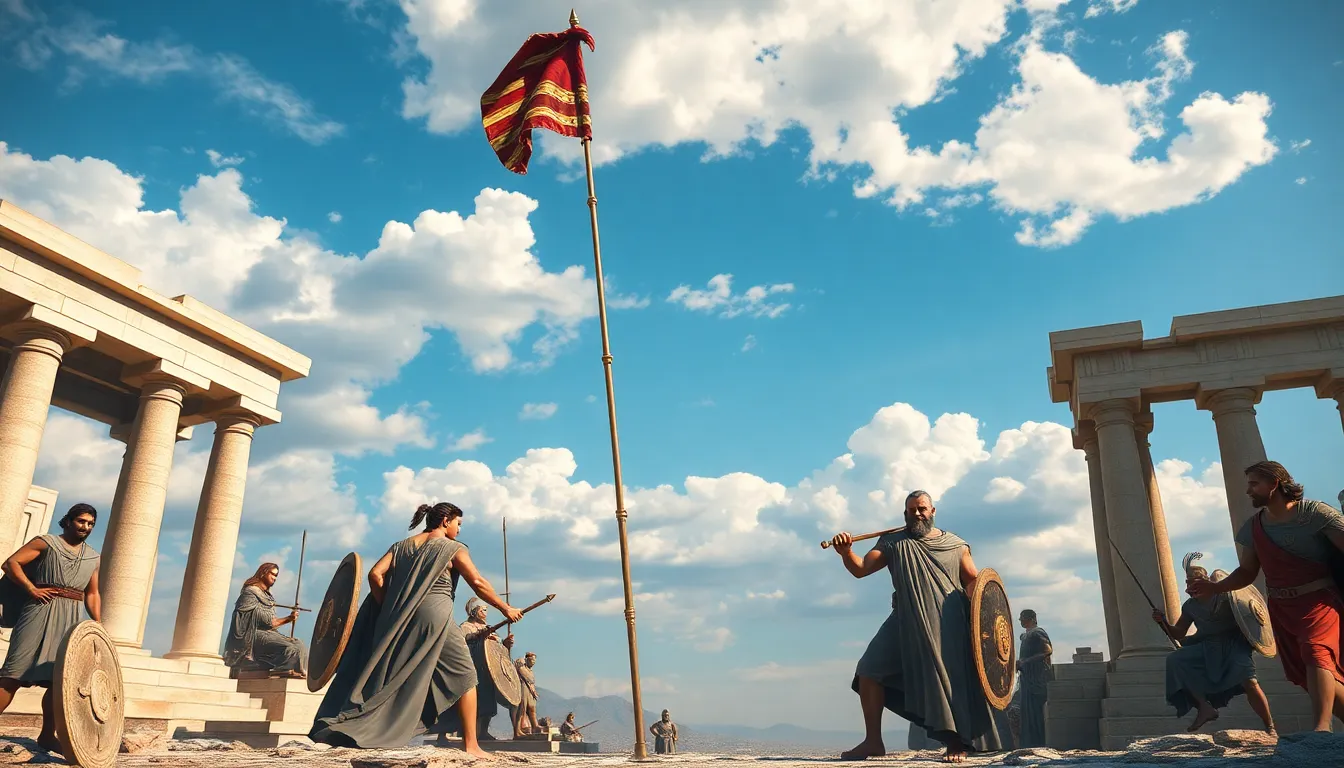
The Heroes of the Trojan War: Athens’ Unseen Champions
I. Introduction
The Trojan War stands as one of the most significant events in Greek mythology, capturing the imaginations of countless generations through epic tales of heroism, love, and tragedy. It is a legendary conflict that pitted the combined forces of Greece against the city of Troy, resulting in monumental battles and the eventual fall of a great city. While figures such as Achilles, Hector, and Agamemnon often take center stage in these narratives, many of the heroes from Athens remain in the shadows of history.
This article aims to shed light on the often-overlooked Athenian champions of the Trojan War, exploring their contributions and the impact they had on the war’s outcome. By recognizing these unsung heroes, we gain a fuller understanding of the complexities of this legendary conflict.
II. Historical Context of the Trojan War
To appreciate the role of Athenian heroes in the Trojan War, it is essential to grasp the historical context leading to the war.
A. Brief summary of the events leading to the war
The Trojan War was sparked by the abduction of Helen, the wife of Menelaus, King of Sparta, by Paris, a prince of Troy. This act of treachery ignited a coalition of Greek states, led by Agamemnon, to launch an expedition against Troy. The war, which lasted for ten years, is framed within the epic poems of Homer, particularly the “Iliad.”
B. Key figures and their roles in the conflict
- Agamemnon: King of Mycenae and leader of the Greek forces.
- Achilles: The greatest warrior of the Greeks, known for his rage and prowess.
- Hector: The noble defender of Troy and prince of the city.
- Odysseus: Known for his cunning, he played a crucial role in devising the strategy that led to Troy’s downfall.
C. The importance of Athens in the Greek coalition against Troy
Athens, though often overshadowed by its more famous allies, was a significant contributor to the Greek coalition. Known for its naval power and strategic acumen, Athens provided essential resources and warriors in the fight against Troy.
III. The Athenian Contribution to the War Effort
The contributions of Athens to the Trojan War were multifaceted, encompassing military, political, and strategic dimensions.
A. Overview of Athens’ military and political role
Athens was not just a city-state; it was a burgeoning center of culture and power. Its military might was particularly evident in naval warfare, where it excelled and provided critical support to the Greek fleet during the siege of Troy.
B. Description of the Athenian strategy and alliances
Athens formed key alliances with other city-states, leveraging its resources to maintain a strong position in the coalition. The Athenian strategy often involved a combination of direct assaults and the use of its naval superiority to cut off supplies to Troy.
C. Examining the naval power of Athens during the war
The Athenian navy was crucial for transporting troops and supplies. Its ships, known as triremes, were instrumental in blockading Troy and ensuring that the Greek forces could maintain a steady supply line throughout the protracted conflict.
IV. Prominent Athenian Heroes
Among the ranks of Athenian warriors, several figures stood out due to their valor and leadership during the Trojan War.
A. Overview of key Athenian figures
While many Athenian heroes were lesser-known than their counterparts from other city-states, they still played a pivotal role in the war. Two prominent figures include:
- Theseus: A legendary hero of Athens, known for his strength and intelligence.
- Menestheus: The Athenian commander who led the city’s forces into battle.
B. The story of Theseus and his legacy
Theseus is often celebrated for his numerous adventures, including the slaying of the Minotaur. However, his legacy extends to the Trojan War, where he was believed to have participated in the conflict. His leadership and bravery inspired many Athenian warriors who followed in his footsteps.
C. The role of Menestheus as a leader in the conflict
Menestheus was the king of Athens during the Trojan War and played a vital role in leading the Athenian forces. His strategic mind and combat skills made him a respected figure among the Greek leaders. His contributions helped secure significant victories for the Athenian contingent.
V. Lesser-Known Athenian Warriors
In addition to the prominent heroes, several lesser-known Athenian warriors made remarkable contributions to the Trojan War.
A. Profiles of unsung heroes like Philoctetes and Iphicles
These warriors often had pivotal roles that were overshadowed by more famous heroes:
- Philoctetes: A skilled archer who was abandoned on the island of Lemnos due to a festering wound. His return to the war was crucial as he possessed the bow of Heracles, which was necessary for the Greek victory.
- Iphicles: Brother of Heracles, Iphicles fought valiantly for the Athenian cause, showcasing the bravery and resilience that characterized Athenian warriors.
B. Contributions of Athenian archers and infantry
Athenian archers and infantry were integral to the battle formations during the siege of Troy. Their skills in ranged combat allowed them to engage the Trojans effectively while minimizing their own casualties.
C. The impact of these warriors on the overall outcome of the war
The collective efforts of these lesser-known Athenian heroes significantly influenced the war’s outcome. Their bravery and sacrifices ensured that Athens held its ground against the formidable forces of Troy.
VI. The Role of Athena in the Trojan War
No discussion of Athenian heroes in the Trojan War would be complete without mentioning Athena, the goddess of wisdom and warfare.
A. Examination of Athena’s influence and support for Athenian heroes
Athena was a staunch supporter of the Athenian forces, often providing guidance and assistance in battle. Her divine favor was believed to be a significant advantage for Athenian warriors.
B. The symbolism of Athena’s wisdom and strategy in battle
Athena symbolizes not only strength but also wisdom and strategy, qualities that were essential for Athenian heroes. Her presence in the battlefield often inspired confidence and tactical innovation.
C. How divine intervention shaped the course of the war
Athena’s interventions were sometimes direct, influencing the outcomes of battles and the decisions of key figures. Her support for Odysseus, in particular, played a crucial role in the Greeks’ eventual victory.
VII. The Aftermath: Legacy of Athenian Heroes
The contributions of Athenian heroes to the Trojan War have left a lasting legacy in Athenian culture and mythology.
A. How the contributions of these heroes were remembered in Athenian culture
In the aftermath of the war, the tales of Athenian heroes were immortalized through literature, art, and oral traditions. Their exploits were celebrated in festivals and public ceremonies, reinforcing their importance in Athenian society.
B. The impact on Athenian identity and mythology
The stories of these heroes contributed to the Athenian identity, emphasizing values such as bravery, loyalty, and intelligence. They became symbols of Athenian pride and resilience.
C. The lessons learned from their stories in modern contexts
The narratives of Athenian heroes continue to resonate today, offering lessons about courage, sacrifice, and the importance of community in the face of adversity. Their stories encourage modern audiences to reflect on the values that define heroism.
VIII. Conclusion
In conclusion, recognizing the contributions of Athenian heroes in the Trojan War is essential for a comprehensive understanding of this legendary conflict. These unsung champions played crucial roles, often overshadowed by their more famous counterparts.
By reflecting on their stories, we gain insights into