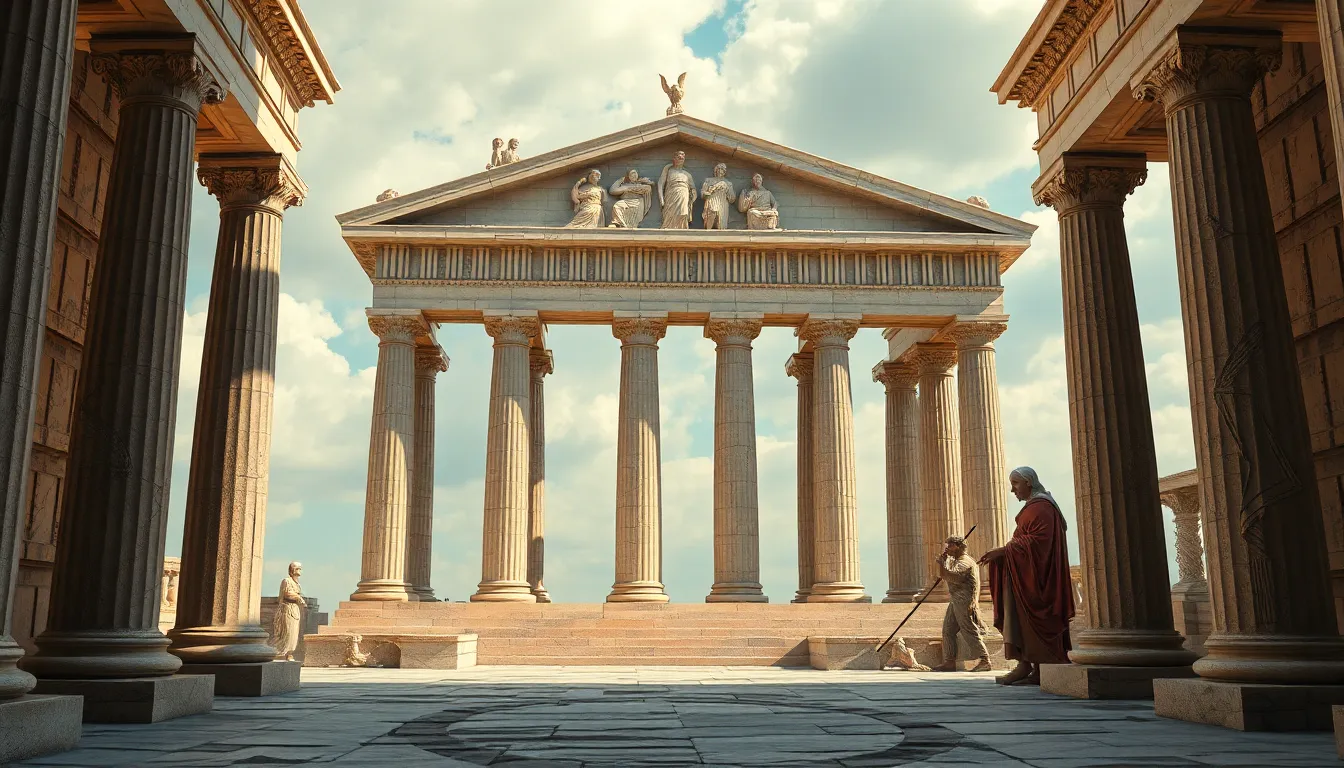
Athens and Its Heroes: The Impact of Myth on Ancient Culture
I. Introduction
Athens, known as the cradle of democracy and a beacon of cultural achievement, served as a pivotal hub in ancient Greece. The city was not only a center for political thought and philosophy but also a fertile ground for the development of rich mythological narratives that shaped the identity of its citizens. Myths played a crucial role in Athenian society, serving as a lens through which the values, beliefs, and traditions of the people were expressed and understood.
In this article, we will explore the profound influence of mythological heroes on Athenian society, examining how these narratives contributed to the civic identity and moral framework of the city. Through the lens of prominent figures such as Theseus and Athena, we will delve into the ways in which myth informed Athenian culture, education, and artistic expression.
II. The Role of Myth in Ancient Greek Society
Myth, in its essence, refers to traditional stories that convey fundamental truths about the world, human nature, and the divine. In ancient Greece, myths served several vital functions:
- Explanatory: Myths provided explanations for natural phenomena and human experiences.
- Religious: They were integral to worship practices and rituals, connecting the community with the divine.
- Cultural: Myths reflected and reinforced cultural values and social norms.
The relationship between myth and religion was particularly pronounced in Athens, where daily life was intertwined with the veneration of gods and heroes. Myths were not merely stories; they were part of the fabric of Athenian life, influencing everything from politics to personal conduct.
Moreover, mythology played a crucial role in education and moral instruction. Young Athenians learned about virtues such as bravery, loyalty, and wisdom through the tales of their heroes, which served as moral exemplars.
III. Prominent Mythological Heroes of Athens
A. Theseus: The Founding Hero of Athens
Among the most celebrated heroes of Athenian mythology is Theseus, a figure synonymous with the city’s founding and unification. His legendary deeds, which include the slaying of the Minotaur and the unification of Attica, symbolize the values of courage and civic pride.
Theseus’s journey to Crete to confront the Minotaur is not just a tale of adventure; it embodies the struggle against chaos and tyranny, positioning him as a symbol of order and civilization. His efforts to unite the various city-states of Attica reflect the ideals of democracy and collective identity that were emerging in Athens.
B. Athena: The Goddess of Wisdom and Protector of the City
Athena, the goddess of wisdom, warfare, and craftsmanship, held a central place in Athenian mythology and culture. As the city’s patron deity, she embodied the intellectual and strategic virtues that Athenians valued. The Parthenon, a magnificent temple dedicated to her, stands as a testament to her significance and the artistic achievements of the city.
The Parthenon not only served as a place of worship but also as a symbol of Athenian democracy and power. The intricate sculptures and friezes that adorn the temple depict various mythological scenes, reinforcing the connection between the divine and civic life in Athens.
IV. Myths as Reflections of Athenian Values
The myths of Athens are rich with themes of heroism, bravery, and sacrifice. These narratives conveyed ideals that were crucial to Athenian identity:
- Heroism: Myths celebrated the courage of heroes like Theseus and Hercules, inspiring citizens to aspire to greatness.
- Bravery: Tales of battles and confrontations with monstrous foes emphasized the value of bravery in the face of adversity.
- Sacrifice: Many stories highlighted the importance of personal sacrifice for the greater good of society.
Additionally, Athenian myths conveyed ideals of democracy and civic responsibility. The narrative of Theseus uniting the city-states of Attica served as an allegory for the democratic principles that were being developed in the fifth century BCE, emphasizing the importance of unity and collective action.
Through these mythological narratives, social norms and behaviors were shaped, providing a framework within which Athenians understood their roles in society.
V. Myth and Athenian Art and Literature
The influence of mythology extended into the realms of art and literature, where heroes were immortalized in sculptural and architectural works. The representation of mythological figures in art served both decorative and educational purposes:
- Sculpture: Statues of gods and heroes adorned public spaces, reinforcing civic pride and cultural identity.
- Architecture: Temples and buildings were designed to reflect mythological themes, creating a visual dialogue between the past and the present.
Athenian drama and poetry were also deeply influenced by myth. Playwrights such as Aeschylus, Sophocles, and Euripides drew upon mythological themes to explore complex human emotions and societal issues. Festivals like the Dionysia celebrated these works, intertwining myth with the cultural life of Athens.
VI. The Evolution of Myths Over Time
Myths in Athens were not static; they evolved over time in response to changing societal conditions and historical events. The portrayal of heroes shifted during different periods:
- Classical Period: Heroes were depicted as paragons of virtue, embodying the ideals of democracy and civic duty.
- Hellenistic Period: Myths became more individualistic, focusing on personal struggles and emotional depth.
Historical events, such as wars and political upheavals, also influenced the narratives. The Persian Wars, for instance, prompted a resurgence of heroic narratives that celebrated Athenian resilience and unity.
This adaptability of myths reflects the dynamic nature of Athenian society and its ability to integrate new experiences into its cultural narrative.
VII. The Legacy of Athenian Myths in Western Culture
The legacy of Athenian myths extends far beyond ancient Greece, leaving an indelible mark on Western culture. The heroes of Athens have inspired countless works of literature and art throughout the ages:
- Literature: Writers from the Romans to the Renaissance drew upon Athenian myths, adapting them to new contexts.
- Art: The depiction of mythological themes in painting and sculpture has persisted, influencing artists across various movements.
Modern interpretations of Athenian myths continue to resonate in contemporary society, providing insights into human experience and morality. The enduring relevance of these myths speaks to their power to connect with audiences across time and space.
VIII. Conclusion
In summary, the significance of mythological heroes in shaping Athenian culture cannot be overstated. These narratives provided a framework for understanding civic identity, moral values, and human experience. The stories of Theseus and Athena, among others, highlight the ideals of bravery, unity, and wisdom that were central to Athenian society.
Reflecting on the enduring power of myths, we see their capacity to illuminate the complexities of human existence, offering lessons that remain relevant today. As we preserve and study these narratives, we honor the rich tapestry of Athenian culture and its contributions to our understanding of the human condition.