Theseus vs. The Minotaur: A Hero’s Epic Showdown
I. Introduction
The myth of Theseus and the Minotaur is one of the most fascinating tales within Greek mythology, encapsulating themes of bravery, sacrifice, and the struggle between order and chaos. Theseus, a hero of Athens, embarks on a perilous journey to confront the terrifying Minotaur, a creature that embodies the darkness lurking within human nature. This story not only entertains but also imparts moral lessons that resonate through the ages.
This article aims to delve into the origins of the Minotaur, explore the character of Theseus, and analyze the significance of their epic confrontation. Through this exploration, we will uncover the deeper themes and cultural importance of this legendary narrative.
II. The Origins of the Minotaur
The tale of the Minotaur begins with King Minos of Crete, who was known for his power and wealth. After receiving a magnificent white bull from Poseidon as a sign of his kingship, Minos failed to sacrifice the bull, which led to Poseidon’s wrath. In retaliation, Poseidon cursed Minos’s wife, Pasiphaë, causing her to fall in love with the bull.
As a result of this unnatural union, Pasiphaë gave birth to the Minotaur, a monstrous creature with the body of a man and the head of a bull. To contain this fearsome being, King Minos commissioned the architect Daedalus to build an intricate labyrinth, a complex maze designed to trap the Minotaur and prevent it from terrorizing the kingdom.
A. The story of King Minos and the birth of the Minotaur
King Minos’s inability to fulfill his obligation to Poseidon led to a series of tragic events:
- Minos’s pride prevented him from sacrificing the bull, leading to divine punishment.
- Pasiphaë’s love for the bull resulted in the birth of the Minotaur.
- The creation of the labyrinth demonstrated Minos’s desire to control chaos.
B. The role of Pasiphaë and the curse from Poseidon
Pasiphaë’s curse is a pivotal point in the myth, illustrating the consequences of defying the gods. Her tragic love for the bull not only highlights the theme of uncontrollable desire but also sets the stage for the Minotaur’s existence as a creature of despair and horror.
C. The labyrinth: Design and purpose in trapping the beast
The labyrinth, a marvel of engineering, symbolizes the complexity of human emotions and the struggle to contain chaos. Its winding paths and hidden chambers serve to reflect the inner turmoil of characters like Theseus and the Minotaur.
III. The Hero: Theseus
Theseus, the protagonist of this myth, embodies the archetype of the hero in Greek mythology. His journey is marked by bravery, intelligence, and moral integrity, qualities that set him apart as a champion of the people.
A. Background of Theseus: Birth and early adventures
Born to Aegeus, the king of Athens, and Aethra, Theseus was raised in a time of peril for his city. From a young age, he demonstrated remarkable strength and courage, undertaking various feats such as:
- Defeating bandits who terrorized travelers on the roads.
- Slaying the monstrous club-wielding giant, Periphetes.
- Confronting the fierce robber, Sinis, by bending trees and launching him to his death.
B. Theseus’s motivations for confronting the Minotaur
Theseus’s motivations are deeply rooted in his desire to protect his homeland. The tribute imposed by King Minos, which demanded young Athenians be sent to Crete as sacrifices to the Minotaur, ignited a fierce determination in Theseus. He recognized the need to confront this terror and free his people from oppression.
C. Traits that define Theseus as a hero
Theseus is characterized by several heroic traits:
- Courage: He willingly volunteered to face the Minotaur, demonstrating immense bravery.
- Intelligence: Theseus exhibits strategic thinking, particularly in navigating the labyrinth.
- Compassion: His commitment to saving others reflects his deep sense of justice.
IV. The Call to Adventure
The call to adventure is a crucial element in the hero’s journey, and for Theseus, it comes in the form of a tragic tribute. Faced with the grim reality of Athens’ sacrifices to the Minotaur, he steps forward to volunteer as one of the tributes.
A. The tribute to Crete: Athens’ sacrifice of young men and women
Each year, King Minos demanded a tribute of seven young men and seven young women from Athens, sending them to their doom in the labyrinth. This practice not only instilled fear in the hearts of the Athenians but also highlighted the brutality of Minos’s reign.
B. Theseus’s decision to volunteer as a tribute
Choosing to confront this injustice, Theseus’s decision to volunteer represents a turning point in his life. It signifies his readiness to embrace his destiny as a hero and challenge the oppressive forces threatening his city.
C. The significance of courage and sacrifice in the hero’s journey
Theseus’s willingness to sacrifice his safety for the greater good showcases the archetypal hero’s journey. His courage not only inspires his fellow Athenians but also reinforces the values of heroism in Greek culture.
V. The Labyrinth: Challenges and Strategies
The labyrinth itself is a formidable challenge, representing the complexity of the hero’s journey. Its design is meant to confuse and ensnare, serving as a metaphor for the internal struggles faced by Theseus.
A. Description of the labyrinth and its complexities
Constructed by Daedalus, the labyrinth was an elaborate maze featuring:
- Twisting paths that led nowhere.
- Dead ends that disoriented those who entered.
- Hidden chambers where the Minotaur lurked, waiting to strike.
B. The role of Ariadne: Love, guidance, and the thread
Ariadne, the daughter of King Minos, plays a pivotal role in Theseus’s quest. Stricken by love for the hero, she provides him with a ball of thread, a symbol of hope and guidance. This thread allows Theseus to navigate the labyrinth and find his way back after slaying the Minotaur.
C. The mental and physical challenges faced by Theseus
Theseus faces not only the physical challenges of the labyrinth but also the psychological toll of confronting his fears and the darkness represented by the Minotaur. His journey through the maze reflects the inner battles that define the human experience.
VI. The Epic Showdown
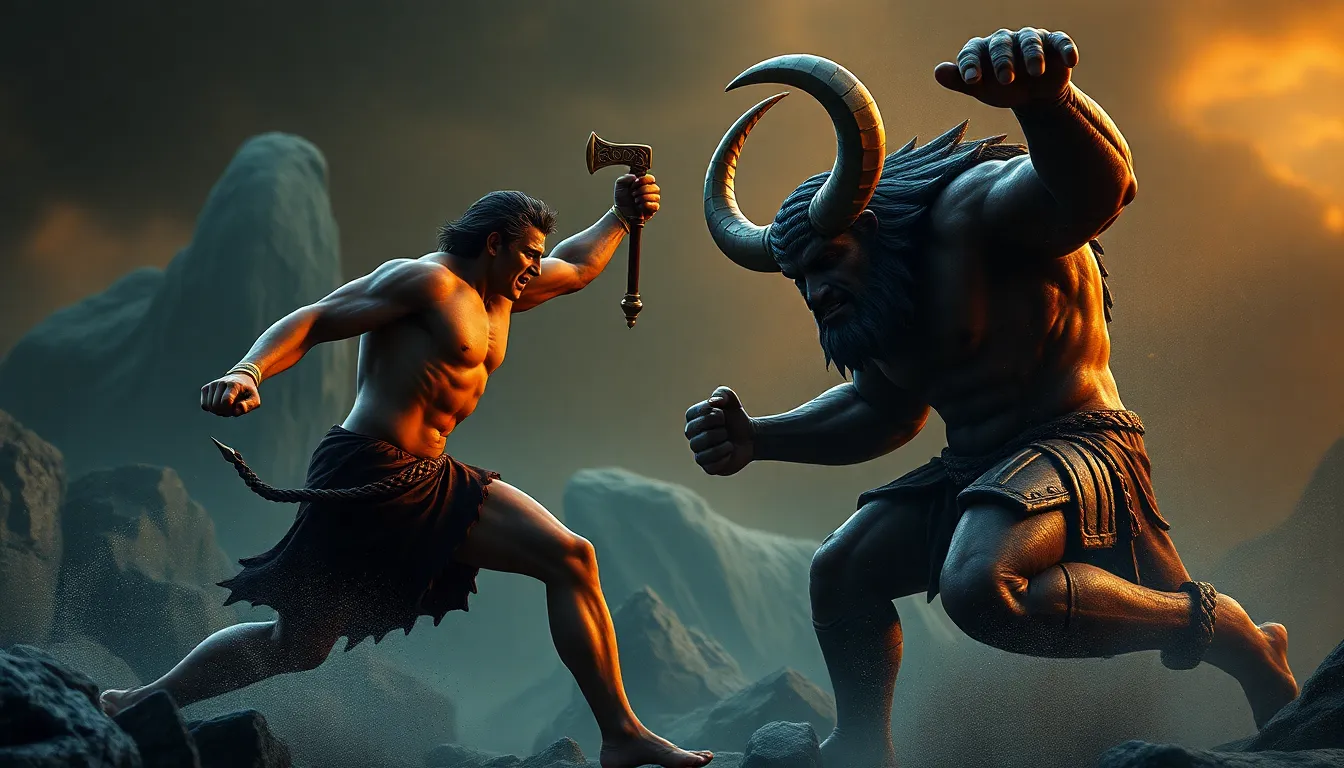
The climax of the myth occurs within the depths of the labyrinth, where Theseus finally confronts the Minotaur. This showdown is not just a battle of strength but a profound manifestation of the struggle between order and chaos.
A. The encounter between Theseus and the Minotaur
As Theseus navigates the labyrinth, he encounters the Minotaur, whose ferocious nature embodies the primal chaos of the world. This encounter is marked by tension and anticipation, as the hero prepares to face his greatest foe.
B. The battle: Techniques and tactics used by Theseus
Utilizing both strength and strategy, Theseus engages the Minotaur in a fierce battle. Key tactics include:
- Using the element of surprise to gain the upper hand.
- Employing his agility and speed to evade the Minotaur’s powerful charges.
- Relying on his intelligence to exploit the creature’s weaknesses.
C. The symbolism of the fight: Confronting inner demons and chaos
The fight against the Minotaur symbolizes the hero’s confrontation with inner demons and the chaos within society. As Theseus battles the beast, he also grapples with the darker aspects of human nature, showcasing the struggle for personal and societal order.