Cerberus and the Concept of Sacrifice in Greek Myths
I. Introduction
Cerberus, the formidable three-headed dog, is a well-known figure in Greek mythology. As the guardian of the Underworld, he symbolizes the boundary between life and death, embodying the concept of sacrifice in various ways. In ancient Greek culture, sacrifice was a crucial aspect of religious practices, serving to appease the gods and maintain cosmic order. This article aims to explore Cerberus as a symbol of sacrifice, delving into his mythological significance and the broader implications of sacrifice within Greek mythology.
II. Cerberus: The Three-Headed Guardian of the Underworld
A. Description of Cerberus and his role in myth
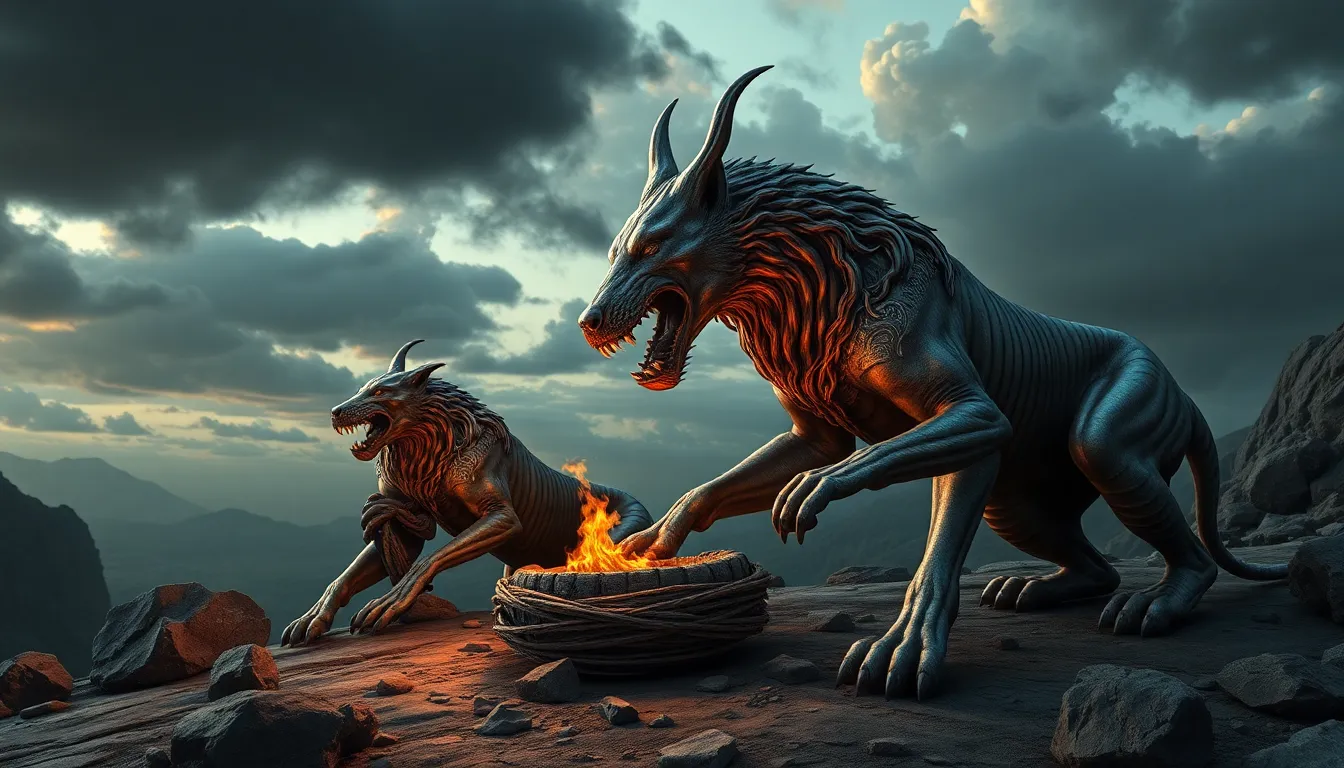
Cerberus is often depicted as a monstrous creature with three ferocious heads, a serpent for a tail, and multiple dog-like features. His primary role is to guard the gates of Hades, ensuring that the dead do not escape and the living do not enter without permission. Each head has its own personality, representing different aspects of the underworld and the souls that reside there.
B. Origins and parentage of Cerberus in mythology
Cerberus is the offspring of the monstrous Echidna and Typhon, making him part of a lineage of fearsome creatures in Greek mythology. His parentage signifies his connection to chaos and the underworld, further enhancing his role as a guardian of the dead.
C. Cerberus’s duties as the gatekeeper of Hades
As the gatekeeper of Hades, Cerberus has several important duties:
- Preventing the escape of souls from the Underworld.
- Ensuring that the living do not enter without proper rituals or permission.
- Maintaining the balance between life and death.
III. The Nature of Sacrifice in Greek Myths
A. Definition of sacrifice in the context of Greek culture
In ancient Greece, sacrifice was a central component of religious life, often involving offerings to the gods to seek favor or forgiveness. Sacrifices could be made in various forms, ranging from simple offerings of fruits and grains to more elaborate rituals involving animals or even humans.
B. Types of sacrifices: animal, human, and symbolic
There are several types of sacrifices found in Greek mythology:
- Animal Sacrifices: Typically involved the slaughter of animals, such as goats or sheep, during religious ceremonies.
- Human Sacrifices: Although less common, instances of human sacrifice appear in myths, often as a last resort to appease angry gods.
- Symbolic Sacrifices: These included offerings of fruits, flowers, and other items considered valuable or meaningful.
C. The importance of sacrifice in appeasing deities and ensuring balance
Sacrifice was essential for maintaining a harmonious relationship with the gods. It was believed that offering something of value would ensure the gods’ favor, helping to secure prosperity, health, and safety for individuals and the community as a whole.
IV. Cerberus as a Symbol of Sacrifice
A. The duality of Cerberus as both protector and punisher
Cerberus embodies a duality in his nature. As a protector, he safeguards the underworld and the souls within it, but he also serves as a punisher for those who dare to defy the natural order of life and death. This duality reflects the complex nature of sacrifice, where acts of devotion can lead to both salvation and suffering.
B. Cerberus in the context of sacrifice—what does he represent?
Cerberus represents the sacrifices that must be made when confronting death, fear, and the unknown. He serves as a reminder that to cross the threshold between life and death, individuals must face their fears and make sacrifices, whether they be emotional, physical, or spiritual.
C. Cerberus’s role in various myths involving sacrifice
In many myths, Cerberus is central to the theme of sacrifice, where characters must confront him to achieve their goals or save loved ones. His presence often signifies a critical juncture where sacrifice is necessary for redemption or knowledge.
V. Key Myths Featuring Cerberus and Sacrifice
A. The Twelve Labors of Heracles: capturing Cerberus
One of the most famous stories involving Cerberus is the twelfth labor of Heracles (Hercules). To complete this task, Heracles must descend into the Underworld and capture Cerberus without using weapons. This myth encapsulates the theme of sacrifice as Heracles must confront his fears and the realm of the dead to ultimately gain redemption and prove his worth.
B. Orpheus and Eurydice: the sacrifice of love and loss
In the tale of Orpheus and Eurydice, Orpheus descends to the Underworld to retrieve his beloved wife, Eurydice. He must charm Cerberus with his music to gain passage. The story highlights the sacrifices made for love, as Orpheus risks everything to confront death, only to lose Eurydice again due to his inability to trust the conditions imposed by Hades.
C. Other notable stories involving Cerberus and themes of sacrifice
Other myths, such as the story of Psyche and her trials, also involve Cerberus and the concept of sacrifice. Psyche’s challenges often test her devotion and willingness to sacrifice for love, paralleling the trials faced by those who encounter Cerberus.
VI. The Psychological and Cultural Implications of Cerberus
A. Cerberus as a reflection of humanity’s fears and desires
Cerberus serves as a powerful symbol of humanity’s fears of death and the unknown. He embodies the darker aspects of human nature, prompting individuals to confront these fears through the lens of sacrifice and heroism.
B. The relationship between sacrifice and redemption in mythology
The theme of sacrifice is closely intertwined with the idea of redemption in Greek myths. Characters who confront Cerberus or the Underworld often emerge transformed, having made sacrifices that lead to personal growth and understanding.
C. Cerberus’s continuing influence in literature and popular culture
Cerberus has left a lasting legacy, influencing various forms of literature, art, and popular culture. His image continues to symbolize the struggle between life and death, as well as the sacrifices made in the pursuit of love and redemption.
VII. Comparative Analysis: Cerberus and Other Mythical Creatures
A. Similarities with other guardians (e.g., Fenrir in Norse mythology)
Similar to Cerberus, Fenrir in Norse mythology serves as a guardian figure, representing chaos and destruction. Both creatures embody the tension between order and disorder, highlighting the theme of sacrifice in their respective mythologies.
B. The role of sacrifice in other mythologies (e.g., Egyptian, Mesopotamian)
Other cultures also depict sacrifice as a means to appease deities. In Egyptian mythology, the weighing of the heart against a feather symbolizes the sacrifices made in life to achieve a favorable afterlife, paralleling the sacrifices associated with Cerberus.
C. The universal themes of sacrifice and guardianship
Across various mythologies, the themes of sacrifice and guardianship persist, reflecting humanity’s ongoing struggles with mortality, morality, and the quest for meaning. Cerberus stands as a potent symbol within this broader context.
VIII. Conclusion
Cerberus’s significance in Greek mythology extends beyond his role as a guardian of the Underworld; he embodies the complex interplay between sacrifice, fear, and redemption. The concept of sacrifice remains deeply embedded in the fabric of mythology, serving as a crucial element in understanding the human experience. As we reflect on the stories of Cerberus and the sacrifices made by various characters, we recognize the enduring legacy of these themes in our own lives and cultures.