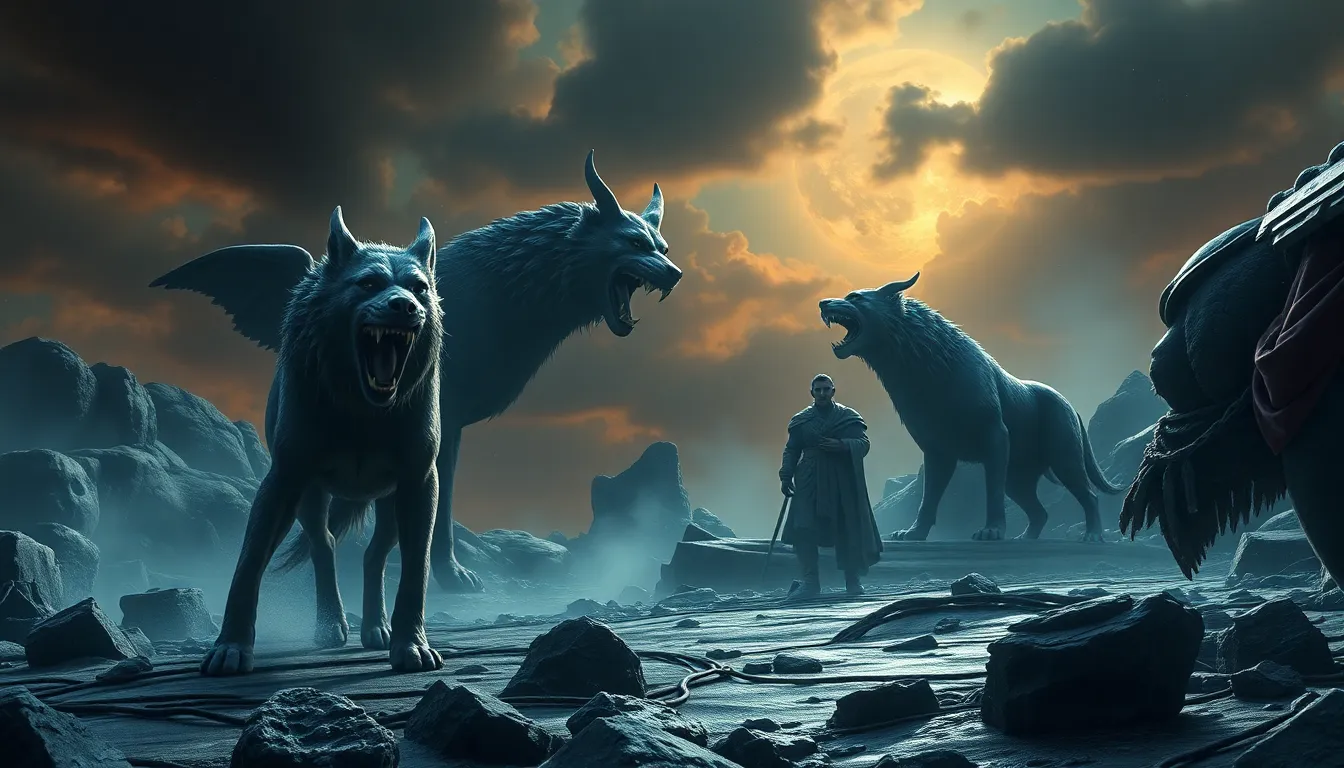
Cerberus and the Heroes: Encounters with the Guardian of the Underworld
I. Introduction
Cerberus, the fearsome three-headed dog of Greek mythology, serves as one of the most recognizable figures associated with the Underworld. As the guardian of Hades, Cerberus plays a crucial role in maintaining the boundaries between the mortal world and the realm of the dead. This article will explore the encounters of various heroes with Cerberus, delving into the significance of these interactions and the lessons they impart.
II. The Mythological Background of Cerberus
A. Description and characteristics of Cerberus
Cerberus is typically depicted as a monstrous creature with three heads, a serpent for a tail, and snakes protruding from his body. Each head represents different aspects of his nature: one symbolizes ferocity, another vigilance, and the third embodies the inevitability of death.
B. Origins and family lineage
Cerberus is the offspring of the monstrous Echidna and Typhon, making him a sibling to other notable mythological beasts, such as the Hydra and the Chimera. His lineage connects him to some of the most fearsome creatures in Greek mythology, emphasizing his role as a powerful guardian.
C. Cerberus’s role in the Underworld
As the guardian of the Underworld, Cerberus ensures that the dead do not escape and that the living do not enter without permission. He is known for his loyalty to Hades, the ruler of the Underworld, and plays an essential role in maintaining the order of the afterlife.
III. The Significance of Cerberus in Ancient Greek Culture
A. Symbolism of Cerberus in mythology
Cerberus embodies the duality of fear and protection. He represents the fear of death and the unknown, while simultaneously serving as a protector of the sacred realm of the dead. This complex symbolism makes him a compelling figure in Greek mythology.
B. Cerberus in art and literature
Cerberus has been depicted in various forms of ancient art, including pottery, sculpture, and literature. He appears in works such as Homer’s “The Iliad,” where his presence underscores the gravity of the Underworld and the fate that awaits all mortals.
C. Cerberus as a representation of fear and protection
- Fear: Cerberus evokes a sense of dread associated with death and the afterlife.
- Protection: His role as a guardian signifies the need to protect sacred spaces from the living.
IV. Famous Heroes and Their Encounters with Cerberus
A. Heracles (Hercules) and the Twelve Labors
1. Overview of the labor involving Cerberus
One of Heracles’ Twelve Labors was to capture Cerberus and bring him to the surface world. This task was particularly daunting, as it required Heracles to confront not only the beast itself but also the challenges of the Underworld.
2. Heracles’ tactics and outcomes
Heracles approached Cerberus with courage and cleverness. He used his immense strength to subdue the creature without using weapons, demonstrating his heroism. After capturing Cerberus, he brought him to the surface, showcasing his triumph over death and fear.
B. Orpheus and the Descent to the Underworld
1. The journey to retrieve Eurydice
Orpheus, the legendary musician, descended into the Underworld to retrieve his beloved wife, Eurydice. His music had the power to charm even the most fearsome of creatures, including Cerberus.
2. Orpheus’s interaction with Cerberus
Upon encountering Cerberus, Orpheus played a soulful melody that lulled the beast into a calm state, allowing him to pass unharmed. This interaction highlights the power of art and love in overcoming obstacles.
C. Aeneas and the Underworld Journey
1. Virgil’s portrayal of Aeneas’s encounter
In Virgil’s “Aeneid,” Aeneas descends into the Underworld to seek guidance from the spirit of his father. He confronts Cerberus, who is described as a fearsome yet tragic figure.
2. Significance of Cerberus in the Aeneid
Cerberus’s role in the “Aeneid” symbolizes the challenges of facing one’s fears and the inevitability of death. Aeneas’s encounter with Cerberus reinforces the theme of destiny and the hero’s journey.
V. Themes and Lessons from Encounters with Cerberus
A. The nature of fear and bravery
Encounters with Cerberus illustrate the complex relationship between fear and bravery. Heroes like Heracles and Orpheus demonstrate that confronting one’s fears can lead to personal growth and transformation.
B. The concept of death and the afterlife
Cerberus serves as a reminder of the inevitability of death. The heroes’ interactions with him encourage reflection on mortality and the afterlife, urging individuals to embrace life while acknowledging its transient nature.
C. The testing of heroism and character
Each hero’s encounter with Cerberus serves as a test of their character. Whether through strength, cunning, or artistry, these heroes reveal the multifaceted nature of heroism in the face of daunting challenges.
VI. Cerberus in Modern Popular Culture
A. Depictions of Cerberus in literature and film
Cerberus continues to captivate modern audiences, appearing in various adaptations of Greek mythology. From films like “Clash of the Titans” to novels such as Rick Riordan’s “Percy Jackson” series, Cerberus remains a prominent figure.
B. Cerberus in video games and gaming culture
In the realm of gaming, Cerberus has been featured in numerous titles, including “God of War” and “Hades,” where players encounter the legendary beast in various forms, often as a formidable opponent.
C. The enduring legacy of Cerberus in contemporary storytelling
The legacy of Cerberus endures in contemporary storytelling, symbolizing the eternal struggle between life and death, fear and bravery. His character continues to inspire new interpretations and adaptations across various media.
VII. Interpretations and Adaptations of Cerberus
A. Various interpretations in different cultures
Cerberus has inspired interpretations in various cultures, often serving as a symbol of the boundary between life and death. Similar creatures appear in different mythologies, reflecting humanity’s fascination with the afterlife.
B. Adaptation of Cerberus in modern media
Modern adaptations explore Cerberus’s character through various lenses, portraying him as both a villain and a tragic figure. These reinterpretations encourage audiences to consider the complexity of his role as a guardian.
C. The relevance of Cerberus in today’s narratives
In today’s narratives, Cerberus represents not only fear but also the importance of facing one’s inner demons. His presence serves as a reminder of the challenges that come with life, death, and the journey of self-discovery.
VIII. Conclusion
Cerberus stands as a powerful symbol in Greek mythology, representing the intricate relationship between heroes and their fears. Through the encounters of notable figures like Heracles, Orpheus, and Aeneas, we learn valuable lessons about bravery, mortality, and the nature of heroism. The enduring fascination with Cerberus reflects humanity’s timeless struggle with fear and the unknown, reminding us of the universal themes that continue to resonate across cultures and generations.
https://www.youtube.com/watch?v=nDH014CJ1-I