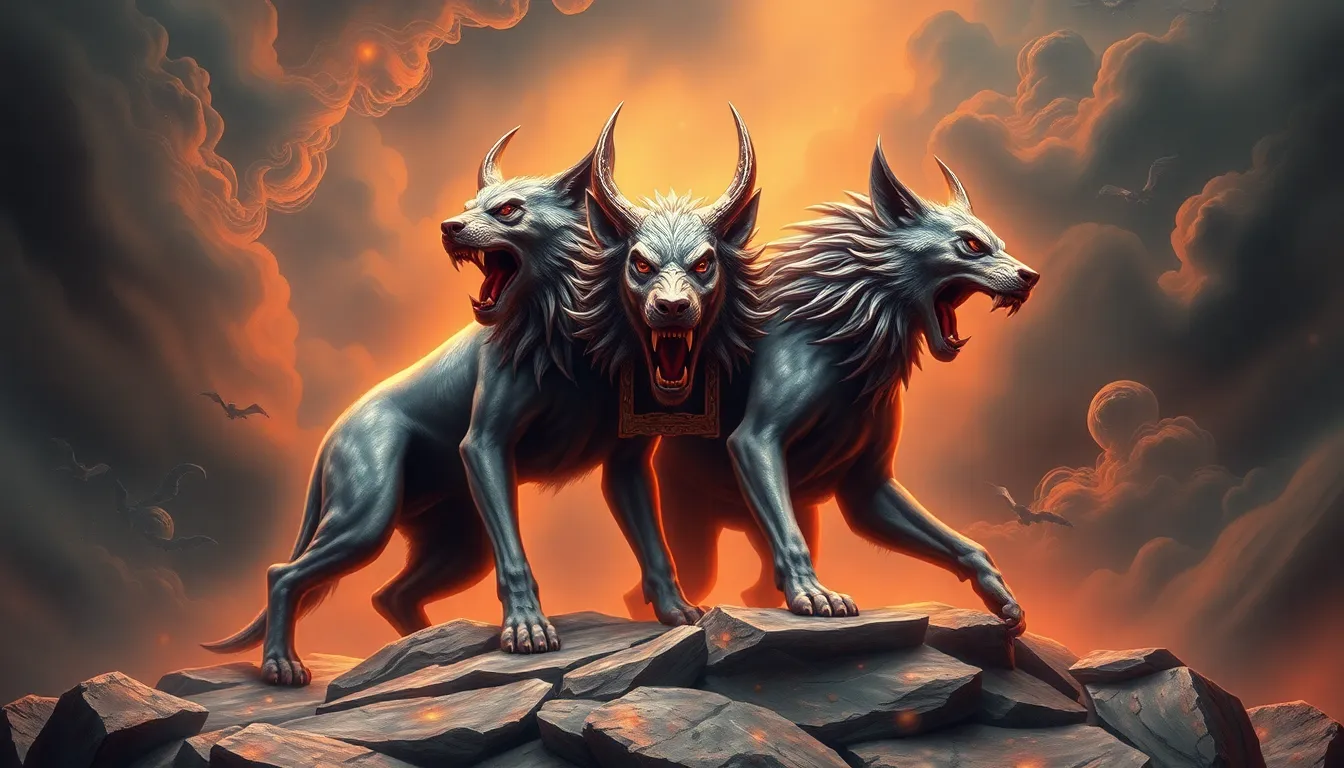
Cerberus and the Intersection of Myth and Morality
I. Introduction
Cerberus, the formidable three-headed dog of Greek mythology, serves as one of the most enduring symbols of the ancient world. A creature of awe and terror, Cerberus stands guard at the gates of the Underworld, preventing the escape of souls and ensuring that the living do not intrude upon the realm of the dead. This article delves into the myth of Cerberus, examining how this creature encapsulates complex themes of morality and guardianship.
Exploring the intersection of myth and morality allows us to understand the deeper implications of ancient narratives. Myths often encapsulate moral lessons, reflecting societal values and human nature. Through the lens of Cerberus, we can glean insights into the ethical frameworks that governed ancient Greek society.
The purpose of this article is to explore Cerberus’s role in mythology and morality, examining how this legendary creature serves as a guardian, a symbol of boundaries, and a reflection of human nature.
II. The Myth of Cerberus
A. Origins and depiction in ancient texts
The origins of Cerberus can be traced back to ancient Greek literature, with references found in works such as Hesiod’s “Theogony” and Virgil’s “Aeneid.” Described as a monstrous dog with three heads, Cerberus is often depicted with a serpent for a tail and snakes protruding from his back, emphasizing his fearsome nature.
B. Cerberus as the guardian of the Underworld
Cerberus’s primary role is that of the guardian of the Underworld, a position of immense significance in Greek mythology. He is tasked with ensuring that the dead remain in the realm of Hades, preventing any souls from escaping back to the living world. This duty reflects a broader theme within mythology: the importance of boundaries between life and death.
C. Symbolism of the three-headed dog
The three heads of Cerberus symbolize various aspects of existence and morality:
- Past: One head represents the past, embodying memories and experiences that shape individual identity.
- Present: The second head signifies the present moment, emphasizing the importance of living in the now.
- Future: The third head looks toward the future, representing potential and the unknown.
III. Cerberus in Cultural Context
A. Cerberus in ancient Greek society and beliefs
In ancient Greece, Cerberus was more than just a mythical beast; he embodied the cultural beliefs surrounding death, the afterlife, and the moral order of the universe. The Greeks viewed death as a natural part of life, and Cerberus’s role as a guardian signified the respect afforded to the dead.
B. Representation in art and literature
Cerberus has been depicted in various forms of art, from ancient pottery to Renaissance paintings. Artists often portrayed him alongside figures such as Hercules, who famously captured Cerberus as one of his Twelve Labors. These representations highlight Cerberus’s dual nature as both a beast to be feared and a creature to be respected.
C. Evolution of Cerberus in modern interpretations
In modern times, Cerberus has evolved into a symbol that transcends its mythological origins. From literature to film, the character of Cerberus has been adapted to fit various narratives, often embodying themes of loyalty, protection, and the darker aspects of human nature.
IV. Morality and the Role of Guardianship
A. Cerberus as a moral guardian of the Underworld
Cerberus’s role as a guardian emphasizes the moral implications of boundaries. He serves as the gatekeeper who enforces the separation between the living and the dead, a crucial moral order that maintains the balance of the universe.
B. The concept of boundaries and protection in mythology
Mythology often explores the concept of boundaries—both physical and moral. Cerberus’s presence at the gates of the Underworld symbolizes the need for protection and the enforcement of limits, reflecting society’s understanding of right and wrong.
C. Ethical implications of Cerberus’s role
The ethical implications of Cerberus’s guardianship extend to questions of justice and retribution. As a sentinel of the Underworld, he ensures that souls face the consequences of their earthly actions, reinforcing the idea that morality is tied to accountability.
V. Cerberus and Human Nature
A. The duality of fear and protection
Cerberus embodies the duality of fear and protection. While he instills fear in those who encounter him, his role as a protector of the Underworld serves to maintain order. This complexity mirrors the human experience, where fear can often accompany the need for safety.
B. Cerberus as a reflection of human vices and virtues
The myth of Cerberus also highlights human vices and virtues. His fierce loyalty to Hades contrasts with the potential for violence and chaos that arises when boundaries are breached. This duality serves as a reminder of the complexities within human nature.
C. The psychological aspects of the myth
From a psychological perspective, Cerberus represents our inner fears and the instinctual need for protection. He can be seen as a manifestation of our anxieties about death and the unknown, reflecting the psychological struggles that accompany the human condition.
VI. Cerberus in Contemporary Media
A. Adaptations in films, literature, and video games
In contemporary media, Cerberus has been adapted into various forms, including films, literature, and video games. These adaptations often reinterpret Cerberus’s character, portraying him in ways that resonate with modern audiences. For example, in the “Harry Potter” series, a three-headed dog named Fluffy serves as a guardian, mirroring Cerberus’s role in mythology.
B. The moral lessons derived from modern portrayals
Modern portrayals of Cerberus often emphasize themes of loyalty, sacrifice, and the importance of protecting what is valued. These narratives continue to explore the moral dilemmas associated with guardianship and the consequences of crossing boundaries.
C. The impact of Cerberus on popular culture
Cerberus’s influence extends beyond literature and film; he has become a popular symbol in video games and other forms of entertainment. His presence in popular culture serves to remind us of the enduring nature of myth and its relevance to contemporary moral issues.
VII. Lessons from Cerberus: Mythological Morality
A. The balance between chaos and order
The myth of Cerberus teaches us about the delicate balance between chaos and order. As a guardian, Cerberus enforces boundaries that prevent disorder in the Underworld, reflecting the broader moral lesson that order must be maintained for society to function.
B. Moral dilemmas presented through Cerberus’s story
Cerberus’s story presents various moral dilemmas, such as the ethics of guardianship and the consequences of transgressing boundaries. These dilemmas encourage reflection on the nature of right and wrong in our own lives.
C. Relevance of Cerberus’s lessons in today’s society
The lessons derived from Cerberus remain relevant in today’s society. The need for boundaries, protection, and ethical responsibility continues to resonate, reminding us of the importance of upholding moral values in an increasingly complex world.
VIII. Conclusion
In summary, Cerberus holds significant importance in both mythology and morality. As a guardian of the Underworld, he embodies the complexities of human nature and the moral lessons that ancient myths impart. The enduring legacy of Cerberus invites us to reflect on the boundaries we establish in our own lives and the ethical implications of our actions.
Ultimately, the story of Cerberus serves as a poignant reminder of the moral lessons embedded in myths, encouraging us to consider the balance between order and chaos, protection and fear, as we navigate the complexities of existence.