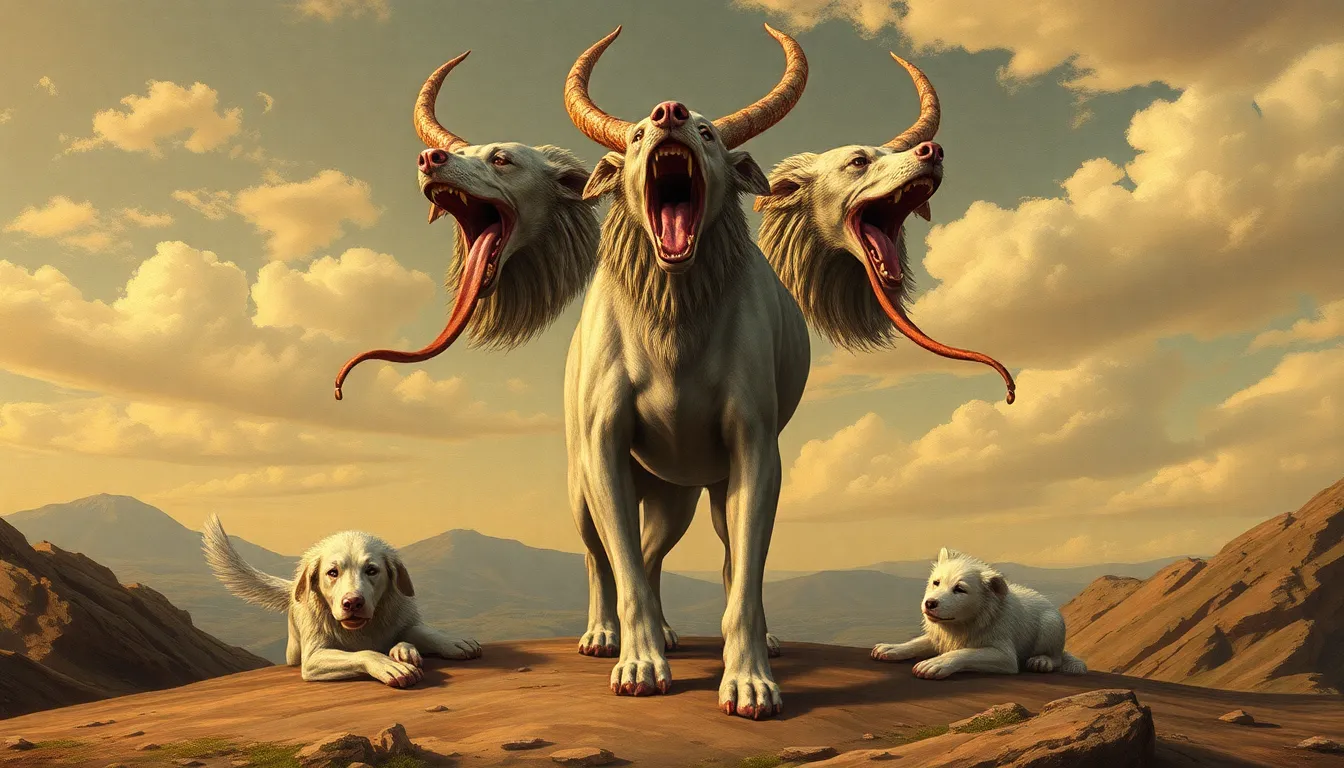
Cerberus in Art: How the Three-Headed Dog Has Inspired Artists Through the Ages
I. Introduction
In Greek mythology, Cerberus is a three-headed dog that guards the entrance to the Underworld, ensuring that the dead cannot escape and the living cannot enter without permission. As a powerful symbol of the boundary between life and death, Cerberus has captivated the imagination of artists throughout history. This article explores the various artistic interpretations of Cerberus across different periods, highlighting its significance as a cultural and mythological icon.
II. Ancient Representations of Cerberus
Cerberus first emerged in ancient Greek art and literature, where he was depicted as a fearsome creature with three heads, often portrayed in the company of the god Hades. His image served as a powerful reminder of the inevitability of death and the importance of the afterlife.
A. Cerberus in Greek mythology and early art
In early Greek mythology, Cerberus was often described as having a serpent for a tail and a mane of snakes. He was a significant figure in various myths, including the Twelve Labors of Heracles, where Heracles was tasked with capturing him as one of his feats.
B. Notable examples from pottery and sculpture
Cerberus was frequently depicted on ancient pottery and in sculptures. Some notable examples include:
- Black-Figure Pottery: Many vases from the 6th century BCE feature Cerberus, often depicted in dynamic scenes involving heroes.
- Reliefs: Sculptural reliefs from temples often included Cerberus as a guardian figure.
- Frescoes: Cerberus appeared in frescoes in ancient homes, reflecting his role in domestic and public spaces.
C. Symbolism of Cerberus as a guardian of the underworld
As the guardian of the Underworld, Cerberus symbolizes the finality of death and the protection of sacred spaces. His fearsome appearance serves as a deterrent to would-be trespassers, representing the natural order of life and death.
III. Cerberus in Roman Art and Literature
The Roman culture inherited much from Greek mythology, including the figure of Cerberus. Roman artists and writers adapted the mythological character to their own context, leading to a rich tapestry of representations.
A. Influence of Greek depictions on Roman artists
Roman artists were heavily influenced by Greek depictions of Cerberus, often replicating the three-headed dog in sculptures and mosaics. However, they also added their own interpretations, reflecting Roman values and aesthetics.
B. Cerberus in Roman mosaics and frescoes
Cerberus was a popular subject in Roman mosaics, often found in villas and public buildings. These artworks depicted him in various scenes, such as guarding the gates of the Underworld or interacting with mythological figures.
C. Literary references and their artistic interpretations
Roman poets such as Virgil and Ovid referenced Cerberus in their works, further cementing his role in literature and inspiring visual artists to create works that encapsulated his essence. Cerberus’ portrayal in these texts often emphasized themes of fear, loyalty, and the afterlife.
IV. The Renaissance Revival of Cerberus
The Renaissance marked a significant revival of classical themes, including mythology. Artists of this era sought to reconnect with the ideals of ancient Greece and Rome, leading to new interpretations of Cerberus.
A. Humanism and the resurgence of classical themes
Humanism emphasized the value of human experience and emotion, prompting artists to reinterpret mythological figures like Cerberus in a more personal and relatable context.
B. Key Renaissance artists who depicted Cerberus
Several renowned artists depicted Cerberus during the Renaissance:
- Michelangelo: His sculptures often reflected the struggle between human and divine, with Cerberus symbolizing the darker aspects of human nature.
- Albrecht Dürer: Known for his engravings, Dürer depicted Cerberus in works that explored themes of fear and mortality.
C. Interpretation of Cerberus in the context of human struggles
Renaissance artists often portrayed Cerberus as a representation of human fears and struggles, using his image to delve into themes of mortality, sin, and redemption.
V. Cerberus in Baroque and Neoclassical Art
The Baroque and Neoclassical periods saw further evolution in the representation of Cerberus, reflecting changing artistic styles and cultural meanings.
A. Evolution of Cerberus’ representation during the Baroque period
In Baroque art, Cerberus was often depicted with dramatic flair, emphasizing emotion and movement. His menacing presence became a focal point in works that explored the tension between life and death.
B. Noteworthy Baroque artists and their works featuring Cerberus
Artists such as Gian Lorenzo Bernini and Peter Paul Rubens included Cerberus in their works, utilizing his image to convey complex emotional narratives.
C. The shift in symbolism during the Neoclassical era
The Neoclassical era redefined Cerberus’ symbolism, focusing on reason and enlightenment. Artists depicted him in a more subdued manner, often highlighting his role as a guardian rather than a monstrous figure.
VI. Cerberus in Modern and Contemporary Art
The 20th and 21st centuries have seen diverse interpretations of Cerberus, reflecting contemporary themes and societal concerns.
A. Diverse interpretations of Cerberus in the 20th and 21st centuries
Modern artists have approached Cerberus from various angles, exploring themes of identity, fear, and the afterlife. His three heads have been used metaphorically to represent different facets of human experience.
B. Cerberus in popular culture (film, literature, and comics)
Cerberus has made appearances in numerous films, books, and comic series, often portrayed as a guardian or adversary. Notable examples include:
- Film: Cerberus appears in Hercules and Harry Potter and the Sorcerer’s Stone, each time adapted to fit different narratives.
- Comics: He has been featured in various comic book series, often embodying themes of loyalty and ferocity.
C. Thematic explorations of fear, loyalty, and the afterlife
Contemporary interpretations of Cerberus frequently explore complex themes, including the nature of loyalty, the fear of death, and the concept of the afterlife, making him a relevant figure in modern storytelling.
VII. Cerberus as a Cultural Symbol
Cerberus’ legacy extends beyond art into various cultural domains, continuing to resonate with audiences around the world.
A. The enduring legacy of Cerberus in various cultures
Cerberus has influenced numerous cultures, often serving as a symbol of protection and the boundary between life and death. His image can be found in literature, folklore, and religious texts globally.
B. Influence on modern interpretations of mythology
The character of Cerberus has inspired modern retellings of myths and new stories, exploring themes of mortality and the human condition in innovative ways.
<