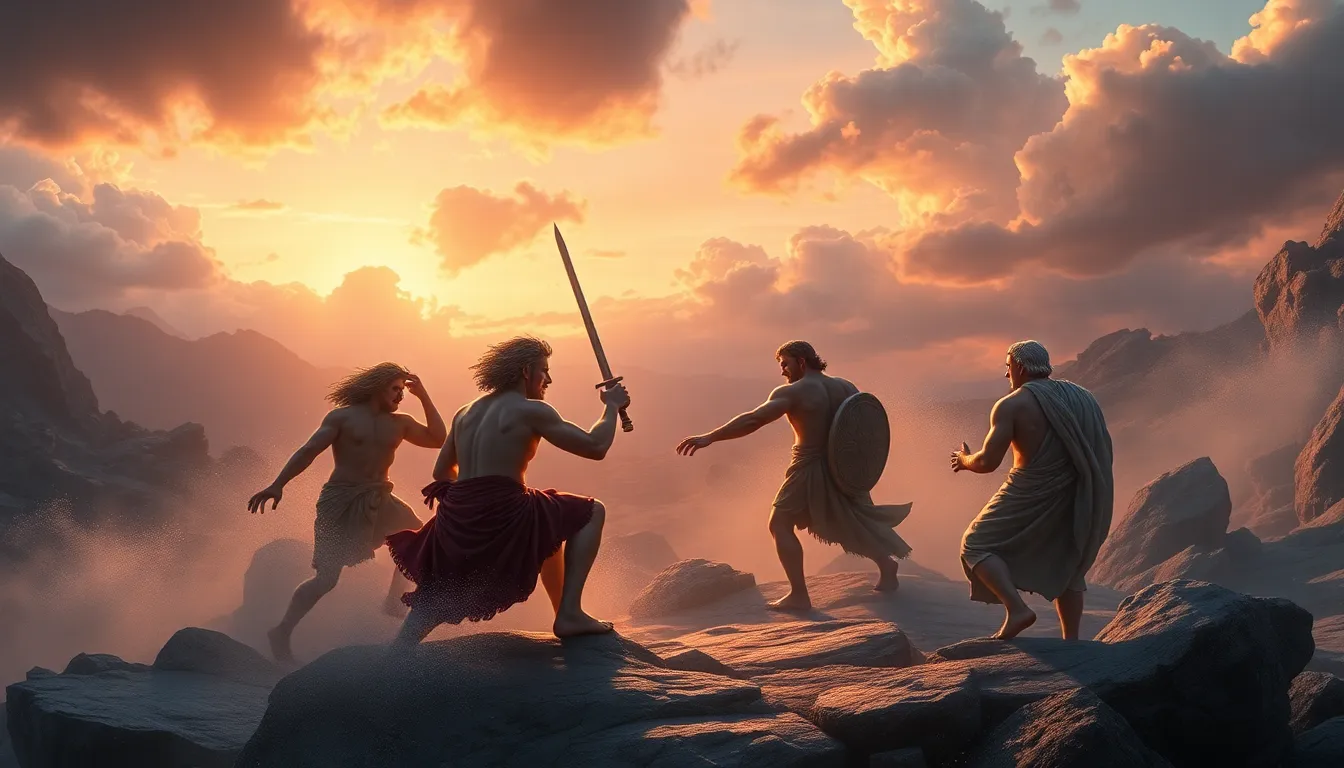
Cronus and the Olympians: A Clash of Generations
I. Introduction
Greek mythology is a rich tapestry of stories, gods, and heroes that has captivated the imagination of people for centuries. It serves not only as a reflection of ancient Greek culture and beliefs but also as a source of timeless lessons about humanity, power, and the cosmos. Among the most pivotal figures in this mythology is Cronus, the leader of the Titans, and his eventual conflict with the Olympian gods. This article explores the generational clash between Cronus and the Olympians, delving into the origins, battles, and legacies of these iconic mythological figures.
II. The Titans: Origins and Significance
The Titans were the primordial beings who ruled during the Golden Age of Greek mythology. They were born from Gaia (Earth) and Uranus (Sky) and represented various aspects of the natural world. The Titans held significant power and influence, governing the cosmos before the rise of the Olympians.
A. The creation of the Titans and their role in mythology
The Titans were twelve in number, including notable figures such as Oceanus, Hyperion, and Rhea. They embodied fundamental natural forces and were seen as the ancestors of many gods and creatures in Greek mythology.
B. Cronus as the leader of the Titans
As the youngest of the Titans, Cronus overthrew his father Uranus to become the ruler of the cosmos. He was often depicted as a powerful figure wielding a sickle, symbolizing his dominion over time and harvest.
C. The Titanomachy: the battle against the Olympians
The Titanomachy was the great war between the Titans, led by Cronus, and the Olympian gods, who sought to overturn their rule. This battle was not only a struggle for power but also a conflict that embodied the cyclical nature of generations in mythology.
III. Cronus: The King of the Titans
Cronus’s rise to power was marked by his cunning and ruthless actions, particularly in relation to his family.
A. Cronus’s rise to power and his rule over the cosmos
After defeating Uranus, Cronus became the supreme deity and established his reign over the Titans. He ruled during a time of abundance but was plagued by fear of a prophecy that foretold his downfall.
B. The prophecy that foreshadowed his downfall
According to the prophecy, one of Cronus’s children would eventually overthrow him. To prevent this, he resorted to swallowing each of his offspring at birth, including Hestia, Demeter, Hera, Hades, and Poseidon.
C. Cronus’s relationship with his siblings and children
Cronus had a complex relationship with his siblings, the other Titans. While he was the leader, there was always an underlying tension due to the fear of fate and the inevitability of change. His actions toward his children depicted a tyrannical nature, as he sought to eliminate any threats to his power.
IV. The Olympians: The Next Generation
While Cronus attempted to secure his power, his children were destined to challenge him.
A. Introduction to the Olympian gods: Zeus, Hera, Poseidon, and others
The Olympians were the new generation of gods, including:
- Zeus – the god of the sky and thunder
- Hera – the goddess of marriage and family
- Poseidon – the god of the sea
- Demeter – the goddess of agriculture
- Hades – the god of the underworld
B. The upbringing of the Olympians and their rebellion against Cronus
Rhea, Cronus’s wife, managed to save Zeus by hiding him in a cave on Crete and giving Cronus a stone wrapped in swaddling clothes. Zeus grew up to lead the rebellion against his father, ultimately freeing his siblings from Cronus’s stomach.
C. Key characteristics and roles of each Olympian
The Olympian gods each held unique attributes and domains:
- Zeus: King of the gods, wielding the thunderbolt.
- Hera: Protector of marriage and women, often depicted with a peacock.
- Poseidon: God of the sea, known for his trident.
- Demeter: Goddess of fertility and the harvest.
- Hades: Ruler of the underworld, overseeing the dead.
V. The Clash of Generations: Titanomachy
The stage was set for an epic confrontation between the Titans and the Olympians, marking a significant shift in the balance of power.
A. The lead-up to the conflict between Titans and Olympians
After Zeus freed his siblings, he rallied them and sought allies, including the Cyclopes and the Hecatoncheires, who would play crucial roles in the upcoming battle.
B. Major battles and strategies employed by both sides
The Titanomachy lasted for ten years and was marked by fierce battles on Mount Olympus and across the cosmos. The Olympians used their cunning and the strength of their allies to combat the Titans.
C. The eventual defeat of Cronus and the Titans
Ultimately, the Olympians triumphed, imprisoning many Titans in Tartarus and establishing Zeus as the new king of the gods. The defeat of Cronus signified the end of the Titan era and the dawn of the Olympian age.
VI. Aftermath of the Clash: Reign of the Olympians
With the Titans defeated, the Olympians took their places in the cosmic order.
A. Establishment of Zeus as the new ruler of the gods
Zeus ascended to power, becoming the chief deity and establishing a new hierarchy among the gods.
B. Changes in the cosmic order and the roles of the Olympians
The Olympians brought about a new order, each taking on specific roles and domains that defined their identities and responsibilities within mythology.
C. Treatment of the Titans post-defeat
Many Titans were imprisoned in Tartarus, while others, like Prometheus, experienced punishment for their defiance. The fate of the Titans served as a warning against rebellion and the consequences of challenging divine authority.
VII. Themes and Symbolism in the Clash
The clash between Cronus and the Olympians embodies several enduring themes in mythology.
A. The struggle for power and the cycle of generations
The story illustrates the inevitable conflict that arises when one generation seeks to overthrow another, highlighting the cyclical nature of power.
B. Parental control and rebellion in mythological narratives
Cronus’s attempts to control his offspring reflect a common theme of parental dominance, while the Olympians’ rebellion underscores the desire for autonomy and self-determination.
C. The significance of fate and prophecy in the stories of Cronus and the Olympians
The prophecies that foreshadowed Cronus’s downfall and the rise of Zeus emphasize the role of fate in Greek mythology, suggesting that destiny often outweighs individual actions.
VIII. Conclusion
The clash between Cronus and the Olympians is a foundational myth that explores themes of power, rebellion, and the cyclical nature of generations. This conflict not only marked a significant turning point in Greek mythology but also left a lasting legacy that continues to resonate in modern culture and literature. The stories of these gods remind us of the complexities of family dynamics and the enduring struggle for power and identity that shapes our lives.