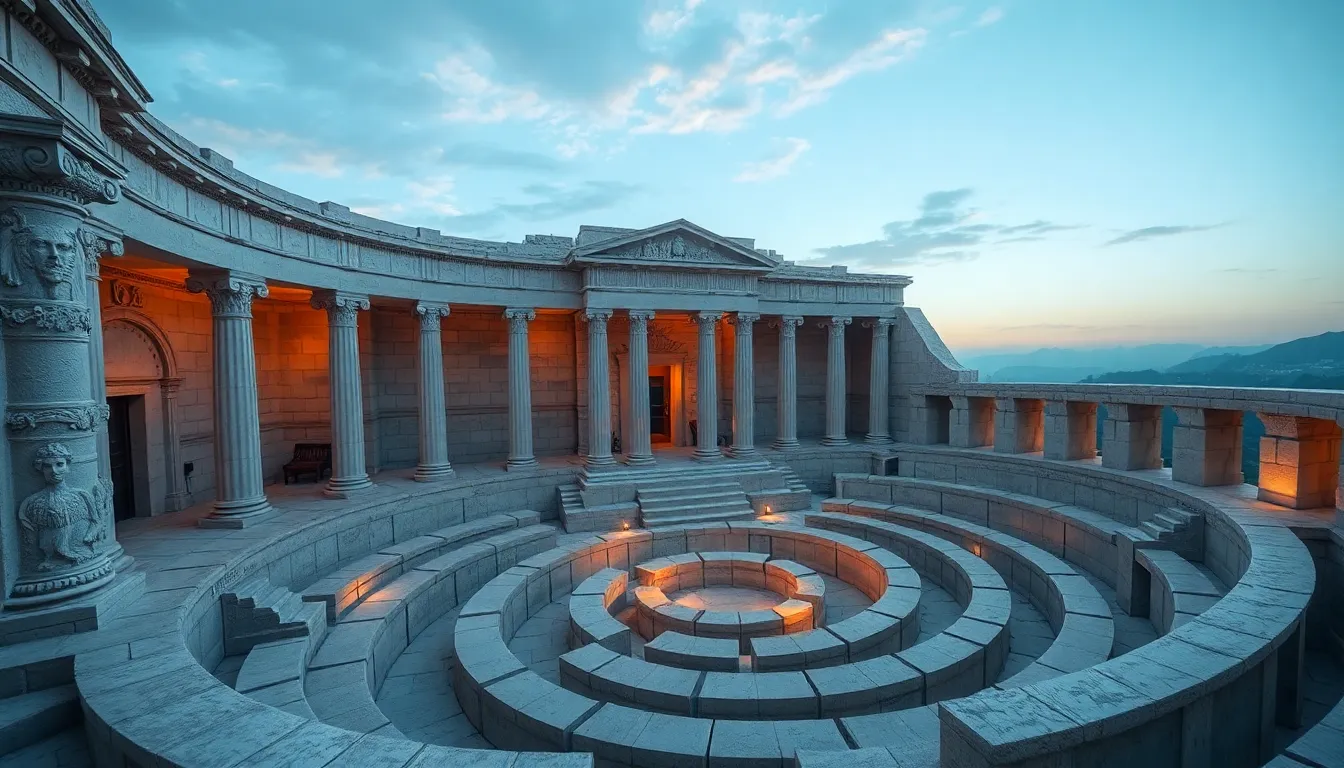
Decoding the Labyrinth: Architectural Inspirations from the Minotaur Legend
I. Introduction
The legend of the Minotaur is a gripping tale rooted in Greek mythology, characterized by themes of heroism, tragedy, and the intricate nature of human existence. At its heart lies the labyrinth, a complex maze that has transcended its mythological origins to inspire countless architects and artists throughout history. This article aims to explore the architectural inspirations derived from the Minotaur legend, delving into the significance of the labyrinth in both ancient and modern contexts.
II. The Minotaur Legend: A Brief Summary
The Minotaur, a creature with the body of a man and the head of a bull, is a central figure in Greek mythology. It was born from a curse on King Minos of Crete, who had failed to sacrifice a magnificent bull to the sea god Poseidon. In a bid to contain this fearsome beast, Minos commissioned the construction of an elaborate labyrinth designed by the architect Daedalus.
- Key Figures: The narrative features several pivotal characters:
- Theseus: The heroic prince of Athens who ultimately slays the Minotaur.
- Ariadne: The daughter of Minos, who aids Theseus by providing him with a ball of thread to navigate the labyrinth.
- The Minotaur: The tragic monster that embodies the consequences of human folly.
The labyrinth itself symbolizes the complexities of human emotions and the journey of self-discovery, representing both a physical and psychological maze.
III. Architectural Elements of the Labyrinth
The design characteristics of labyrinths in ancient architecture were both functional and symbolic. They often featured winding paths, dead ends, and intricate routes intended to confuse and mislead.
- Design Characteristics:
- Non-linear pathways that challenge the navigator’s sense of direction.
- Concentric circles or spirals that draw visitors deeper into the structure.
- Strategically placed openings that create visual intrigue and mystery.
- Materials and Construction Techniques:
- Use of stone, clay, and wood, often sourced locally to blend with the environment.
- Employing techniques such as corbel arching and vaulted ceilings to create a sense of enclosure.
- The Role of Light and Space:
- Natural light to enhance the labyrinth’s atmosphere, creating shadows and highlighting specific areas.
- Open and closed spaces to evoke feelings of isolation or safety as one navigates through.
IV. Historical Examples of Labyrinthine Architecture
Throughout history, various cultures have embraced labyrinthine designs, each adding their unique twist. Here are some notable examples:
- The Palace of Knossos:
This Minoan palace, located on Crete, is often associated with the Minotaur legend. Its complex layout, characterized by multiple levels and interconnecting rooms, reflects the essence of a labyrinth.
- Roman and Medieval Interpretations:
Romans adopted labyrinth motifs in their gardens and villa designs, while medieval churches often featured labyrinths in their floor patterns, symbolizing spiritual journeys.
- Global Examples:
- Mesoamerican pyramids often incorporated labyrinthine pathways in their ceremonial layouts.
- Asian temples, like the ones found in Japan, frequently include winding paths that create a sense of pilgrimage.
V. Modern Interpretations of the Labyrinth
In contemporary architecture, the influence of the Minotaur legend persists, inspiring a new generation of architects and urban planners.
- Contemporary Architects:
Prominent figures, such as Frank Gehry and Zaha Hadid, have drawn on the fluidity and complexity of labyrinths in their designs, creating spaces that encourage exploration and interaction.
- Urban Design and Public Spaces:
Labyrinths are increasingly utilized in urban environments, offering pockets of tranquility amidst the chaos of city life, as seen in parks and community gardens.
- Symbolism in Modern Architecture:
Today’s labyrinths often embody themes of connectivity, community, and the journey of life, reflecting the ongoing relevance of this ancient symbol.
VI. Psychological and Cultural Impacts of Labyrinthine Spaces
Labyrinths offer profound insights into human psychology and cultural narratives.
- The Relationship Between Labyrinths and Human Psychology:
Labyrinths can evoke feelings of anxiety and curiosity, serving as metaphors for life’s challenges and uncertainties.
- Labyrinths in Art and Literature:
From classical literature to contemporary art, labyrinths symbolize the complexity of the human experience, appearing in works by authors such as Jorge Luis Borges and artists like Salvador Dalí.
- Cultural Narratives:
The Minotaur legend continues to influence modern storytelling, serving as a metaphor for personal struggles and societal challenges.
VII. The Future of Labyrinthine Architecture
As we look to the future, labyrinthine design is evolving in exciting ways.
- Emerging Trends:
Architects are increasingly focusing on creating labyrinths that promote sustainability and ecological awareness, integrating natural elements into their designs.
- Sustainable Practices:
The use of reclaimed materials and energy-efficient technologies is becoming standard in labyrinth-inspired architecture, reflecting a commitment to environmental responsibility.
- Virtual and Augmented Reality:
These technologies hold the potential to revolutionize the exploration of labyrinths, allowing users to navigate complex spaces in immersive environments.
VIII. Conclusion
The Minotaur’s architectural legacy is an enduring testament to the power of mythology in shaping human creativity. Labyrinths continue to inspire architects and artists, serving as a reminder of the complexities of life and the journeys we undertake. As we navigate our own labyrinths in contemporary society, the intersection of myth and architecture remains a relevant and thought-provoking topic.