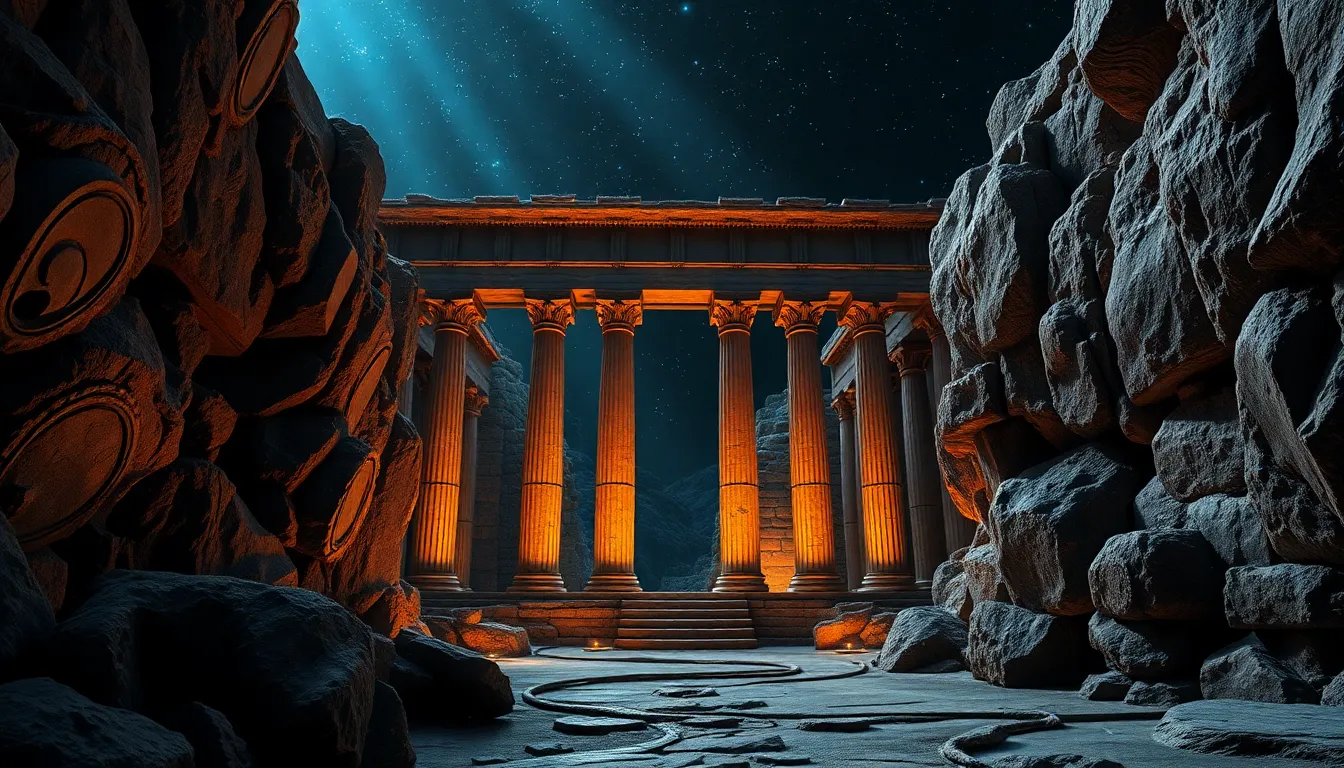
Delphi: The Gateway to the Underworld?
I. Introduction
Delphi, often regarded as one of the most significant sites of the ancient Greek world, played a pivotal role in the cultural and spiritual lives of the Greeks. Located on the slopes of Mount Parnassus, it was not only a center of worship but also a hub of political and social activity. The site is famous for its oracle, the Pythia, who delivered prophecies that shaped the course of Greek history.
The dual role of Delphi as both a religious sanctuary and a political oracle makes it a fascinating subject of study. As a site of divination, it was believed to be a connection point between the mortal realm and the divine, and even the underworld. This article explores the concept of Delphi as a potential gateway to the underworld, delving into its implications in mythology and spirituality.
II. Historical Context of Delphi
A. The origins of the Oracle of Delphi
The Oracle of Delphi was established in the 8th century BCE and quickly became renowned for its prophetic capabilities. According to mythology, the oracle was founded after Apollo, the god of prophecy, killed the serpent Python, which guarded the site. Thus, Delphi became a sanctuary dedicated to Apollo, where the Pythia, a priestess, would deliver cryptic messages from the god.
B. The role of the Pythia and the Delphic sanctuary
The Pythia was an essential figure in the Delphic cult, serving as the oracle who communicated Apollo’s will to the people. She would enter a trance-like state, often induced by inhaling ethylene gases from fissures in the earth, to provide her prophecies. These messages were often ambiguous, requiring interpretation by priests.
C. Cultural and political influence of Delphi in ancient Greece
Delphi’s influence extended beyond religion into the cultural and political spheres. City-states would consult the oracle before making significant decisions, such as going to war or founding new colonies. The Delphic Amphictyony, a league of neighboring tribes, managed the sanctuary and its sacred games, reinforcing its importance in Greek society.
III. Mythological Connections to the Underworld
A. The myth of Persephone and her descent
One of the most significant myths associated with the underworld is that of Persephone, the daughter of Demeter. According to myth, she was abducted by Hades and taken to the underworld, leading to her mother’s grief and the changing of the seasons. Delphi, given its proximity to the underworld, is often linked to this myth as a place of transition between life and death.
B. Chthonic deities associated with Delphi
Delphi was not only associated with Apollo but also with several chthonic deities, including Hades and Persephone. These deities represented the underworld and the afterlife, indicating that Delphi served as a bridge between the living and the dead.
C. Symbolism of the underworld in Greek mythology
In Greek mythology, the underworld symbolizes the unknown and the inevitable fate of all humans. It represents a journey that every soul must take, and Delphi’s role as a site of prophecy often included insights into this journey. The sanctuary’s location and its associations with death and rebirth highlight its significance as a gateway.
IV. Archaeological Discoveries at Delphi
A. Key findings that support the underworld connection
Archaeological excavations at Delphi have unearthed various artifacts and structures that suggest a link to the underworld. The presence of altars, inscriptions, and offerings dedicated to both Apollo and chthonic deities reinforces this connection.
B. The significance of the Temple of Apollo
The Temple of Apollo, built in the 4th century BCE, serves as the principal structure of the sanctuary. Its design and orientation reflect the importance of Apollo as a mediator between the divine and the mortal realms. The temple was the site where the Pythia would deliver her oracles, making it a focal point for those seeking knowledge about life and death.
C. Ritual practices that suggest a link to the afterlife
- Animal sacrifices: Offerings made to appease gods and spirits.
- Libations: Pouring of liquids as a ritual for the deceased.
- Funeral rites: Ceremonies that may have occurred at Delphi to honor the dead.
These practices indicate that Delphi was not just a place for seeking guidance in life but also a site with significant connections to the afterlife.
V. The Oracle of Delphi and Prophecies of the Underworld
A. Notable prophecies and their interpretations
The Oracle of Delphi delivered numerous prophecies that often touched upon themes of mortality and the afterlife. For instance, when Croesus, the wealthy king of Lydia, consulted the oracle about going to war, he received a cryptic response that ultimately led to his downfall.
B. The impact of these prophecies on individuals and city-states
Delphic prophecies could alter the course of history. Many individuals and city-states took the oracle’s words seriously, leading to decisions that affected their fates. The belief in the oracle’s connection to the divine and the underworld added weight to these decisions.
C. The relationship between divine knowledge and the afterlife
The oracles often provided insights into the afterlife, suggesting that understanding one’s fate was intertwined with divine knowledge. This relationship highlights the importance of Delphi as a spiritual center where the boundaries between the living and the dead blurred.
VI. Delphi in Later Cultural Interpretations
A. Influence on Roman and later European thought
As the Greek world transitioned into the Roman Empire, Delphi continued to hold significance. Roman writers and philosophers often referenced the oracle, emphasizing its role in divine communication. The intellectual legacy of Delphi influenced later European thought, especially during the Renaissance when interest in classical antiquity surged.
B. Artistic representations of Delphi and the underworld
Delphi’s connection to the underworld has been depicted in various artistic forms throughout history. From ancient pottery to Renaissance paintings, artists have portrayed scenes that highlight its mystical qualities and its role as a spiritual gateway.
C. Modern interpretations of Delphi’s significance
In contemporary culture, Delphi’s legacy continues to inspire interpretations that explore the nature of destiny, spirituality, and the afterlife. Scholars and spiritual seekers alike draw connections between ancient practices and modern beliefs about life beyond death.
VII. The Spiritual Legacy of Delphi
A. Delphi’s role in contemporary spirituality and mysticism
Today, Delphi remains a site of pilgrimage for those seeking spiritual insight. Many visitors view it as a place to connect with ancient wisdom and explore their spiritual paths. The idea of Delphi as a gateway to other realms continues to resonate with modern mystics.
B. Pilgrimages and modern visitors seeking connection
Modern pilgrims often visit Delphi to experience its historical and spiritual significance. Many seek to tap into the energy of the site, reflecting on its past while contemplating their own journeys. The allure of connecting with the divine and the afterlife draws people from around the world.
C. The ongoing fascination with the concept of gateways to other realms
The concept of gateways to the underworld or other realms is a recurring theme in many cultures. Delphi exemplifies this idea, representing a point of access to divine knowledge and the mysteries of existence. This fascination endures in literature, art, and spiritual practices, highlighting humanity’s quest to understand life and death.
VIII. Conclusion
In summary, Delphi stands as a testament to the rich tapestry of ancient Greek culture, spirituality, and mythology. Its historical significance as a site of prophecy and worship intertwines with profound mythological connections to the underworld. The archaeological discoveries and ritual practices further indicate its role as a potential gateway to the afterlife.
The enduring mystery of Delphi continues to captivate scholars, spiritual seekers, and artists alike. As we explore the intersection of history, mythology, and spirituality, we gain deeper insights into Delphi’s legacy as a sacred place that transcends time and connects us to the ancient beliefs about life, death, and what lies beyond.