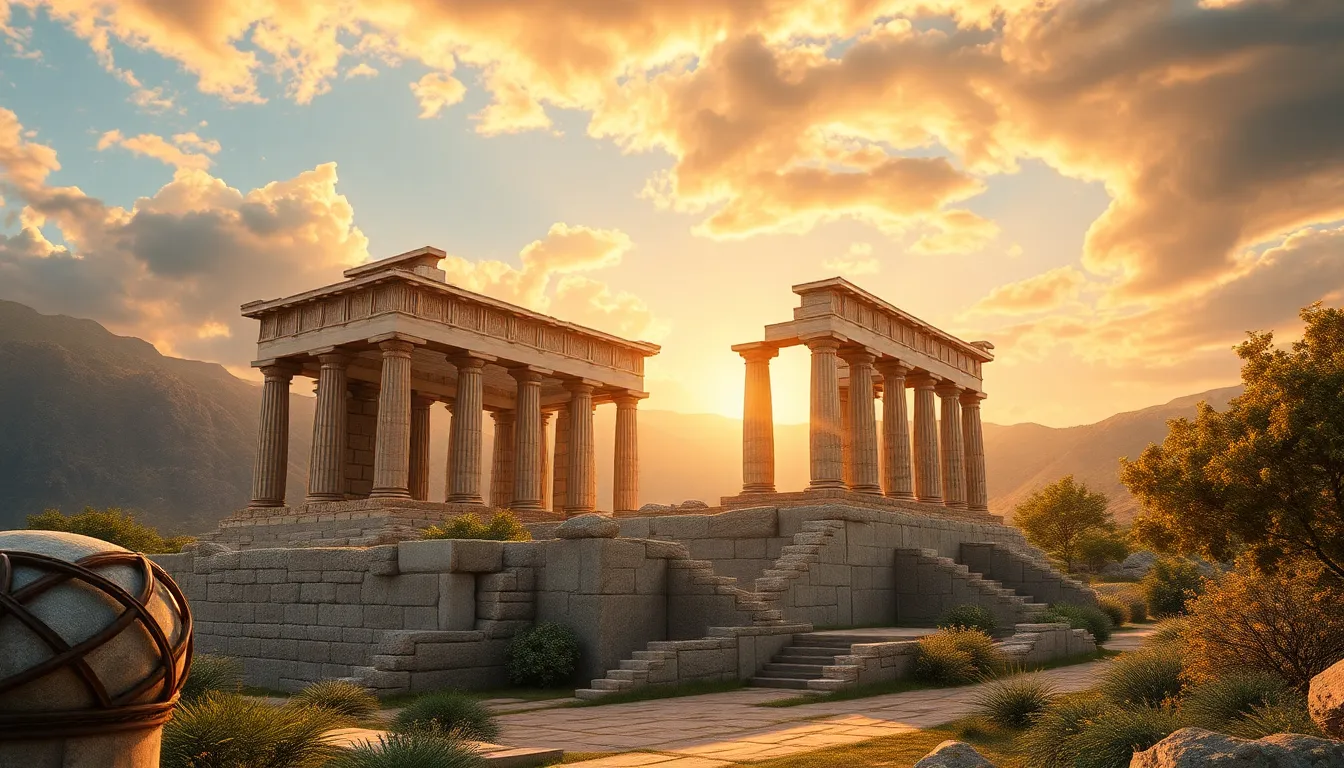
Delphi’s Sacred Texts: Insights from the Ancient World
I. Introduction
Delphi, often referred to as the navel of the world in ancient Greek mythology, was a significant site of worship and prophecy. Nestled on the slopes of Mount Parnassus, this sanctuary was dedicated to Apollo, the god of music, prophecy, and healing. It held immense cultural and religious significance, serving as a pivotal center for the ancient Greeks to seek divine guidance.
The sacred texts of Delphi, produced and utilized by the Oracle, played a crucial role in shaping the religious practices and beliefs of the time. These texts provided not only guidance and prophecies but also reflected the moral and ethical frameworks of ancient Greek society. This article aims to delve into these ancient writings, exploring their context, content, and lasting impact.
II. Historical Background of Delphi
A. Origins and establishment of the Delphic sanctuary
The origins of Delphi can be traced back to the early Bronze Age, but it gained prominence in the 8th century BCE. According to mythology, Apollo established his sanctuary at Delphi after defeating the serpent Python, which had guarded the site. The establishment of the Temple of Apollo marked the beginning of Delphi as a prominent oracle site.
B. Role of the Oracle of Delphi in ancient Greek society
The Oracle of Delphi was a priestess known as the Pythia, who served as the medium through which Apollo communicated with the people. Individuals and city-states would visit Delphi to receive prophecies, advice, and guidance on various matters, including politics, warfare, and personal affairs. The Pythia would enter a trance-like state, inhaling vapors from a chasm in the earth, and deliver cryptic messages that required interpretation.
C. Key historical events associated with Delphi
- The establishment of the Olympic Games, which were held every four years in honor of Zeus, was influenced by the Pythia’s prophecies.
- Delphi played a significant role in the Greco-Persian Wars, where its oracles guided Greek city-states in their struggles against Persian invasions.
- Delphi was also the site of the Amphictyonic League, an ancient religious association of tribes that emphasized the importance of mutual cooperation and respect for the sanctuary.
III. The Role of Sacred Texts in Delphic Practices
A. Types of sacred texts associated with Delphi
Delphi was rich in sacred texts that served various religious and social functions. These texts can be categorized into several types:
- Oracular pronouncements: The most famous texts, often recorded and later transcribed, encapsulated the prophecies given by the Pythia.
- Hymns and prayers: Composed to honor Apollo and other deities, these texts reflected the religious sentiments of the worshipers.
- Ritual inscriptions: These included decrees, dedications, and records of rituals performed at the sanctuary, providing insights into the religious practices of the time.
B. Function and purpose of these texts in religious practices
The sacred texts of Delphi served multiple purposes:
- They acted as a means of communication between the divine and mortals, allowing individuals to seek guidance.
- These texts preserved the cultural and religious heritage of the Greeks, ensuring the continuity of traditions.
- They were instrumental in shaping the ethical and moral frameworks within which the ancient Greeks operated.
IV. Major Themes in Delphic Sacred Texts
A. Divine guidance and prophecy
The primary theme of Delphi’s sacred texts is the concept of divine guidance. The oracular pronouncements provided insights into future events, guiding individuals and city-states in decision-making. The ambiguous nature of these prophecies often required interpretation, which became a skill in itself.
B. The relationship between mortals and the divine
Another prevalent theme is the relationship between mortals and the divine. The texts emphasize the importance of piety, reverence, and respect towards the gods, particularly Apollo. This relationship was reciprocal, as humans sought the favor of the gods through prayers, offerings, and rituals.
C. Moral and ethical teachings
Delphi’s sacred texts also contained moral and ethical teachings that guided individuals in their personal lives and societal interactions. The Delphic maxims, such as “Know thyself” and “Nothing in excess,” were inscribed at the temple, serving as reminders of the principles that governed a virtuous life.
V. The Influence of Delphi’s Sacred Texts on Ancient Culture
A. Impact on philosophy and thought
The philosophical underpinnings of ancient Greece were significantly influenced by the insights gained from Delphi’s sacred texts. Thinkers such as Socrates, Plato, and Aristotle drew upon the principles articulated in these texts to formulate their own ideas about ethics, morality, and the nature of knowledge.
B. Influence on literature and arts
The sacred texts of Delphi also inspired a wealth of literary and artistic works throughout antiquity. Poets and playwrights frequently referenced the Oracle, and many myths surrounding Apollo and the Pythia became central themes in Greek drama and poetry.
C. Role in shaping political and social structures
Delphi’s influence extended to the political realm, as leaders and states often consulted the Oracle before making pivotal decisions. The guidance received from the Pythia could sway public opinion and alter the course of history, reflecting the intertwining of religion and politics in ancient Greece.
VI. Archaeological Discoveries Related to Delphi’s Sacred Texts
A. Overview of key archaeological sites
Archaeological excavations at Delphi have uncovered numerous artifacts, inscriptions, and structures that illuminate the role of sacred texts in ancient practices. Key sites include:
- The Temple of Apollo, where the Pythia delivered her oracles.
- The ancient theater, which hosted performances inspired by Delphic prophecies.
- The Stadium of Delphi, where athletic competitions were held in the Oracle’s honor.
B. Significant findings and their implications
Among the most significant discoveries are inscriptions containing oracular pronouncements that provide direct insight into the beliefs and concerns of ancient Greeks. These texts not only reveal the content of the prophecies but also the societal issues that prompted consultations with the Oracle.
C. Preservation efforts and ongoing research
Preservation efforts at Delphi continue to be crucial for maintaining the integrity of these archaeological findings. Ongoing research aims to decipher, translate, and contextualize the remaining texts, shedding light on their historical significance and contemporary relevance.
VII. Modern Interpretations and Relevance of Delphi’s Sacred Texts
A. Contemporary scholarship on Delphic texts
Modern scholars are increasingly recognizing the importance of Delphi’s sacred texts in understanding ancient Greek culture. Interdisciplinary approaches, combining archaeology, literature, and philosophy, are revealing new insights into the complexities of these ancient writings.
B. Relevance of ancient wisdom in today’s world
The wisdom encapsulated in Delphi’s sacred texts resonates with contemporary audiences. Themes of self-knowledge, moderation, and the quest for understanding the divine remain relevant as individuals navigate the complexities of modern life.
C. Influence on modern spirituality and philosophy
Delphi’s legacy can be seen in various modern spiritual practices and philosophical discourses. The emphasis on introspection and ethical living continues to inform contemporary thought, inspiring individuals to seek wisdom in their own lives.
VIII. Conclusion
A. Summary of key insights gained from Delphi’s sacred texts
Delphi’s sacred texts offer profound insights into the ancient Greek worldview, reflecting the interplay between the divine and human experience. They highlight the importance of seeking guidance, the ethical imperatives of life, and the enduring quest for understanding.
B. Reflection on the enduring legacy of Delphi in contemporary culture
The legacy of Delphi persists in contemporary culture, as its themes of knowledge, morality, and spirituality continue to inspire and provoke thought. The sanctuary remains a symbol of the quest for truth and understanding in an ever-changing world.
C. Call to further explore and appreciate ancient wisdom and its relevance today
As we delve deeper into the sacred texts of Delphi, we are invited to