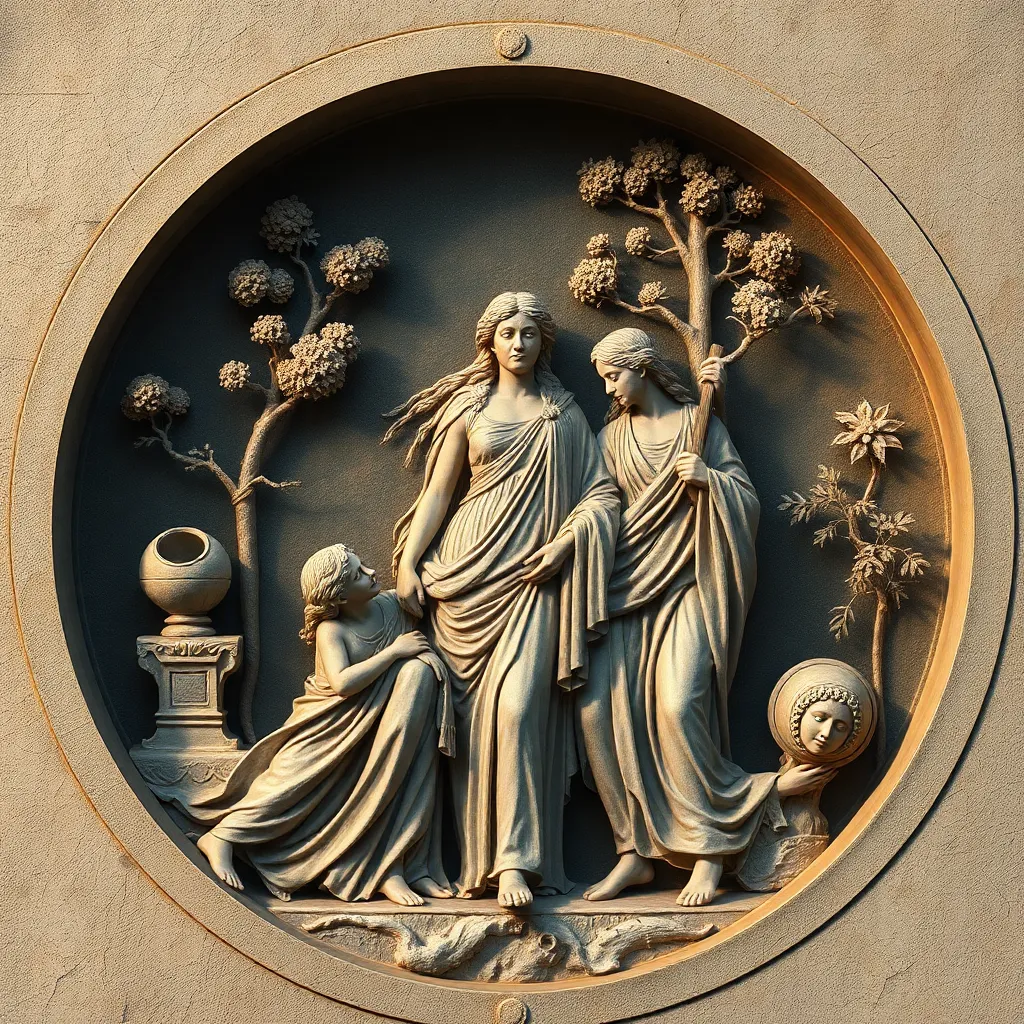
Demeter and the Concept of Home: Family and Fertility in Her Myths
I. Introduction
Demeter, one of the most revered goddesses in Greek mythology, embodies the dual concepts of family and fertility. As the goddess of agriculture, she plays a crucial role in the growth of crops and the sustenance of life. Her myths intricately weave themes of nurturing, loss, and the cyclical nature of existence, making her a central figure in the understanding of home in ancient Greek society. This article will explore the connection between Demeter, the idea of home, family, and fertility, highlighting her significance in mythology and culture.
II. Demeter: The Goddess of Agriculture and Fertility
Demeter’s role in ancient Greece was pivotal, as she was directly associated with agriculture, harvest, and the cycles of nature. Her worship was widespread, with many cities celebrating her through festivals and rituals, most notably the Thesmophoria, which honored her agricultural gifts.
- Historical Context: Demeter’s importance was underscored by the agricultural reliance of ancient Greek society. She represented the bountiful harvests that sustained communities.
- Connection to Agriculture: As the earth’s nurturer, Demeter was believed to govern the fertility of the soil, influencing planting and harvesting seasons.
- Symbolism of Fertility: In artistic depictions, she is often shown with wheat, flowers, or a cornucopia, symbolizing abundance and the nurturing aspects of motherhood.
III. The Myth of Demeter and Persephone
The myth of Demeter and her daughter Persephone is one of the most poignant stories in Greek mythology, encapsulating themes of maternal love, loss, and longing. According to the myth, Persephone was abducted by Hades, the god of the underworld, which plunged Demeter into deep grief.
This loss profoundly affected Demeter’s actions and the world around her. She withdrew her gifts from the earth, leading to a barren landscape and a devastating famine. The bond between mother and daughter is at the heart of this myth, symbolizing the emotional ties that define family.
- Themes of Loss: Demeter’s search for Persephone represents a mother’s anguish and the lengths she will go to protect her child.
- Impact on Home: The abduction of Persephone disrupted the natural order, and the home became a place of sorrow rather than comfort.
IV. The Equilibrium of Seasons: Life, Death, and Rebirth
Demeter’s grief is intricately tied to the changing seasons. Her sorrow during the absence of Persephone leads to winter, a season of death and dormancy. Conversely, when Persephone returns, spring blooms, symbolizing renewal and rebirth.
This cyclical nature of life is reflected in family dynamics, where periods of joy and sorrow coexist. The changing seasons serve as a metaphor for the stages of familial relationships and the nurturing aspect of motherhood.
- Grief and the Seasons: Each season reflects Demeter’s emotional state, illustrating how personal experiences can shape the environment.
- Symbolic Representation: Fertility is not just tied to agricultural bounty but also to the emotional cycles within families.
V. The Eleusinian Mysteries: Cult and Community
The Eleusinian Mysteries were ancient rites held in honor of Demeter and Persephone, emphasizing the goddess’s significance in community life. These mysteries celebrated the agricultural cycle and the promise of fertility, creating a strong communal identity.
Through these rituals, participants sought a deeper connection with Demeter and the natural world, fostering a sense of belonging and home. The mysteries provided a space for communal bonding, reinforcing family and societal ties.
- Significance of the Mysteries: They represented the cycle of life and death, mirroring the relationship between Demeter and Persephone.
- Rituals and Belonging: The communal aspect of these rites helped individuals feel connected to one another and to the divine, creating a shared sense of home.
VI. Demeter’s Relationships with Other Deities
Demeter’s interactions with other gods and goddesses further illustrate her role in the Greek pantheon and the themes of family and home. Her relationships, particularly with Zeus, Poseidon, and Hades, reveal various dimensions of fertility and motherhood.
- Interactions with Zeus: As the mother of Persephone, her relationship with Zeus highlights the complexities of familial ties and divine responsibility.
- Impact of Male Deities: The narratives surrounding Demeter often show how male gods influence the fertility narrative, portraying a balance between male and female roles in Greek mythology.
VII. Modern Interpretations of Demeter’s Myths
In contemporary society, the themes encapsulated in Demeter’s myths resonate with modern discussions about motherhood, fertility, and the concept of home. Her stories have influenced literature, art, and feminist discourse, reflecting the ongoing relevance of her narrative.
- Contemporary Views: Modern interpretations often focus on the strength of mothers and the significance of family dynamics.
- Influence on Art and Literature: Demeter’s myths have inspired countless works, symbolizing the struggle for balance between personal desires and family obligations.
- Feminist Discourse: Her narrative has been embraced in feminist discussions, highlighting the importance of women’s roles in both domestic and agricultural spheres.
VIII. Conclusion
Demeter remains a powerful figure in mythology, encapsulating the enduring themes of family and fertility. Her connection to agriculture and the cycles of life mirrors the complexities of human relationships, particularly those between mothers and their children. The significance of home, as portrayed in her myths, continues to resonate in modern discussions about community, motherhood, and identity.
As we reflect on Demeter’s narrative, we recognize the profound impact of her myths on our understanding of home, emphasizing that the bonds of family and the nurturing essence of life are universal themes that transcend time.