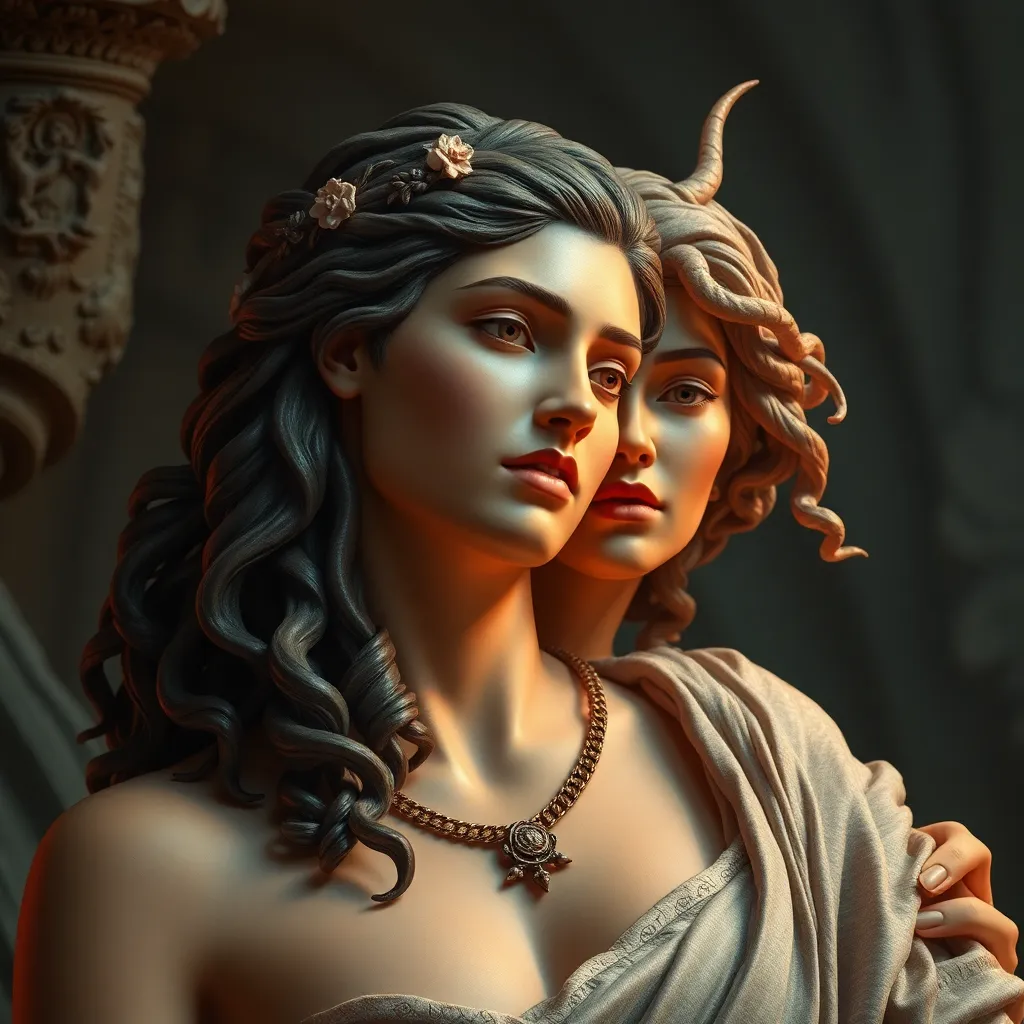
Demeter and the Underworld: Exploring Her Complex Relationship with Hades
I. Introduction
In the rich tapestry of Greek mythology, the figures of Demeter and Hades represent two fundamental aspects of existence: the nurturing of life and the inevitability of death. Demeter, the goddess of harvest and fertility, and Hades, the god of the Underworld, have a relationship that is as complex as it is vital to understanding the cycles of nature and human experience.
This article delves into the significance of their relationship, exploring how their interactions shape mythological narratives and cultural beliefs. Through an examination of their individual roles, the pivotal myth of Persephone, and the overarching themes of life and death, we aim to uncover the intricate dynamics between these two deities.
II. Demeter: The Goddess of Harvest and Fertility
Demeter is revered as one of the Twelve Olympian gods and goddesses, embodying the principles of fertility, agriculture, and the harvest. Her significance in Greek mythology extends beyond mere agricultural abundance; she represents the nurturing qualities of the earth and the sustenance of life.
A. Role and significance in Greek mythology
As the mother of Persephone, Demeter’s character is deeply intertwined with the themes of motherhood, loss, and rebirth. She is often depicted as a caring figure who ensures the earth flourishes, symbolizing the bond between humans and nature.
B. Key attributes and symbols associated with Demeter
- Wheat and Grain: Representing sustenance and agriculture.
- Sheaf of Wheat: A common symbol of harvest.
- Torch: Symbolizing the search for her daughter, Persephone.
C. Her relationship with the earth and agriculture
Demeter’s nurturing spirit is reflected in the changing seasons and agricultural cycles. She is responsible for the fertility of the land, ensuring that crops grow and life thrives. Her nurturing nature is a testament to the interconnectedness of all living things.
III. Hades: The God of the Underworld
Hades, the brother of Zeus and Poseidon, rules over the Underworld, a realm that often evokes fear and misunderstanding. Contrary to popular belief, Hades is not the embodiment of evil; rather, he is a complex deity with specific responsibilities that maintain the balance of life and death.
A. Overview of Hades’ domain and responsibilities
Hades governs the Underworld, ensuring that souls find their resting place and that the cycle of life continues. He oversees the afterlife, managing the souls of the deceased and maintaining order in his realm.
B. Misconceptions about Hades and the Underworld
Many myths depict the Underworld as a place of torment; however, it is important to recognize that Hades is not synonymous with punishment. Instead, his domain is a necessary part of the natural order, reflecting the inevitability of death.
C. Hades’ characteristics and portrayal in myths
- Stoic and Reserved: Hades is often portrayed as serious and unyielding.
- Just Ruler: He ensures fairness in the treatment of souls.
- Occasional Compassion: Hades shows moments of tenderness, especially towards Persephone.
IV. The Abduction of Persephone
The myth of Persephone’s abduction is central to understanding the relationship between Demeter and Hades. This narrative illustrates the complexities of love, loss, and the cyclical nature of existence.
A. The myth of Persephone’s kidnapping
According to myth, Hades, captivated by Persephone’s beauty, abducts her to the Underworld. This act sets off a chain of events that alters the natural world.
B. Demeter’s reaction and its consequences
Demeter, devastated by the loss of her daughter, withdraws her blessings from the earth, resulting in a barren landscape. This myth emphasizes the profound connection between maternal love and the fertility of the earth.
C. The role of Hades in the abduction and subsequent events
While Hades plays the role of the abductor, his intentions are not purely malevolent. He desires Persephone as his queen and believes that by bringing her to the Underworld, he can offer her a life of luxury and power.
V. The Cycle of Seasons: Demeter’s Grief and the Underworld
The relationship between Demeter and Hades is poignantly reflected in the changing seasons. Their intertwined fates illustrate the themes of loss and renewal that characterize the natural world.
A. Connection between Demeter’s emotions and seasonal changes
Demeter’s grief during Persephone’s absence corresponds to the barren winter months when the earth lies dormant. Conversely, the return of Persephone heralds the arrival of spring, symbolizing rebirth and renewal.
B. How Persephone’s time in the Underworld affects Demeter
Each year, Persephone spends part of her time with Hades in the Underworld and part with Demeter on earth. This cyclical return governs the seasons and highlights the balance between life and death.
C. The symbolic meaning of death and rebirth in agriculture
The myth encapsulates the essence of agricultural cycles, illustrating how death (the end of the harvest) is necessary for rebirth (the new planting season). This cycle reflects the broader themes of renewal in nature.
VI. The Duality of Demeter and Hades’ Relationship
Demeter and Hades share a unique relationship that embodies the duality of life and death, fertility and decay. Their mythological interactions serve as a reminder of the delicate balance that sustains existence.
A. Exploration of their shared responsibilities in the cycle of life and death
While Demeter nurtures life, Hades ensures that death is respected and incorporated into the cycle. Together, they represent the continuum of existence.
B. The balance between fertility and the inevitability of the Underworld
Their relationship highlights the inevitability of death as a part of life. This balance is crucial for understanding the natural order in Greek mythology.
C. Comparisons to other mythological relationships in Greek lore
Similar themes can be found in other mythological pairings, such as that of Zeus and Hera, where love and conflict coexist. The dynamics between Demeter and Hades reflect these broader themes in Greek mythology.
VII. Interpretations and Legacy of Their Relationship
The relationship between Demeter and Hades has left a profound impact on ancient Greek culture, influencing religious practices and artistic expressions throughout history.
A. Influence on ancient Greek culture and religion
Demeter was worshipped in various agricultural festivals, which celebrated the harvest and the changing of the seasons. The Eleusinian Mysteries, dedicated to Demeter and Persephone, highlighted the importance of their myth in Greek spirituality.
B. Modern interpretations and adaptations in literature and art
In contemporary literature and art, the story of Demeter and Hades has been revisited, often symbolizing themes of maternal love, loss, and the cyclical nature of life. Various adaptations explore their complex relationship in new and innovative ways.
C. The enduring relevance of Demeter and Hades in contemporary discussions
Their narrative continues to resonate in discussions about environmentalism, the human condition, and the interconnectedness of life and death. The themes encapsulated in their myth remain relevant in today’s world.
VIII. Conclusion
The relationship between Demeter and Hades is a rich and multifaceted narrative that encapsulates the complexities of love, loss, and the natural world. Their interactions illustrate the duality of existence, emphasizing that life and death are inextricably linked.
As we reflect on their mythological narrative, we are reminded of the lessons it imparts about resilience, the cyclical nature of life, and the profound connections we share with the earth and each other. The legacy of Demeter and Hades endures, inviting us to explore the depths of their relationship and the universal themes it represents.