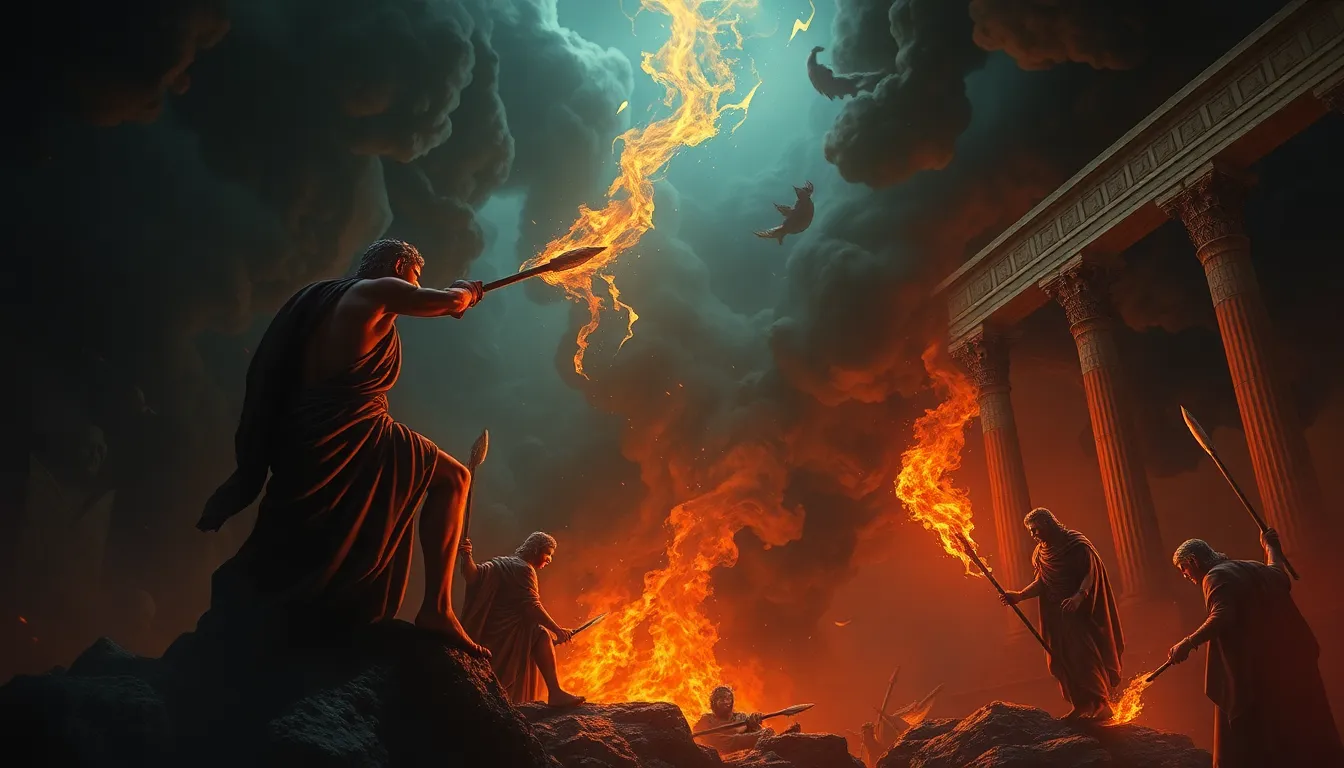
Divine Punishments: A Closer Look at Greek Myths’ Darkest Tales
I. Introduction
Greek mythology is a rich tapestry of stories that encompass the adventures of gods, heroes, and mythical creatures. These tales have been passed down through generations, providing insight into the values, beliefs, and cultural practices of ancient Greece. Central to these myths is the concept of divine punishment, a reflection of the ancient Greeks’ understanding of morality and justice.
Divine punishment in Greek culture served not only as a means to enforce moral behavior but also as a way to illustrate the consequences of hubris and transgression against the gods. In this article, we will explore some of the darkest tales of retribution found in Greek mythology, revealing how these stories serve as cautionary tales about the consequences of pride and disobedience.
II. The Nature of Divine Justice in Greek Myths
A. Definition of divine justice and its moral implications
Divine justice in Greek mythology is often portrayed as a strict and unforgiving force. It is the idea that the gods are not only powerful but also moral arbiters who uphold the cosmic order. This justice is not merely punitive; it serves to maintain balance in the universe and to instill a sense of moral responsibility among mortals.

B. The role of gods and goddesses as enforcers of justice
The pantheon of Greek gods and goddesses played a crucial role in enforcing divine justice. Each deity had specific domains and responsibilities, and they intervened in human affairs to punish wrongdoers. For example:
- Athena: Goddess of wisdom and warfare, often punished those who displayed hubris.
- Zeus: King of the gods, who wielded thunderbolts as instruments of punishment.
- Dike: The personification of justice, ensuring fairness and order.
C. The belief in fate versus free will
Ancient Greeks grappled with the concepts of fate and free will. While mortals had the ability to make choices, their fates were often predetermined by the gods. This tension between free will and divine control forms the backdrop of many myths, where characters face dire consequences for their actions, sometimes despite their best intentions.
III. Prominent Examples of Divine Punishments
A. The tale of Arachne: Hubris and Transformation
Arachne, a talented weaver, boasted that her skills surpassed those of Athena, the goddess of wisdom and crafts. Offended by Arachne’s hubris, Athena challenged her to a contest. Despite Arachne’s flawless work, Athena punished her for her arrogance by transforming her into a spider, ensuring she would weave for eternity.
B. Niobe: The consequences of pride and arrogance
Niobe, queen of Thebes, was blessed with fourteen children and boasted of her superiority over Leto, who had only two. In retaliation for her hubris, Leto sent her children, Apollo and Artemis, to kill Niobe’s offspring. As a result, Niobe was left in despair, turned to stone, and forever wept for her lost children.
C. Actaeon: The price of voyeurism and disrespect
Actaeon, a skilled hunter, stumbled upon the goddess Artemis while she bathed. His gaze was deemed disrespectful, and in her fury, Artemis transformed him into a stag. He was subsequently hunted down and killed by his own hounds, illustrating the severe consequences of violating the sanctity of the divine.
IV. Punishments of the Titans and Giants
A. The Titanomachy: The fall of the Titans
The Titanomachy was a monumental conflict between the Titans, led by Cronus, and the Olympian gods, led by Zeus. The Titans were ultimately defeated and punished for their rebellion against the gods. This battle exemplifies the idea that those who challenge divine authority will face dire consequences.
B. The fates of Atlas and Prometheus
Following the Titanomachy, Atlas was condemned to hold up the sky for eternity as punishment for his role in the rebellion. Similarly, Prometheus was punished for stealing fire from the gods to give to humanity. He was bound to a rock, where an eagle would eat his liver daily, only for it to regenerate at night, forcing him to endure this torment forever.
C. Lessons learned from Titan and Giant tales
The tales of the Titans and Giants serve as reminders of the consequences of pride and rebellion against divine order. These stories reinforce the notion that the gods maintain ultimate power and that defiance leads to suffering.
V. The Role of Mortals in Divine Punishments
A. Exploration of mortal flaws that provoke divine wrath
Many mortal characters in Greek mythology exhibit flaws such as hubris, jealousy, and disobedience that provoke divine punishment. These traits serve as a reflection of human nature and the potential for downfall.
B. The interplay between human actions and divine retribution
The relationship between human actions and divine punishment is a central theme in Greek myths. Mortals are often warned of the consequences of their actions, yet they frequently succumb to their flaws, leading to their tragic ends.
C. Case studies of notable mortals: Cassandra and Oedipus
Cassandra, gifted with the ability to foresee the future, was cursed by Apollo to never be believed. Her tragic fate illustrates the consequences of divine punishment for rejecting a god’s advances.
Oedipus, in his quest to uncover the truth about his origins, unwittingly fulfilled a prophecy that he would kill his father and marry his mother. His ultimate suffering stems from both his actions and the inescapable fate that the gods had decreed.
VI. Symbolism and Moral Lessons
A. Understanding the symbolism behind divine punishments
Divine punishments often carry deep symbolism, representing the moral order of the universe. They serve as allegories for the consequences of human behavior and the importance of humility before the gods.
B. The moral lessons imparted through these myths
Through stories of divine punishment, ancient Greeks conveyed essential moral lessons, including:
- The dangers of pride (hubris)
- The importance of respect for the gods
- The inevitability of fate
C. How these tales reflect ancient Greek societal values
These myths reflect the values of ancient Greek society, emphasizing the significance of community, respect for the divine, and the consequences of individual actions. They served as a guide for ethical behavior and social norms.
VII. The Legacy of Divine Punishments in Modern Culture
A. Influence on literature, art, and popular culture
The themes of divine punishment resonate throughout modern literature, art, and popular culture. Many contemporary works draw inspiration from Greek myths, exploring similar themes of justice, morality, and retribution.
B. Parallels in modern interpretations of justice and punishment
Modern discussions of justice often echo the moral dilemmas found in Greek mythology. The consequences of actions, the role of fate, and societal values continue to be relevant in contemporary legal and ethical contexts.
C. The relevance of these myths in contemporary discussions of morality
Greek myths remain pertinent in discussions of morality and ethics. They provoke thought about human flaws, the nature of justice, and the role of divine influence in human affairs, engaging audiences across generations.
VIII. Conclusion
In exploring the dark tales of divine punishments in Greek mythology, we uncover profound insights into human nature and morality. These myths serve as timeless reminders of the consequences of hubris, the importance of humility, and the inescapable nature of fate.
The enduring power of these stories lies in their ability to resonate with our understanding of justice and morality, encouraging reflection on our actions and their repercussions. As we engage with these narratives, we gain a deeper appreciation for the complexities of human behavior and the moral landscape that shapes our lives.