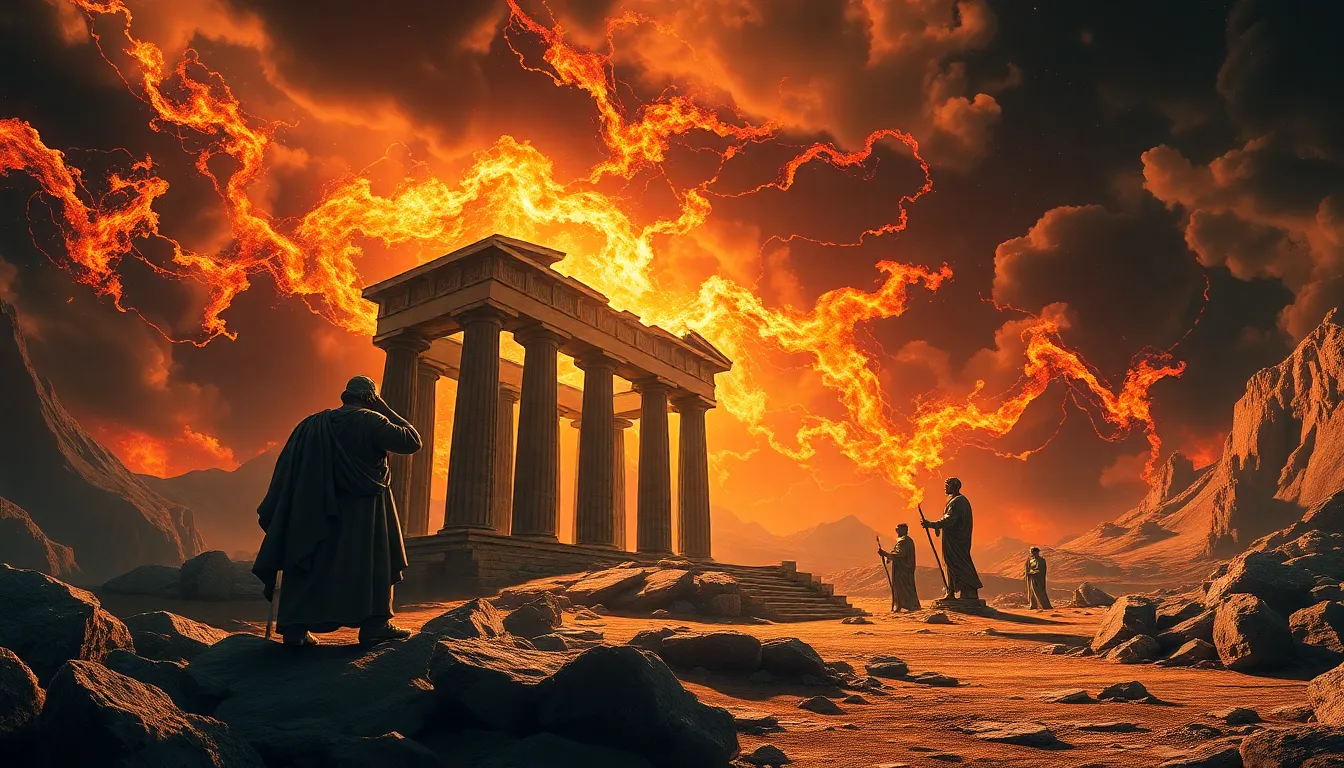
Exploring the Aftermath of the Titanomachy: A New Order Emerges
I. Introduction
The Titanomachy, a monumental conflict in Greek mythology, marks a significant turning point in the cosmic order. This war pitted the Titans, the previous rulers of the universe, against their offspring, the Olympian gods, led by Zeus. The clash between these two powerful factions not only reshaped the divine hierarchy but also had profound implications for the mortal realm.
The significance of the Titanomachy extends beyond mere conflict; it represents the struggle for power, the transition from one era to another, and the establishment of new divine order. This article aims to explore the aftermath of the Titanomachy, examining the emergence of a new order, the impact on mortals, and the lasting legacy of this epic war.
II. The Titanomachy: A Recap
A. Key players: Titans vs. Olympians
The Titanomachy featured a fierce battle between the Titans, descendants of Gaia (the Earth) and Uranus (the Sky), and the Olympians, led by Zeus, who sought to dethrone their elder counterparts. Key figures include:
- Zeus – The king of the Olympians and god of the sky.
- Chronos – The leader of the Titans, who was overthrown by Zeus.
- Hera – Zeus’s sister and wife, who played a significant role in the Olympian victory.
- Poseidon – God of the sea and Zeus’s brother, who contributed to the Olympians’ strategies.
- Hades – God of the underworld, another of Zeus’s brothers, who assumed control over the realm of the dead post-war.

B. Major events and battles
The Titanomachy lasted for ten years and involved numerous battles. The Olympians, with the help of the Cyclopes and Hecatoncheires, engaged in fierce combat against the Titans. Key events include:
- The release of the Cyclopes and Hecatoncheires from Tartarus, who provided Zeus with thunderbolts.
- The decisive battle on Mount Olympus, where Zeus and his siblings launched a final assault against the Titans.
- The intervention of Gaia, who initially supported the Titans but later turned against them.
C. Consequences of the war
The Titanomachy resulted in the defeat of the Titans, leading to their imprisonment in Tartarus. The Olympians gained control over the cosmos, establishing a new order that would define the relationship between gods and mortals for centuries to come.
III. The Immediate Aftermath: A World in Transition
A. The fall of the Titans and their fate
With the Titans defeated, their powerful reign came to an end. Most of the Titans were banished to Tartarus, a deep abyss used as a dungeon of torment. This marked a dramatic shift in the balance of power in the universe, with the Titans’ influence greatly diminished.
B. Changes in the Earth’s landscape and order
The war reshaped the Earth itself. Mountains were raised, valleys were carved, and the very fabric of nature was altered as a result of the fierce battles that took place. This upheaval not only affected the physical world but also brought about a new cosmic order governed by the Olympians.
C. The initial power vacuum and uncertainty
In the aftermath of the Titanomachy, there was a period of uncertainty. With the Titans defeated, the Olympians had to establish their rule and address the power vacuum left in the wake of the conflict. The fate of the world rested in the hands of the Olympians as they sought to solidify their dominion.
IV. The Rise of the Olympians
A. Establishing dominance: Zeus and the new hierarchy
Zeus emerged as the supreme ruler, establishing a new hierarchy among the gods. He divided responsibilities among his siblings and allies, creating a structured governance that allowed for more stability than the previous Titan regime.
- Zeus – King of the gods, ruler of Mount Olympus.
- Poseidon – God of the sea, granted dominion over all waters.
- Hades – Lord of the underworld, overseeing the dead.
- Hera – Queen of the gods, protector of marriage and women.
B. The role of other Olympian gods in governance
Each Olympian god took on specific roles that reflected their individual powers and domains. They became responsible for various aspects of mortal life and natural phenomena, establishing a direct connection between the divine and human realms.
C. Creation of new myths and rituals
With the rise of the Olympians, new myths and rituals began to emerge. The stories of the Olympians and their interactions with mortals served to reinforce their power and establish a new religious framework. Worship practices evolved, and temples dedicated to the Olympian gods were built across ancient Greece.
V. The Impact on Mortals and Society
A. Changes in human worship and religious practices
The Titanomachy led to significant changes in how mortals worshipped the gods. The Olympians became central figures in religious life, and new rituals were established to honor them. Festivals celebrating the gods were instituted, and temples became focal points for community gatherings.
B. The influence of the Olympians on daily life and culture
The Olympians’ influence permeated all aspects of Greek life. They became patrons of various activities, such as:
- Athletics – Associated with Zeus, leading to the establishment of the Olympic Games.
- Arts and Culture – Inspired by Apollo, the god of music and poetry.
- Agriculture – Associated with Demeter, goddess of the harvest.
C. Emergence of new heroic legends
The aftermath of the Titanomachy also saw the rise of new heroes who embodied the values of the Olympian gods. These legendary figures, such as Heracles and Perseus, became central to Greek mythology, showcasing the triumph of the Olympians over the Titans and inspiring future generations.
VI. The Legacy of the Titanomachy
A. Historical interpretations and cultural reflections
The Titanomachy has been interpreted in various ways throughout history. Scholars have analyzed it as a metaphor for the struggle between order and chaos, civilization and barbarism. It reflects the ancient Greeks’ understanding of power dynamics and their cultural values.
B. Artistic representations in literature and art
The Titanomachy has been a rich source of inspiration for ancient and modern artists. From epic poems like Hesiod’s “Theogony” to classical sculptures and paintings, the conflict has been depicted in numerous forms, capturing the imagination of audiences for centuries.
C. Long-term philosophical implications
The philosophical implications of the Titanomachy resonate through Western thought. It raises questions about authority, the nature of power, and the relationship between the divine and the mortal. The struggle between the Titans and the Olympians serves as an enduring symbol of change and transformation.
VII. The New Order: Challenges and Conflicts
A. Internal conflicts among the Olympians
Despite their victory, the Olympians faced internal strife. Jealousies and rivalries among the gods often led to conflicts that threatened their unity. Notable examples include:
- The tumultuous relationship between Zeus and Hera.
- Poseidon’s disputes with Zeus over control of the seas.
- Hades’s resentment towards the other gods for being relegated to the underworld.
B. Resurgence of Titan remnants and other threats
While the Titans were imprisoned, remnants and allies of the Titans posed ongoing threats to the Olympian order. Creatures like the Giants, born from Gaia, often challenged the Olympians, leading to further conflicts such as the Gigantomachy.
C. The balance of power and its fragility
The balance of power established by the Olympians was