Exploring the Myths Behind the Parthenon: What Legends Tell Us
I. Introduction
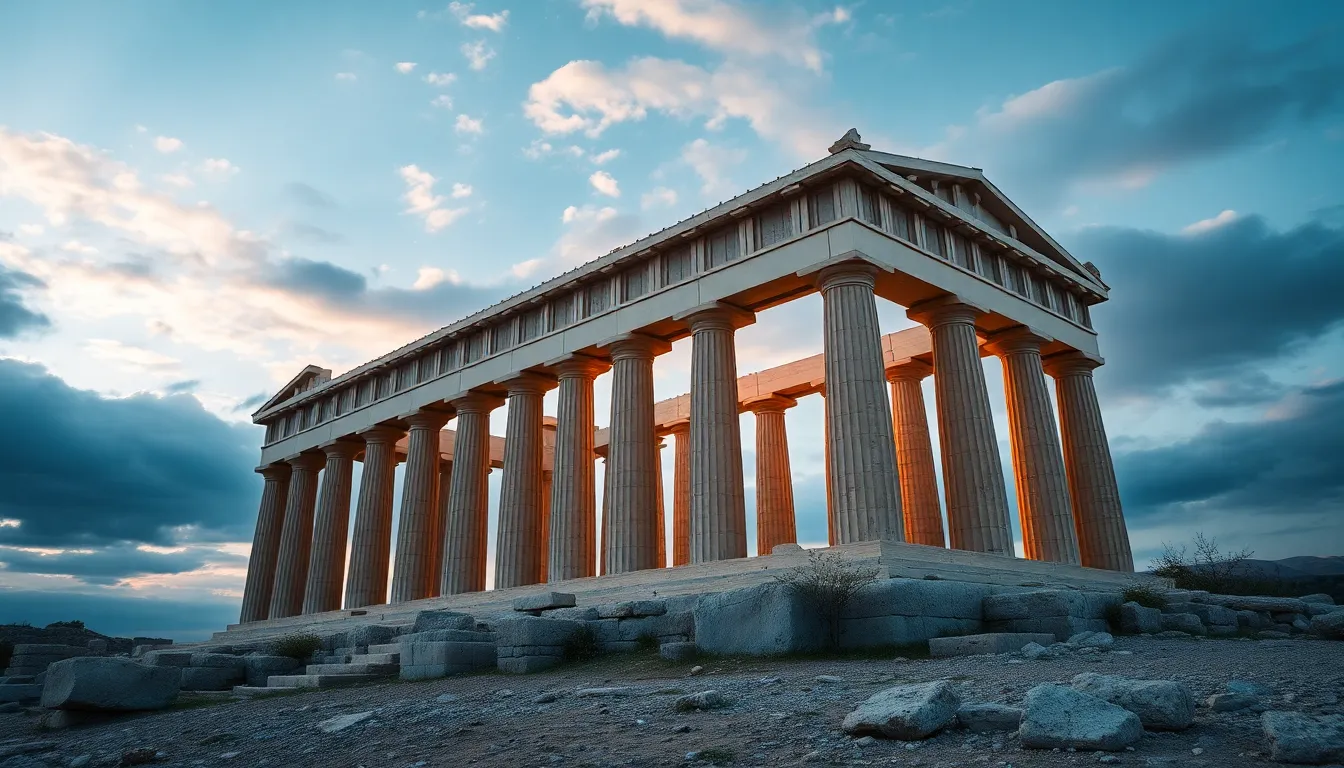
The Parthenon, an iconic symbol of Ancient Greece, stands majestically on the Acropolis of Athens. Constructed in the 5th century BCE, this temple was dedicated to the goddess Athena, the city’s patron deity. Its historical significance extends beyond its architectural grandeur; it represents the zenith of Athenian democracy and culture.
However, the Parthenon is not merely a relic of the past; it is steeped in myths and legends that have shaped its narrative and purpose. These stories provide insight into the values, beliefs, and artistic expressions of ancient Greeks. In this article, we will delve into these myths, exploring their origins, meanings, and lasting impact on the Parthenon and Athenian society.
II. The Origins of the Parthenon
To understand the Parthenon’s myths, we must first consider the historical context of Ancient Athens. In the 5th century BCE, Athens emerged as a powerful city-state, flourishing in arts, philosophy, and governance. This period, known as the Golden Age of Athens, was marked by the establishment of democracy and significant cultural advancements.
The Parthenon served as a central religious site, symbolizing the unity of the Athenian people under the guidance of Athena. It was not only a temple but also a treasury and a symbol of Athenian power. The construction of the Parthenon reflected the city’s self-identification with democracy and the divine.
Athena, the goddess of wisdom, war, and crafts, was born fully grown from the forehead of Zeus. This miraculous birth symbolizes intelligence, strategy, and the virtues of rational thought, aligning perfectly with the democratic ideals of the Athenian people. The Parthenon stands as a tribute to her, housing her colossal statue and serving as a focal point for worship and celebration.
III. Myth of Athena’s Birth
The legend of Athena’s birth is one of the most significant myths associated with the Parthenon. According to mythology, Zeus, fearing that a child born to him would be more powerful than he, swallowed his pregnant consort Metis. Later, he suffered from a severe headache, prompting Hephaestus to split open his head, from which Athena emerged, fully armored and ready for battle.
This miraculous birth is rich in symbolism, representing not only the power of wisdom over brute strength but also the idea that the greatest gifts often come from unexpected sources. Athena’s emergence signifies the birth of rational thought and civilization, qualities that the Parthenon embodies.
Artistic representations of Athena can be found throughout the Parthenon, most notably in the friezes and sculptures. The Parthenon’s east pediment illustrated her birth, showcasing her divine nature and connection to the city. These artistic depictions serve to reinforce her importance in Athenian society and the overarching narrative of the temple.

IV. The Contest Between Athena and Poseidon
Another pivotal myth is the contest between Athena and Poseidon for the patronage of Athens. As the legends tell, both deities sought to become the city’s protector by offering gifts to its citizens. Poseidon struck the ground with his trident, producing a saltwater spring, while Athena offered an olive tree, symbolizing peace and prosperity.
The Athenians, valuing the olive tree for its many uses—food, oil, and wood—chose Athena as their patroness. This contest not only highlights the characteristics of both gods but also reflects the values of Athenian society, which prized wisdom and sustenance over military power.
The Parthenon’s design and purpose were influenced by this myth. The olive tree became a symbol of Athena’s victory and is often depicted in various forms of art within the temple. This narrative of competition and choice underscores the significance of the Parthenon as a spiritual and civic center of Athens.
V. The Role of the Parthenon in Athenian Rituals
The Parthenon was central to many religious festivals and ceremonies in ancient Athens. One of the most important was the Panathenaic Festival, which celebrated Athena’s birthday. This festival included a grand procession, athletic competitions, and sacrifices, all intended to honor the goddess.
Myths surrounding the Panathenaic Festival emphasize the connection between the people of Athens and their goddess. The procession featured a new peplos (robe) for the statue of Athena, reinforcing her role as protector and benefactor of the city.
During the festival, citizens would make offerings and sacrifices to Athena, reflecting their devotion and seeking her favor. The rituals performed at the Parthenon fostered a sense of community and collective identity among the Athenians, linking them to their divine patroness through shared worship.
VI. Architectural Myths and Symbolism
The Parthenon’s construction is also shrouded in myths and legends. According to tradition, the design of the temple was inspired by divine guidance. The architects, Ictinus and Callicrates, are said to have incorporated mystical proportions and sacred geometry into the building’s design, mirroring the harmony of the universe.
Symbolic elements in the architecture reflect Athenian values. The Parthenon’s Doric columns represent strength and simplicity, while the intricate sculptures and friezes celebrate cultural achievements and divine favor. The temple’s orientation and proportions create a sense of harmony and balance, embodying the ideals of beauty and order that the Athenians cherished.
Additionally, the Parthenon employs optical illusions, such as slight curvature in the columns and entasis (a slight swelling), to create a visually perfect structure. These techniques, rooted in myth and mathematics, reflect the Athenian pursuit of excellence in art and architecture.
VII. The Influence of Myths on Modern Perceptions
The myths associated with the Parthenon have significantly influenced contemporary views of this ancient monument. The stories of Athena’s birth, her contest with Poseidon, and the rituals conducted within the temple resonate with modern audiences, highlighting timeless themes of wisdom, community, and identity.
In popular culture, the Parthenon has been depicted in various forms of media, from literature to film, often symbolizing democracy, beauty, and the triumph of civilization. These representations keep the ancient myths alive, allowing new generations to connect with the rich heritage of Athens.
The ongoing relevance of these myths in discussions of heritage and identity underscores the Parthenon’s status as more than just an architectural marvel; it serves as a reminder of the cultural and historical legacies that shape our understanding of the past.
VIII. Conclusion
In exploring the myths surrounding the Parthenon, we uncover a rich tapestry of stories that reflect the values and beliefs of ancient Athens. From Athena’s miraculous birth to her contest with Poseidon, these legends illuminate the significance of the Parthenon as a site of worship, community, and artistic expression.
The enduring legacy of the Parthenon in modern society serves as a reminder of the intersection of myth and history. As we continue to appreciate this monumental structure, we also embrace the stories that have shaped its identity and the cultural heritage it represents.
In understanding the Parthenon, we not only honor the past but also recognize the timeless narratives that continue to influence our present and future.