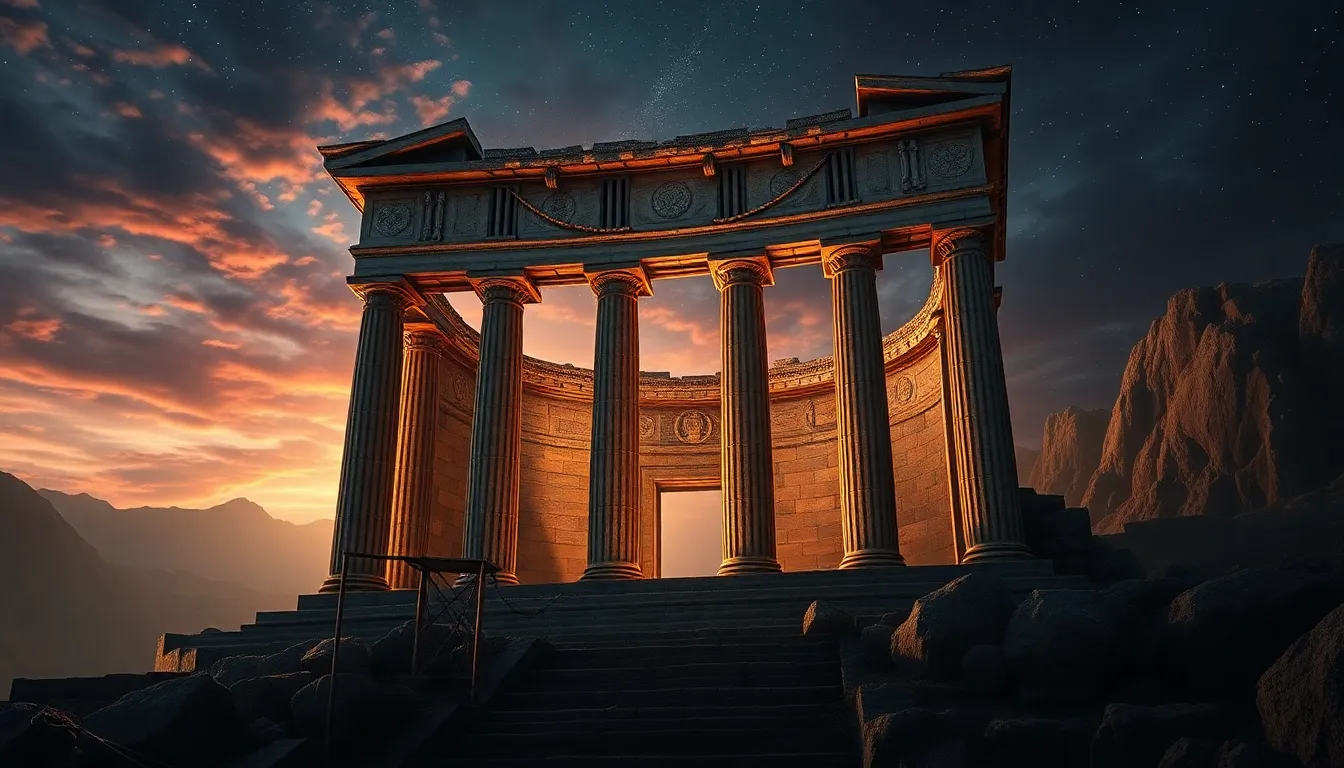
Exploring the Nine Circles of Tartarus: A Mythical Tour
I. Introduction to Tartarus
Tartarus, in Greek mythology, represents one of the most profound and enigmatic realms of the afterlife. Defined as a primordial void, it serves as a deep abyss used as a dungeon of torment for the wicked and a prison for the Titans. Unlike the more serene Hades, Tartarus is a place of punishment and despair, making it a significant aspect of Greek cosmology.
As a realm of the afterlife, Tartarus is often depicted as a dark and terrifying location where souls are subjected to eternal suffering. It is a stark reminder of the moral lessons woven throughout Greek myths, emphasizing justice and retribution. This article aims to guide you through the nine circles of Tartarus, exploring the punishments and souls that inhabit this dark domain.
II. Historical Context and Literary Origins
The concept of Tartarus is rooted in ancient Greek texts, particularly in the works of Hesiod and Homer. In Hesiod’s “Theogony,” Tartarus is described as a place far below the earth, where the Titans were imprisoned after their defeat by the Olympian gods. Homer, in “The Iliad,” also references Tartarus as a dark abyss that serves as a prison for the most formidable foes of the gods.
Over time, the portrayal of Tartarus evolved within Greek mythology and literature. It became synonymous with the idea of punishment for the sins committed during one’s life, differentiating it from other realms such as Elysium, which was reserved for the virtuous. In comparison to other mythological underworlds, such as the Norse Hel or the Egyptian Duat, Tartarus stands out for its specific focus on retributive justice.
III. The Structure of Tartarus: An Overview of the Circles
Tartarus is commonly envisioned as a multi-layered structure consisting of nine distinct circles. Each circle represents different sins and the corresponding punishments that await the souls who committed them during their lives. The descent through these circles symbolizes a journey into the depths of despair and moral degradation.
As one descends through each circle, the severity of the punishments intensifies, illustrating the belief that each sin carries its own weight and consequence. This structure not only serves to categorize the various forms of human vice but also presents an opportunity for redemption, albeit a slim one, for the souls trapped within these circles.
IV. The First Circle: The Uncommitted
The first circle of Tartarus is inhabited by the souls of the uncommitted—those who lived their lives without making meaningful choices. These souls are neither virtuous nor villainous, having failed to take a stand on any moral issue. Their punishment is to eternally chase a banner that perpetually eludes them, symbolizing their inability to commit to any cause or belief.
Among the mythological figures associated with this circle are those who were indecisive in life, such as the ancient Greeks who did not choose sides during significant conflicts. They are destined to wander aimlessly, reflecting the consequences of a life lived without purpose.
V. The Second Circle: The Lustful
In the second circle reside the souls of the lustful, who succumbed to their carnal desires. These souls are punished by being blown about by violent winds, representing their inability to control their passions. The torment is eternal, reflecting the chaos that lust brings to one’s life.
Notable myths associated with this circle include those of figures like Paris, who chose Helen over his duties, and Aphrodite, whose beauty sparked countless conflicts. Their stories serve as cautionary tales about the dangers of unchecked desire and the turmoil it can unleash.
VI. The Third Circle: The Gluttonous
The third circle is home to the gluttonous, who indulged excessively in food, drink, and other pleasures. Their punishment involves lying in a vile slush produced by ceaseless rain, symbolizing the wastefulness and degradation of their excesses. They are tormented by the presence of Cerberus, the three-headed dog, who represents their insatiable appetites.
Gluttony in mythology often carries deep symbolic implications, suggesting a deeper moral failing beyond mere indulgence. Famous characters linked to this circle include Tantalus, who was forever denied sustenance, and other figures who exemplified the consequences of overindulgence.
VII. The Remaining Circles: Wrathful, Heretical, Violent, Fraudulent, and Treacherous
The remaining circles of Tartarus are equally significant, each representing different aspects of human vice and the corresponding punishments:
- Fourth Circle: The Wrathful and Sullen
This circle is divided into two groups: the wrathful, who are eternally fighting each other in a swamp, and the sullen, who lie submerged in the mud, unable to express their anger. Their punishment reflects the destructive nature of unchecked rage and despair.
- Fifth Circle: The Heretical
Here, heretics are punished by being trapped in fiery tombs. This circle symbolizes the consequences of denying the established truths of the gods and the universe. Notable figures include those who challenged the traditional beliefs of their time.
- Sixth Circle: The Violent
The violent are divided into three subcategories: those who were violent against others, themselves, and God. Their punishments vary from being submerged in rivers of blood to being turned into trees, illustrating the multifaceted nature of violence.
- Seventh Circle: The Fraudulent
Fraudsters face a range of torments, from being chased by serpents to being engulfed in flames. This circle serves as a warning about the consequences of deceit and betrayal.
- Eighth Circle: The Treacherous
The treacherous are punished according to the severity of their betrayals. They may be frozen in ice or consumed by their own treachery, serving as a stark reminder of the dangers of disloyalty.
The ninth circle is particularly infamous as it represents the ultimate betrayal. Here, the souls of those who have committed heinous acts against kin, country, or benefactor are eternally encased in ice, symbolizing their complete detachment from humanity and the warmth of life.
VIII. Conclusion: Lessons from Tartarus
As we reflect on the nine circles of Tartarus, we uncover profound moral and ethical teachings that resonate through time. Each circle serves not only as a punishment but also as a cautionary tale, warning against the vices that can lead to one’s downfall.
In modern culture and literature, the themes of Tartarus continue to find relevance. The exploration of moral consequences and the complexity of human nature are topics that resonate with contemporary audiences, reminding us of the timeless nature of these myths.
Ultimately, the significance of Tartarus lies in its ability to provoke thought about our choices and the paths we take in life. By delving into these mythological explorations, we gain insights into human nature, the consequences of our actions, and the eternal quest for redemption.