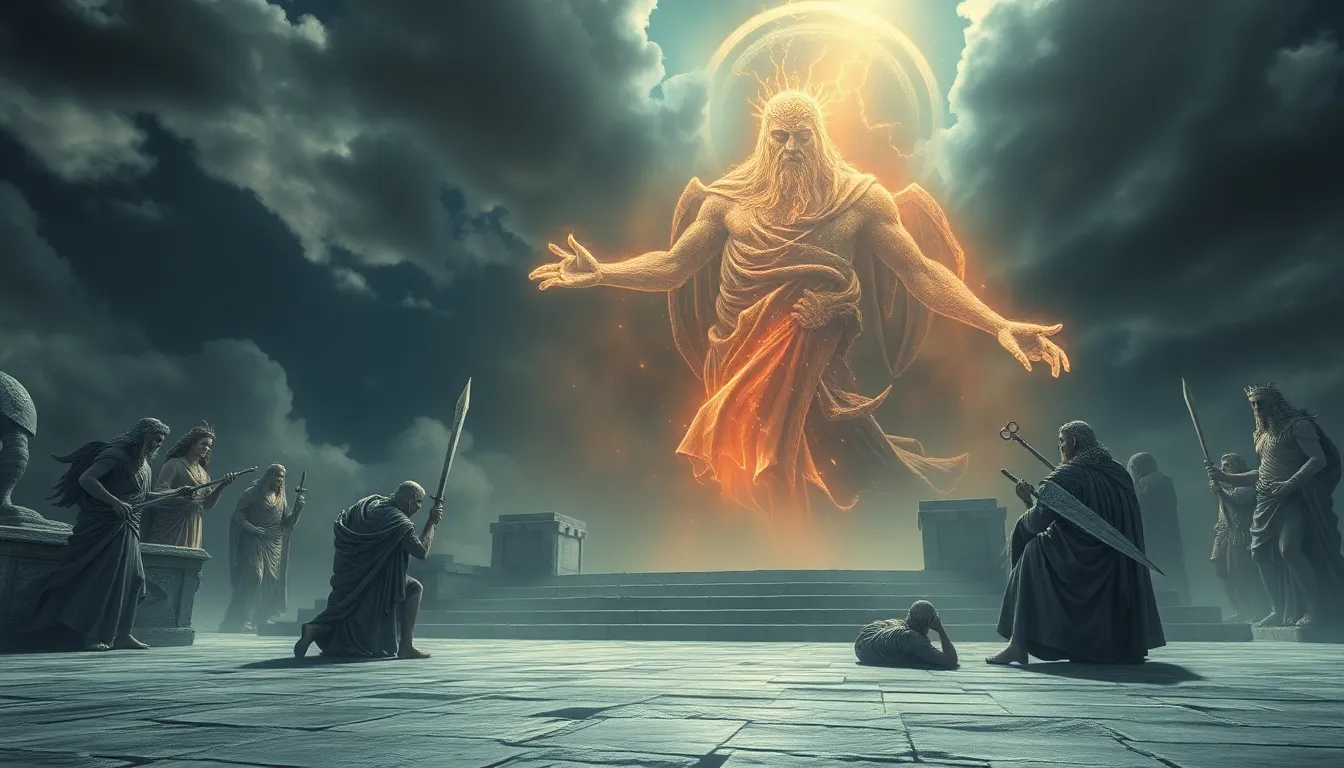
Fallen from Grace: Mortals Who Faced the Gods’ Wrath
I. Introduction
In the vast tapestry of mythology, the concept of divine wrath serves as a powerful narrative force, illustrating the consequences that mortals face when they transgress against the gods. Whether it be through acts of hubris, defiance, or disrespect, these stories reflect the belief that the divine realm is not only powerful but also deeply invested in the moral order of the universe. The examination of mortal transgressions against the divine highlights the fragile nature of human existence and the inevitable repercussions that arise when one challenges the authority of higher powers.
II. The Nature of Divine Wrath
Divine wrath can be defined as the intense anger or displeasure exhibited by gods towards mortals who violate cosmic laws or moral codes. This wrath often manifests in various forms, including:
- Physical Punishments: Such as transformation, illness, or death.
- Emotional Distress: Inflictions of madness, despair, or guilt.
- Societal Consequences: Disruption of community harmony or natural disasters.
Throughout different cultures, divine wrath is characterized by its severity and unpredictability. In many mythologies, gods are portrayed as capricious beings, capable of great kindness but also swift to punish those who overstep their bounds. The consequences of angering the gods can lead to tragic fates that serve as cautionary tales for future generations.
III. Mythological Figures Who Faced Divine Retribution
Numerous myths recount the tales of mortals who faced the wrath of the gods. These narratives often serve as moral lessons about the consequences of human actions. One of the most famous examples is that of Prometheus, the Titan who defied Zeus to bring fire to humanity.

Case Study: Prometheus and the Gift of Fire
Prometheus’s act of stealing fire symbolizes the quest for knowledge and enlightenment, yet it also represents a direct challenge to divine authority. As punishment for his transgression, Zeus ordered Prometheus to be bound to a rock, where an eagle would eat his liver each day, only for it to regenerate overnight. This eternal punishment serves as a stark reminder that defiance against the gods comes at a tremendous cost.
IV. Real-Life Historical Figures and Their Downfalls
The theme of divine punishment is not limited to mythology; it also finds echoes in history. Many historical figures have faced downfalls that can be interpreted as manifestations of divine retribution.
Case Study: The Fate of King Nebuchadnezzar II
Nebuchadnezzar II, the powerful King of Babylon, is often remembered for his grandeur and military conquests. However, his story also includes a dramatic fall from grace. According to biblical accounts, Nebuchadnezzar’s pride led him to exalt himself above God. As a result, he was struck with madness, living like an animal for seven years, until he recognized the sovereignty of the divine. His story serves as a historical parallel to mythological narratives, emphasizing that hubris can lead to devastating consequences, both in life and legacy.
V. Themes of Hubris and Pride
Hubris, or excessive pride, is a common theme in many stories of divine wrath. It often acts as the catalyst for a mortal’s downfall, illustrating the dangers of overstepping human limitations.
Case Study: Icarus and the Consequences of Overreaching
The tale of Icarus is a classic example of hubris leading to divine punishment. Icarus, the son of Daedalus, was gifted with wings made of feathers and wax. Ignoring his father’s warnings, he flew too close to the sun, causing the wax to melt and leading to his tragic fall into the sea. This myth serves to remind us of the importance of humility and the acknowledgment of our human limitations, reinforcing the idea that striving beyond what is permissible can result in dire consequences.
VI. The Role of Fate and Destiny
The interplay between fate and free will is a significant aspect of many mythological tales of divine wrath. While mortals may have the ability to choose their actions, the consequences of those actions often seem preordained.
Case Study: Oedipus and the Inescapable Prophecy
The story of Oedipus is a profound exploration of fate and destiny. Despite Oedipus’s efforts to avoid the prophecy that he would kill his father and marry his mother, he ultimately fulfills it through a series of choices that seem to be both his own and dictated by fate. His tragic end highlights the theme that, no matter how much one tries to escape their destiny, the gods’ will may ultimately prevail, leading to a catastrophic outcome.
VII. Lessons Learned from Mortal Failures
The tales of mortals facing divine wrath provide rich moral and ethical implications. They serve as cautionary tales that stress the importance of accountability and the consequences of one’s actions.
The lessons learned from these stories include:
- Respect for the Divine: Acknowledging the limits of human power in relation to the divine.
- The Dangers of Hubris: Understanding that excessive pride can lead to downfall.
- Awareness of Fate: Recognizing the complexities of fate and free will in our lives.
These narratives resonate through time, informing contemporary views on morality, ethics, and the consequences of one’s actions in society today.
VIII. Conclusion
In summary, the significance of understanding divine retribution in mythology lies not only in the rich narratives themselves but also in the moral lessons they impart. The tales of mortals who faced the wrath of the gods remind us of the importance of humility, respect for the divine order, and the acceptance of our limitations. As we reflect on these stories, we find that their relevance transcends time, offering insights into human behavior and the consequences of our actions in the modern world. Through these myths, we are reminded that while we may seek to transcend our mortal bounds, we must always tread carefully, for the wrath of the gods is a powerful force that shapes our destinies.