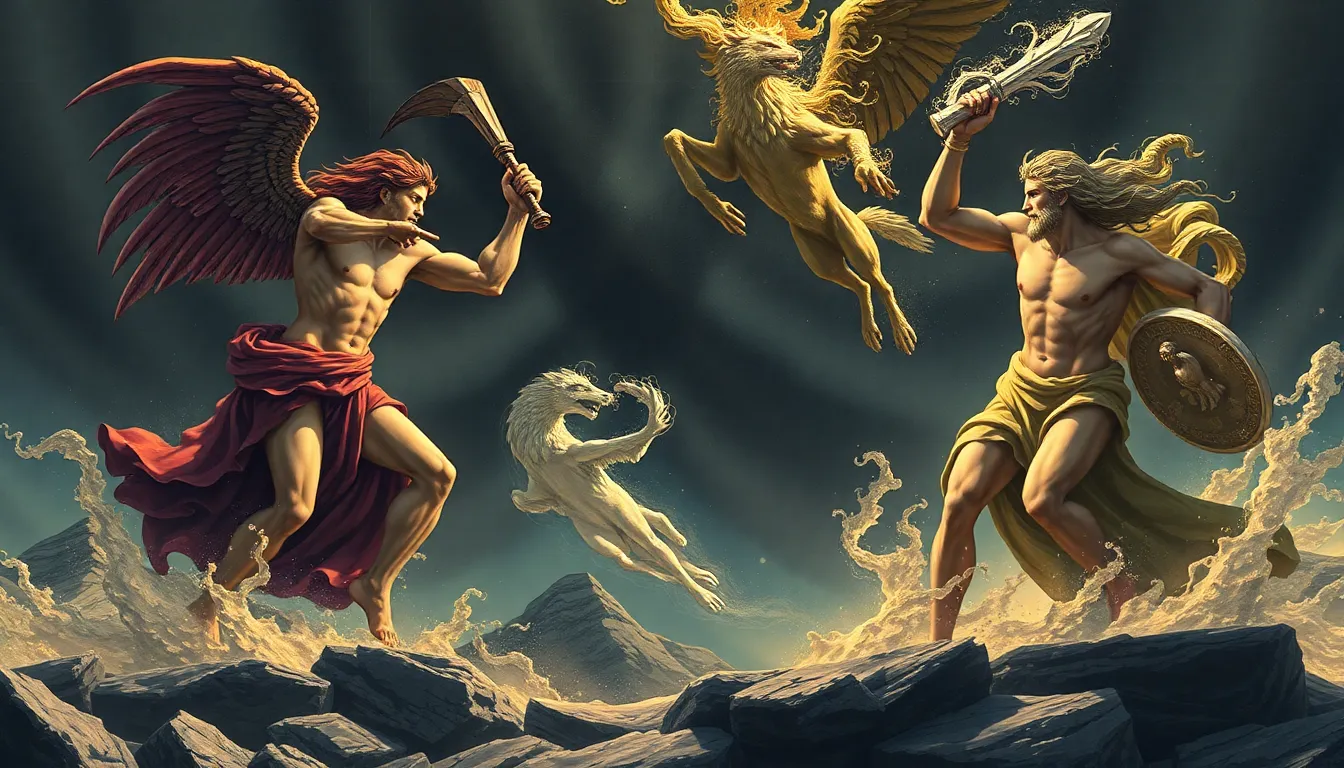
Fate vs. Free Will: The Trials That Changed the Course of Greek Myths
I. Introduction
In Greek mythology, the concepts of fate and free will are intricately woven into the fabric of the narratives that have been passed down through generations. Fate, often depicted as a predetermined force, suggests that certain outcomes are set in stone, leaving little room for personal choice. Conversely, free will represents the ability of individuals to make choices that shape their paths, often leading to unexpected consequences.
The significance of these themes is profound, as they reflect the struggles and moral dilemmas faced by mortals and gods alike. Through various tales, Greek mythology explores the tension between destiny and autonomy, raising questions about the extent to which individuals control their fates. This article aims to delve into key trials that highlight this tension, examining the pivotal moments that illustrate the dynamic interplay between fate and free will.
II. The Concept of Fate in Greek Mythology
Fate, or moira, is a central theme in Greek mythology, often embodied by the Moirai, or Fates, who are three sisters: Clotho, Lachesis, and Atropos. They determine the life span and destiny of every mortal, weaving the threads of life with unwavering authority.
A. The Role of the Moirai (Fates) and Their Influence on Mortal Lives
The Moirai play a crucial role in the lives of both mortals and gods. Their decisions cannot be altered, emphasizing the inevitability of fate. In many myths, characters find themselves grappling with the knowledge of their doomed futures, leading to tragic outcomes.
B. Key Myths Highlighting Predetermined Destinies
- The Fate of Oedipus: Foretold to kill his father and marry his mother, Oedipus’s life is a classic example of a prophecy that cannot be escaped.
- The Curse of the House of Atreus: A lineage doomed by fate, showcasing how curses and prophecies shape the lives of its members.
- The Tragedy of Agamemnon: His fate, dictated by the gods and his own choices, leads to his downfall and the ruin of his family.
C. The Inevitability of Fate in the Lives of Heroes and Gods
The inevitability of fate manifests in the lives of heroes, who often confront their destinies with resignation or rebellion. Even gods, who possess immense power, are not immune to the decrees of fate, suggesting a universal force that governs all beings in the mythological universe.
III. The Nature of Free Will in Greek Myths
While fate looms large in Greek mythology, the notion of free will allows characters to navigate their destinies through personal choices and actions. This interplay raises moral questions about responsibility and consequence.
A. Instances of Choice and Personal Agency Among Characters
Many characters in Greek mythology make pivotal choices that reflect their personal agency. For instance, Achilles chooses to withdraw from battle, leading to dire consequences for the Greek forces. Such decisions highlight the complexity of human nature in the face of predetermined outcomes.
B. The Moral Implications of Free Will in Decision-Making
Free will comes with moral weight. The decisions made by characters often lead to significant repercussions, both for themselves and those around them. This moral dimension adds depth to the narratives, illustrating the consequences of choice.
C. Case Studies of Heroes Who Defy Fate Through Their Actions
- Theseus: By choosing to confront the Minotaur, Theseus defies the fate that had been laid out for him as a sacrificial victim.
- Odysseus: His cunning decisions throughout the Odyssey demonstrate how intellect and choice can alter the course of one’s fate.
IV. The Trials of Oedipus: A Foretold Tragedy
The story of Oedipus is perhaps the most poignant exploration of fate versus free will. Born to King Laius and Queen Jocasta, Oedipus is doomed by a prophecy that foretells he will kill his father and marry his mother.
A. Overview of Oedipus’s Prophecy and Its Implications
In an effort to escape this grim fate, Laius and Jocasta abandon their infant son. However, Oedipus ends up fulfilling the prophecy unknowingly, showcasing the futility of trying to outmaneuver fate.
B. Analysis of Oedipus’s Choices and Their Consequences
Oedipus’s choices, from seeking the truth about his origins to confronting the Sphinx, reflect his active engagement with his fate. Despite his noble intentions, these decisions ultimately lead to his tragic downfall.
C. The Intertwining of Fate and Free Will in Oedipus’s Story
Oedipus embodies the complex relationship between fate and free will, illustrating how personal agency can lead to unintended consequences, reinforcing the idea that fate cannot be escaped.
V. The Labors of Heracles: Struggles Against Predetermined Destiny
Heracles, known for his incredible strength and heroic feats, is another figure who grapples with the concepts of fate and free will. His labors are both a punishment and a means of atonement, reflecting his struggle against the fate imposed upon him.
A. Introduction to Heracles and His Fated Trials
After being driven mad by Hera and killing his family, Heracles is tasked with completing twelve labors as penance. Each labor serves as a test of his strength, intelligence, and will.
B. Examination of Heracles’s Actions and Their Impact on His Fate
Heracles’s choices during his labors, such as opting to save others or seeking assistance from allies, highlight the role of personal agency. His actions not only influence his fate but also shape his legacy as a hero.
C. The Balance Between Divine Intervention and Personal Choice
The interplay of divine intervention and Heracles’s decisions showcases the complexities of fate. While he is subject to the whims of the gods, his personal choices ultimately define his journey.
VI. The Story of Prometheus: Defiance and Consequences
Prometheus stands as a powerful symbol of free will and rebellion against the constraints of fate. His actions in stealing fire for humanity exemplify the struggle between autonomy and predetermined destiny.
A. Prometheus as a Symbol of Free Will and Rebellion Against Fate
By defying Zeus, Prometheus asserts his belief in the potential of humanity to rise above their fated limitations. His choice reflects the desire to empower others, despite the risks involved.
B. The Ramifications of His Actions for Humanity and Himself
While Prometheus’s gift of fire elevates humanity, it also leads to severe repercussions for him, as he is punished by being chained to a rock where an eagle eats his liver daily. This eternal punishment emphasizes the cost of defiance against fate.
C. The Broader Implications of His Story on the Theme of Free Will
Prometheus’s tale resonates beyond the confines of mythology, exploring themes of sacrifice, rebellion, and the moral implications of exercising free will. His defiance serves as a testament to the complexity of human agency.
VII. The Role of the Gods: Interveners or Enforcers of Fate?
The gods in Greek mythology often occupy a dual role as both enforcers of fate and interveners in mortal affairs. Their influence adds another layer to the interplay of fate and free will.
A. The Dual Role of Gods in Shaping Human Destinies
Gods like Zeus, Athena, and Apollo frequently intervene in mortal lives, occasionally altering the course of fate. Their actions can lead to both salvation and destruction, reflecting their complex relationship with humanity.</