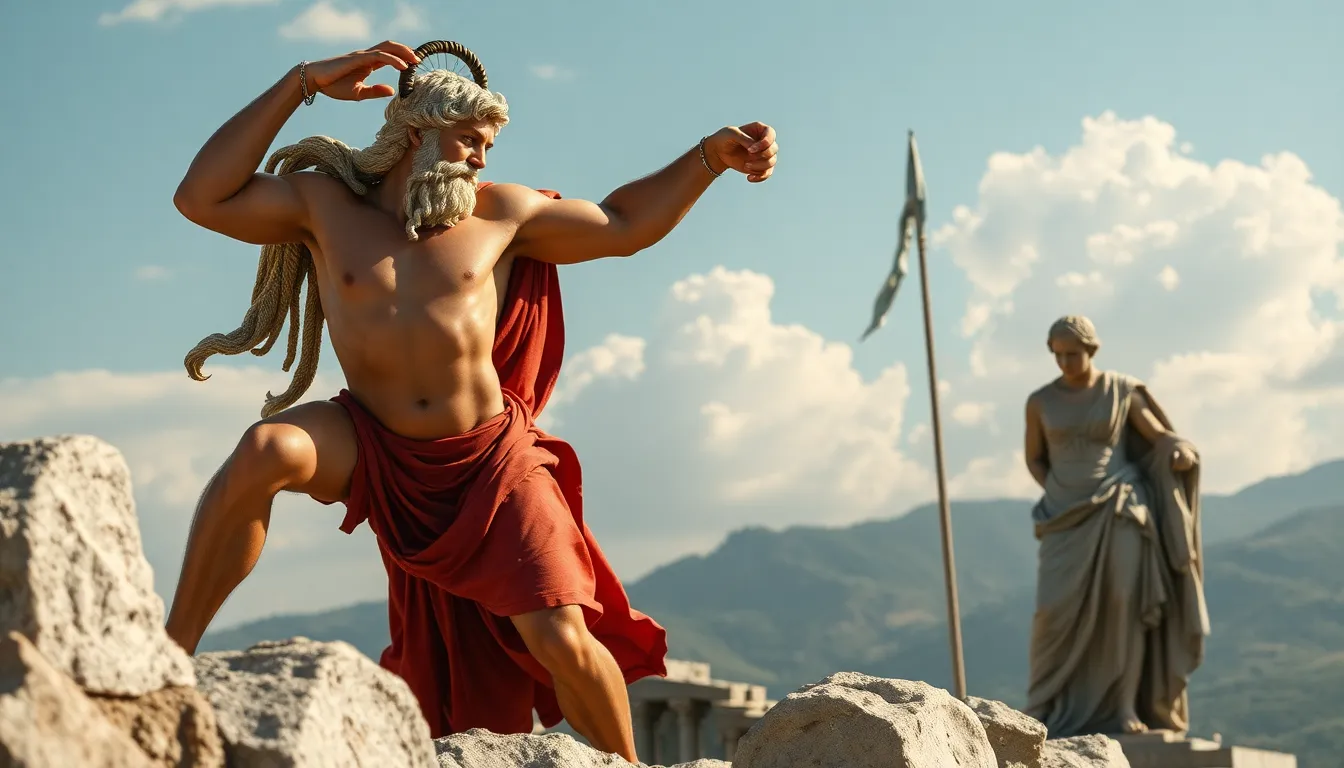
From Homer to Harry Potter: Tracing Greek Mythology in Popular Literature
I. Introduction
Greek mythology is one of the oldest and most influential narratives in human history. It encompasses a rich tapestry of gods, goddesses, heroes, and mythical creatures, which have shaped cultural and literary traditions for centuries. Its significance lies not only in its historical context but also in its ability to resonate with human experiences, emotions, and moral dilemmas.
Tracing the influence of Greek mythology in contemporary literature highlights the timelessness of these stories and their ability to adapt to new cultural contexts. From ancient epics to modern novels, the themes and characters of Greek mythology continue to inspire and captivate audiences around the world.
This article aims to explore the journey of Greek mythology through various literary epochs, from Homer’s foundational texts to modern adaptations in popular literature, and to analyze its enduring impact on storytelling today.
II. The Roots of Greek Mythology: Homer’s Contribution
Homer, the legendary ancient Greek poet, is credited with composing two of the most significant works of Western literature: The Iliad and The Odyssey. These epics not only serve as foundational texts for Greek mythology but also provide profound insights into the human condition.
A. Overview of Homer’s epics: The Iliad and The Odyssey
The Iliad recounts the events of the Trojan War, focusing on the wrath of Achilles and the themes of honor, revenge, and mortality. The Odyssey, on the other hand, follows the hero Odysseus as he encounters various trials on his journey home after the war, emphasizing themes of cunning, loyalty, and perseverance.
B. Key themes and characters introduced by Homer
- Fate and Free Will: The tension between destiny and personal choice is a central theme.
- Heroism and Honor: Characters like Achilles and Odysseus exemplify the Greek heroic ideal.
- The Role of the Gods: Divine intervention plays a crucial role in the lives of mortals.
C. The lasting impact of Homer’s work on later literature
Homer’s narratives have influenced countless writers and poets throughout history. The archetypes of the hero, the quest, and the tragic fall are evident in literature across cultures. Homer’s epics set the stage for exploring complex human emotions and ethical dilemmas, making them relevant even today.
III. The Classical Legacy: Greek Myths in Roman Literature
The transition from Greek to Roman literature marked a significant evolution in the interpretation and adaptation of Greek myths. Roman authors not only preserved these stories but also reimagined them in ways that reflected their own cultural values.
A. Transition from Greek to Roman adaptations
As the Roman Empire expanded, so did its fascination with Greek mythology. The Romans adopted many Greek gods and myths but often altered their characteristics and stories to fit Roman ideals.
B. Influential Roman authors and their interpretations
- Virgil: His epic, The Aeneid, tells the story of Aeneas, a Trojan hero, and draws heavily from the themes of duty and destiny.
- Ovid: In Metamorphoses, he creatively retells numerous Greek myths, focusing on transformation and change.
C. Continuation of mythological themes
Roman literature maintained the core themes of Greek mythology while infusing them with new perspectives, such as the importance of duty to the state and the complexities of personal sacrifice.
IV. The Renaissance Rebirth of Greek Mythology
The Renaissance was a period of renewed interest in classical texts, leading to a revival of Greek mythology in art, literature, and philosophy. This era marked a significant turning point in the appreciation of ancient narratives.
A. Rediscovery of classical texts during the Renaissance
Humanists sought to recover and study ancient manuscripts, leading to a resurgence of interest in Greek and Roman literature. This rekindling of classical knowledge influenced many aspects of culture, including literature.
B. Influence on poets, playwrights, and artists
- William Shakespeare: Incorporated mythological references, such as in A Midsummer Night’s Dream.
- John Milton: In Paradise Lost, he drew on themes from Greek mythology to explore human fallibility.
C. Key works that integrated Greek mythology
Renaissance artists and writers created works that merged classical themes with contemporary ideas, showcasing the enduring appeal of mythology. Paintings, poetry, and dramas often reflected mythological subjects, emphasizing beauty and moral lessons.
V. 19th and 20th Century: Mythology in Modern Literature
The 19th and 20th centuries saw a profound engagement with Greek mythology, particularly through the Romantic movement, which celebrated nature, emotion, and individuality.
A. The Romantic movement and its embrace of mythology
Romantic writers found inspiration in the myths of ancient Greece, using them to explore themes of passion, the sublime, and the human experience. The idealization of the past and the natural world played a significant role in their works.
B. Prominent authors who incorporated Greek myths
- William Blake: Used mythological symbols to convey complex ideas about existence and spirituality.
- Robert Graves: In The White Goddess, he examined the role of mythology in poetry and creativity.
C. Examples of mythological references in classic literature
Many classics of literature reference Greek mythology, such as:
- Moby-Dick by Herman Melville
- The Great Gatsby by F. Scott Fitzgerald
- The Waste Land by T.S. Eliot
VI. Greek Mythology in Contemporary Literature
Today, Greek mythology continues to inspire modern authors across various genres, particularly in fantasy and young adult literature. The themes and characters resonate with contemporary audiences, providing a bridge between ancient and modern storytelling.
A. Overview of modern authors drawing from Greek myths
Numerous authors have revitalized Greek mythology, reinterpreting the characters and themes for new generations. Their works often blend myth with modern issues, making ancient stories relevant.
B. Case studies: Rick Riordan’s Percy Jackson series
Rick Riordan’s Percy Jackson & The Olympians series is a prime example of contemporary literature that draws heavily from Greek mythology. The series follows Percy, a demigod, as he navigates the challenges of adolescence while dealing with mythological monsters and gods.
This series has not only sparked interest in Greek mythology among younger readers but has also led to adaptations in film and theater, further cementing its cultural impact.
C. Other notable examples in fantasy and young adult genres
Other authors who have incorporated Greek mythology include:
- Madeline Miller: Known for Circe and The Song of Achilles, which offer fresh perspectives on mythological figures.
- Joanne Harris: In The Gospel of Loki, she retells Norse mythology with a humorous twist, showing the crossover between mythologies.
VII. The Cultural Impact of Greek Mythology in Popular Media
The influence of Greek mythology extends beyond literature, permeating various forms of media, including film, television, theater, and video games. These adaptations play a significant role in shaping public perception and understanding of these ancient narratives.
<h3