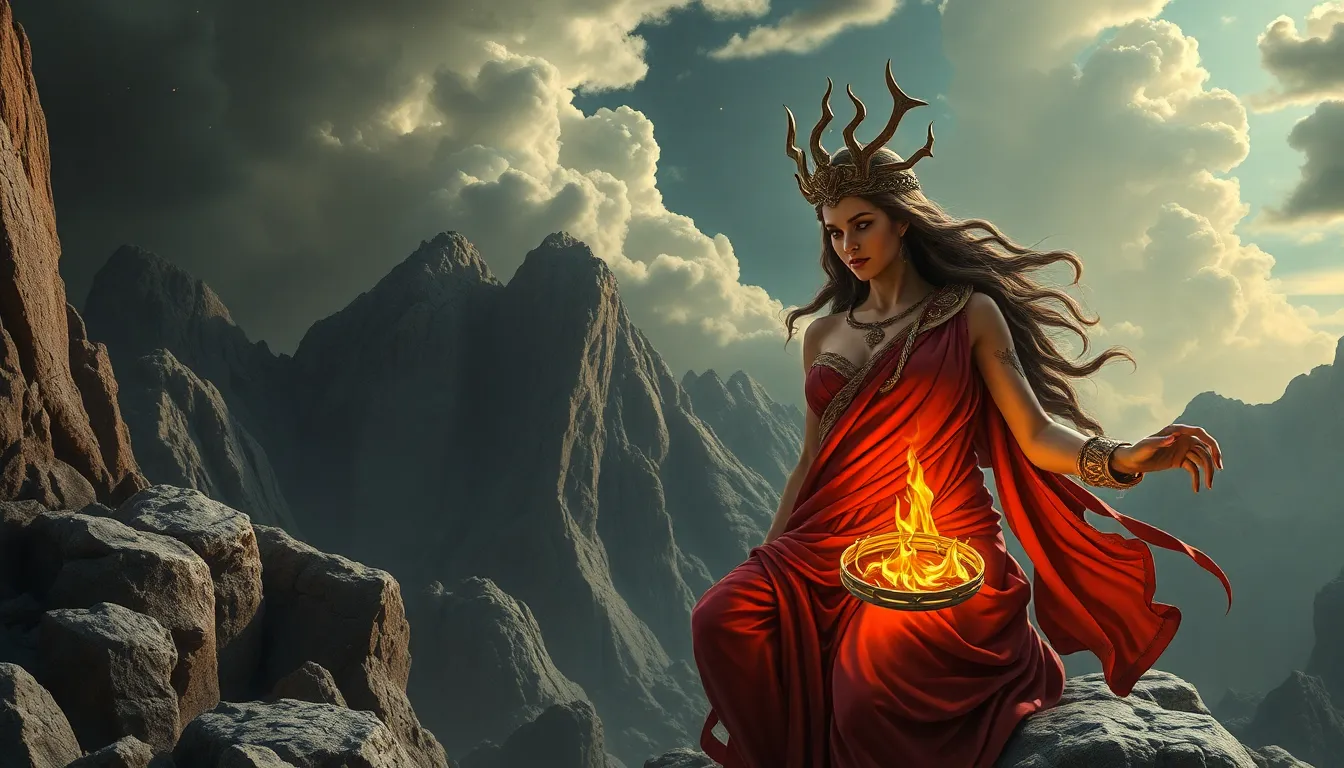
Gaia and Her Role in the Story of Prometheus
I. Introduction
The myth of Prometheus is one of the most enduring stories in Greek mythology, encapsulating themes of rebellion, sacrifice, and the quest for knowledge. Prometheus, a Titan, is best known for his act of stealing fire from the gods and giving it to humanity, an act that would have profound implications for both mortals and immortals alike. However, the narrative of Prometheus cannot be fully understood without acknowledging the influence of Gaia, the personification of Earth and one of the pivotal figures in Greek mythology.
This article aims to delve into the role of Gaia in the Prometheus narrative, exploring her significance, her relationships with other deities, and how her actions and legacy intertwine with those of Prometheus.
II. Understanding Gaia: The Personification of Earth
Gaia, often referred to as Mother Earth, is one of the primordial deities in Greek mythology. She is the personification of the Earth itself and is considered the ancestral mother of all life. Her mythological background is rich and complex, forming the foundation of many Greek myths.
A. Mythological background of Gaia
According to Hesiod’s “Theogony,” Gaia emerged at the dawn of creation, born from Chaos, the void from which all things originated. She gave birth to Uranus (the sky), the mountains, and the sea, establishing herself as a central figure in the Greek cosmology.
B. Her relationship with other deities and elements of nature
- Gaia is the mother of the Titans, including Prometheus, Cronus, and Rhea.
- She is also associated with other primordial beings, such as Tartarus (the abyss) and Eros (love).
- Her relationships often reflect the balance and interplay between nature and divinity.
C. Gaia’s portrayal in ancient texts
Gaia is often depicted as a nurturing figure, symbolizing fertility and life. In various ancient texts, she is portrayed as both a benevolent mother and a fierce protector of the natural order, capable of great wrath when her offspring are threatened.
III. The Myth of Prometheus: A Brief Summary
To understand Gaia’s influence, it is essential to summarize the myth of Prometheus. His story is one of courage and defiance against divine authority.
A. Key elements of Prometheus’ story
Prometheus is known for his intelligence and cunning. He defied Zeus, the king of the gods, by stealing fire from Olympus and giving it to humanity, enabling progress and civilization.
B. The act of stealing fire and its consequences
This act of rebellion did not go unpunished. Zeus, angered by Prometheus’ defiance, condemned him to eternal torment, having him chained to a rock where an eagle would eat his liver daily, only for it to regenerate each night.
C. Overview of Prometheus as a symbol of defiance and enlightenment
Prometheus embodies the spirit of enlightenment, representing the quest for knowledge and the struggle against oppressive authority. His story resonates with themes of creativity, sacrifice, and the moral implications of defying the gods.
IV. Gaia’s Influence on the Titans
As the mother of the Titans, Gaia played a crucial role in shaping their destinies and motivations, including Prometheus.
A. Gaia as the mother of the Titans
Gaia birthed the Titans with Uranus, and among them was Prometheus, who would ultimately stand in opposition to the divine order.
B. The role of Gaia in the upbringing and motivations of Titans like Prometheus
Gaia’s nurturing influence on the Titans instilled in them a sense of autonomy and rebellion, particularly in Prometheus, who sought to elevate humanity.
C. Titanomachy and its connection to Gaia’s legacy
The Titanomachy was a great war between the Titans and the Olympian gods, representing the struggle for power and control. Gaia’s support for her children during this conflict highlights her protective nature and the complexity of her relationships with the gods.
V. Gaia’s Perspective on Prometheus’ Actions
Gaia’s stance on Prometheus’ rebellion can be interpreted in various ways, reflecting her dual nature as both a nurturing and a vengeful figure.
A. Possible interpretations of Gaia’s stance on Prometheus’ rebellion
- As a mother, she may have supported Prometheus’ actions, valuing the gift of fire as a means for humanity to progress.
- Conversely, she might have seen the potential destruction that could arise from humanity’s misuse of such power.
B. The theme of creation vs. destruction in Gaia’s narrative
Gaia embodies the duality of nature, representing both creation and destruction. This duality is reflected in Prometheus’ gift, which, while beneficial, also comes with inherent risks.
C. How Gaia embodies the duality of nature in relation to Prometheus’ gift to humanity
Gaia’s nurturing aspect supports human advancement, while her destructive potential warns of the consequences of unrestrained ambition and power.
VI. The Impact of Gaia on the Punishment of Prometheus
Gaia’s actions and legacy also played a role in the punishment of Prometheus, shaping both the severity and the implications of his defiance.
A. Exploring how Gaia’s actions influence Zeus’ judgment
Some interpretations suggest that Zeus’ judgment was influenced by Gaia’s previous warnings regarding the Titans, as she had a vested interest in maintaining balance between the divine and mortal realms.
B. The role of Gaia in Prometheus’ enduring punishment
Despite being a nurturing figure, Gaia’s indifference towards Prometheus’ suffering illustrates the complexity of her character and the harsh realities of divine retribution.
C. The significance of Gaia’s maternal nature in shaping the consequences of Prometheus’ defiance
Gaia’s maternal nature highlights the interconnectedness of life and the consequences of one’s actions, suggesting that defiance against the divine order can lead to suffering not just for the defiant but for all of creation.
VII. The Legacy of Gaia and Prometheus in Modern Interpretations
The stories of Gaia and Prometheus continue to resonate in contemporary literature, art, and discussions surrounding environmentalism.
A. How contemporary literature and art depict Gaia and Prometheus
Modern interpretations often explore themes of environmental stewardship and the consequences of technological advancement, reflecting Gaia’s nurturing aspect and Prometheus’ rebellious spirit.
B. The relevance of their stories in discussions of environmentalism and humanity
Gaia’s role as the Earth Mother is increasingly significant in today’s environmental discourse, reminding us of the importance of living in harmony with nature, while Prometheus serves as a cautionary tale about the risks of human hubris.
C. Lessons learned from their intertwined narratives in modern contexts
- The need for balance between progress and preservation.
- The importance of considering the long-term consequences of our actions.
- The interconnectedness of all living things and the impact of human decisions on the natural world.
VIII. Conclusion
In examining Gaia’s role in the story of Prometheus, it becomes clear that her influence is profound and multifaceted. As the personification of Earth, Gaia embodies the dual nature of life, representing both creation and destruction.
The interconnectedness of nature and humanity is a central theme in their narratives, reminding us of the responsibilities that come with knowledge and power. The enduring significance of Gaia and Prometheus serves as a powerful reminder of the lessons that mythology imparts, encouraging us to reflect on our relationship with the world around us.