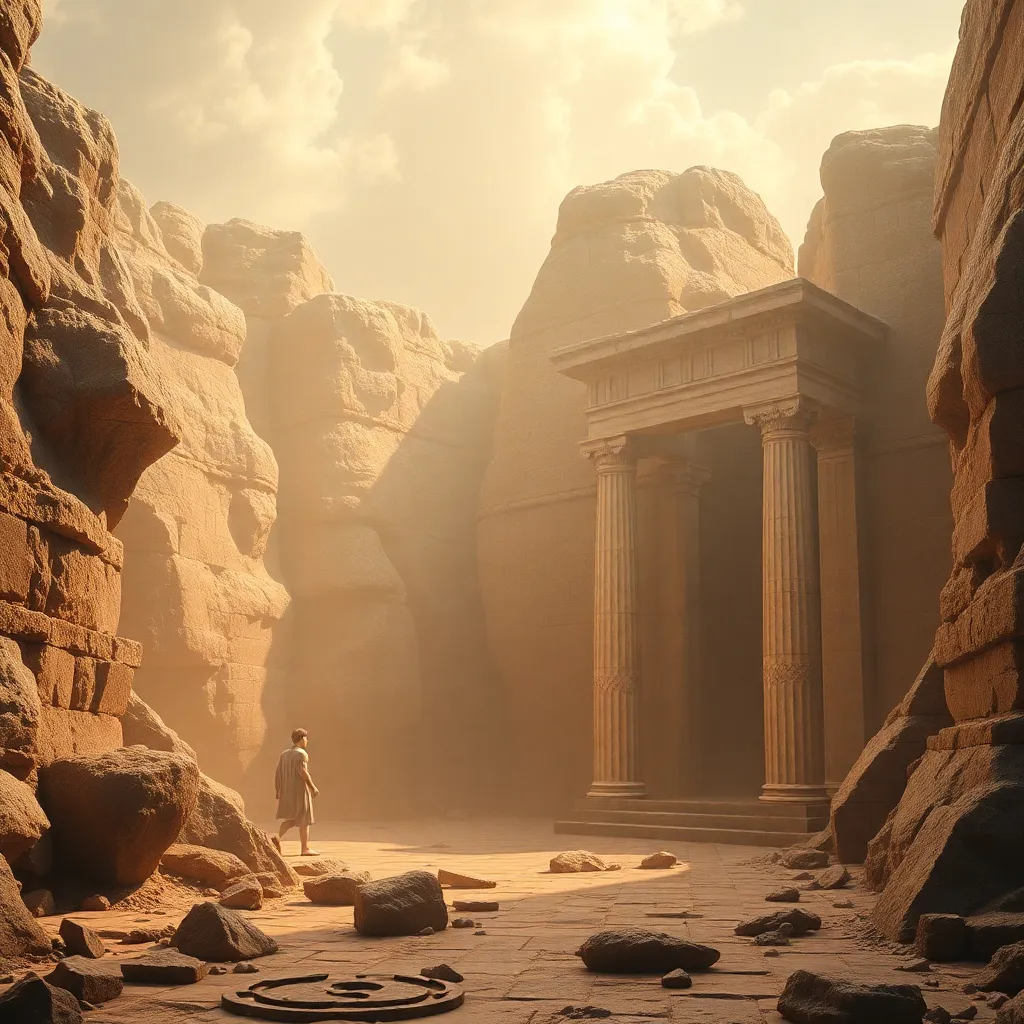
Greek Underworld: A Comparative Study with Other Cultures’ Afterlife Beliefs
I. Introduction
The Greek Underworld, known as Hades, represents a complex belief system about what happens after death. It is a realm where souls journey after their mortal existence, filled with both promise and dread. Understanding the Greek perspective on the afterlife is crucial, as it reflects the values, fears, and hopes of ancient Greek society.
Afterlife beliefs hold significant importance across various cultures, providing a framework for understanding mortality and the moral implications of one’s actions in life. By comparing the Greek Underworld with afterlife beliefs in other cultures, we can gain deeper insights into human perspectives on death and the afterlife.
This study aims to explore the Greek Underworld in relation to other prominent afterlife belief systems, highlighting similarities and differences that reveal much about cultural values and philosophies regarding life, death, and what lies beyond.
II. Overview of the Greek Underworld
The Greek Underworld, ruled by Hades, is not just a singular realm but a complex system of various regions and experiences for the souls of the deceased. It is depicted as a shadowy place, often associated with gloom and despair, but it also holds elements of justice and order.
Key figures in the Greek Underworld include:
- Hades: The god of the Underworld, who oversees the realm and its inhabitants.
- Persephone: The queen of the Underworld, who spends part of the year with Hades and part with her mother, Demeter.
- Charon: The ferryman who transports souls across the River Styx to their final resting place.
- The Furies: Vengeful spirits who punish wrongdoers in the afterlife.
Upon death, souls are believed to embark on a journey to the Underworld, where they are judged based on their actions in life. This journey includes crossing the River Styx, often requiring payment to Charon, symbolizing the importance of proper burial rites and respect for the dead.
III. Afterlife Beliefs in Ancient Egyptian Culture
In ancient Egyptian culture, the afterlife was a richly developed concept centered around the idea of Duat, a realm where the dead resided, and the Field of Reeds, an idyllic paradise for the worthy. The journey to the afterlife was fraught with challenges, requiring the deceased to navigate through various trials.
Key figures in the Egyptian afterlife include:
- Osiris: The god of the afterlife and resurrection, who judges the souls of the dead.
- Anubis: The god associated with mummification and the protection of graves, guiding souls to the underworld.
The judgment of the dead involved weighing the heart of the deceased against the feather of Ma’at, the goddess of truth and justice. This process determined whether the soul would enjoy eternal peace in the Field of Reeds or face punishment in the afterlife.
Compared to the Greek Underworld, the Egyptian beliefs emphasize a more pronounced moral judgment and the possibility of reward or punishment based on one’s earthly conduct.
IV. Afterlife Concepts in Norse Mythology
Norse mythology presents a dualistic view of the afterlife, with two primary realms: Valhalla and Hel. Valhalla, ruled by Odin, is a hall of warriors chosen for their bravery, while Hel is a realm for those who did not die gloriously in battle.
Key figures in Norse mythology include:
- Odin: The chief god who selects the souls of warriors to dwell in Valhalla.
- Freyja: A goddess associated with love and war, also choosing slain warriors for her hall.
- Valkyries: Warrior maidens who serve Odin by guiding the souls of fallen heroes to Valhalla.
The Norse afterlife places a significant emphasis on honor and valor in life, where dying in battle is considered the highest honor. In contrast to the Greek view, where all souls face judgment, the Norse afterlife is notably influenced by one’s actions and status as a warrior.
V. Beliefs in the Afterlife within Hinduism and Buddhism
In Hinduism and Buddhism, the concepts of reincarnation and karma play pivotal roles in shaping beliefs about the afterlife. The cycle of samsara, which represents the continuous cycle of birth, death, and rebirth, is central to both religions.
Key concepts include:
- Karma: The belief that one’s actions in life directly influence their future incarnations.
- Moksha: In Hinduism, the ultimate goal of liberation from the cycle of samsara.
- Nirvana: In Buddhism, the state of enlightenment and cessation of suffering.
Unlike the finality of the Greek Underworld, where souls face a permanent fate, Hinduism and Buddhism offer a cyclical view of existence, emphasizing the potential for rebirth and transformation based on one’s deeds in previous lives.
VI. Indigenous and Folk Beliefs about the Afterlife
Indigenous cultures around the world often possess unique beliefs about the afterlife that emphasize the connection between the living and the deceased. Many cultures view the afterlife as a continuation of life, where ancestors play an active role in the community.
Common themes include:
- Ancestral Spirits: Many cultures believe in the presence of ancestral spirits who guide and protect the living.
- Spirit World: A realm where souls reside, often perceived as a place of harmony and peace.
In these belief systems, the afterlife is often viewed as a communal journey, where the deceased remain part of the community, contrasting with the more individualistic approach seen in Greek and other Western beliefs.
VII. Common Themes and Divergences
Through this comparative study, several common themes and divergences emerge:
- Similarities: Many cultures share a belief in moral judgment and the consequences of one’s actions in life, reflecting a universal concern with ethics and justice.
- Differences: The portrayal of the afterlife varies significantly, ranging from paradisiacal rewards to punitive realms, influenced by cultural and historical contexts.
- Cultural Context: The beliefs surrounding the afterlife are deeply rooted in the culture’s values, traditions, and historical experiences, shaping how death is perceived and dealt with.
VIII. Conclusion
This comparative study highlights the complexity and richness of afterlife beliefs across cultures, particularly focusing on the Greek Underworld and its counterparts. While the Greek notion of a final destination contrasts with the cyclical views of reincarnation in Hinduism and Buddhism, common threads of moral judgment and the significance of one’s actions resonate across cultural boundaries.
Understanding these diverse beliefs enriches our comprehension of human nature and the universal quest for meaning in life and death. Future research could delve deeper into how these beliefs continue to influence contemporary attitudes toward mortality and the afterlife.