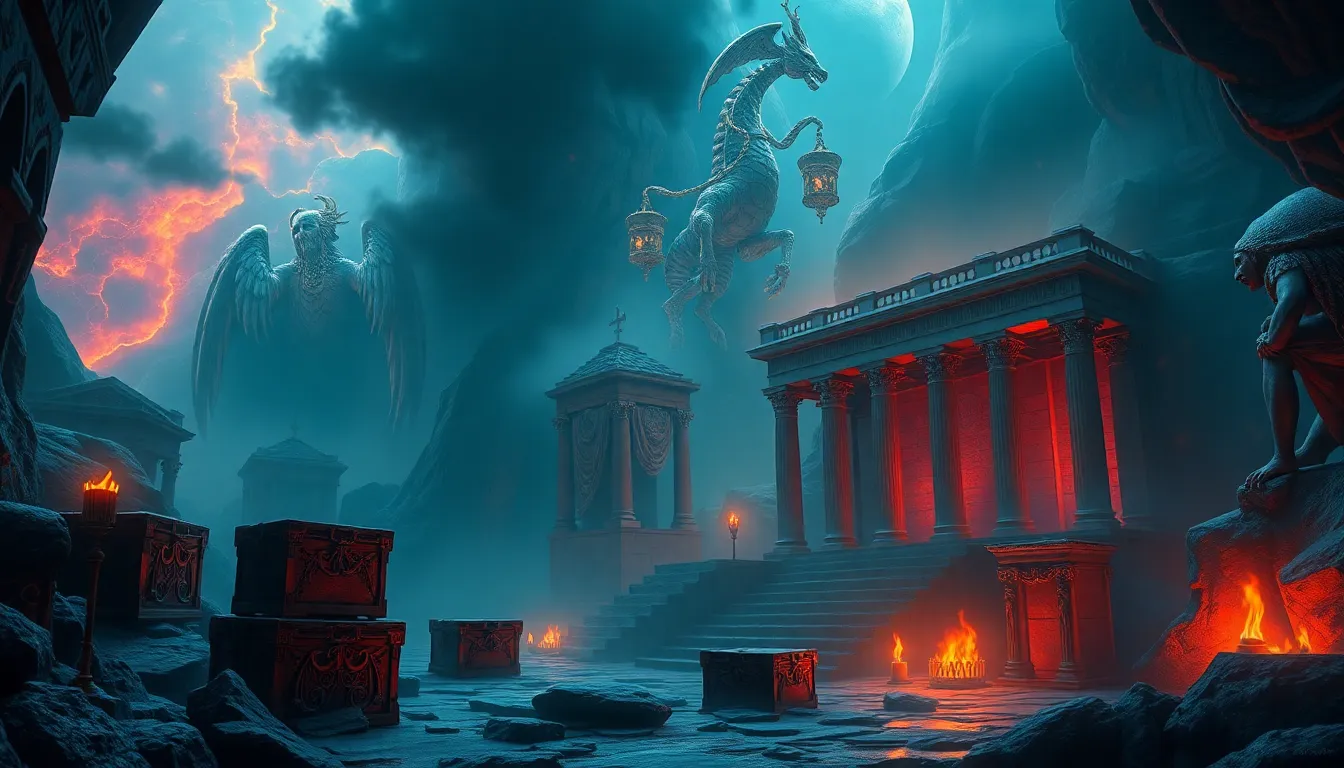
Hades’ Treasures: What Riches Are Hidden in the Underworld?
I. Introduction
In Greek mythology, Hades is not only the god of the dead but also the ruler of the Underworld, a shadowy realm where souls dwell after death. Often misunderstood as a place of torment, the Underworld is also a land rich with symbolism, treasures, and complex narratives that reflect humanity’s understanding of life, death, and the afterlife.
Throughout ancient myths, treasures hold significant importance, symbolizing not only material wealth but also the deeper values of wisdom, power, and virtue. In this article, we will explore the various treasures believed to be hidden in the Underworld, focusing on their meanings and the figures associated with them.
II. The Mythical Landscape of the Underworld
The Underworld, often depicted as a dark and foreboding place, is divided into various realms, each with its own unique characteristics and inhabitants. This realm is not merely a place of punishment but also a complex landscape where the dead reside, reflecting the duality of existence.
- Asphodel Meadows: A neutral zone where souls of ordinary people wander.
- Elysium: A paradise for the virtuous, where heroes and the pious enjoy eternal bliss.
- Tartarus: A deep abyss used for the torment of the wicked, often compared to hell.
Key figures associated with Hades include:
- Persephone: The queen of the Underworld, symbolizing the cycle of life and death.
- Charon: The ferryman who transports souls across the river Styx.
- Minos: The judge of the dead, who determines the fate of souls.
The Underworld’s connection to wealth and prosperity can be seen in the belief that riches come not only from the earth but also from the afterlife, where the souls of the dead may possess great wisdom and experience.
III. The Riches of Hades: Gold and Precious Metals
Gold, in many cultures, represents the highest form of wealth and divine favor. In Greek mythology, it is often associated with gods and heroes, symbolizing immortality, purity, and the divine right to rule.
Legends abound regarding golden treasures hidden within the Underworld:
- The golden fleece sought by Jason and the Argonauts is believed to have ties to the Underworld’s treasures.
- The golden apples of the Hesperides, which were said to be guarded by a dragon and linked to the afterlife.
The significance of precious metals in ancient Greek culture cannot be overstated. They were not just materials for currency but also held spiritual importance, often used in rituals and offerings to the gods.
IV. The Souls of the Departed: Wealth Beyond Measure
In the Underworld, souls are viewed as treasures in their own right. Each soul carries with it the experiences, memories, and legacies of its life, representing a form of wealth that transcends the material realm.
The souls of heroes and villains contribute to Hades’ riches:
- Heroes like Achilles and Odysseus are often depicted as possessing knowledge and valor that enrich the Underworld.
- Villains such as King Minos serve as cautionary tales, their stories imparting wisdom about morality.
Moreover, the idea of knowledge and wisdom as valuable assets is deeply rooted in the belief that the experiences of the dead can guide the living, making the Underworld a repository of profound insights.
V. Artifacts and Relics: Treasures of the Divine
Numerous artifacts and relics are associated with Hades and the Underworld, each holding its own significance within Greek mythology.
- The Helm of Darkness: Worn by Hades, this helmet grants the power of invisibility and represents the unseen aspects of death.
- The Pomegranate: A symbol of life and death, associated with Persephone, it embodies the cycle of the seasons and the duality of existence.
The role of divine relics in Greek mythology is pivotal, often serving as symbols of power, protection, and the divine right to govern. Their significance in ancient times was immense, as they were believed to possess magical properties that could influence fate and fortune.
VI. The Role of Cerberus and Other Guardians
Cerberus, the three-headed dog, is perhaps the most famous guardian of the Underworld, tasked with preventing the escape of souls and ensuring that the living do not enter without permission. He embodies the fierce protection of Hades’ treasures.
The treasures protected by mythical creatures like Cerberus include:
- The souls of the departed, whose stories and experiences are invaluable.
- Artifacts and relics that possess divine power and significance.
The symbolism of protection and guardianship in relation to wealth highlights the idea that true riches are not merely material but also encompass the memories and experiences of those who have passed.
VII. The Cultural Impact of Hades’ Treasures
Hades’ treasures have left a lasting imprint on literature, art, and popular culture. From ancient texts to modern adaptations, the mystique surrounding the Underworld continues to captivate audiences.
- In literature, works like The Divine Comedy by Dante Alighieri draw upon themes of the afterlife and treasures of wisdom.
- Artistic representations, such as paintings and sculptures, often depict Hades and Persephone, symbolizing the eternal cycle of life and death.
Modern interpretations of these myths can be seen in films, television series, and games, which frequently explore themes of the Underworld, morality, and the quest for knowledge. The legacy of Hades and the treasures of the Underworld remains a source of inspiration and fascination.
VIII. Conclusion
In conclusion, the treasures associated with Hades and the Underworld reveal much about ancient Greek beliefs regarding wealth, morality, and the afterlife. From the riches of gold and precious metals to the invaluable souls and divine relics, each aspect contributes to the rich tapestry of mythology.
As we reflect on the interplay between wealth, morality, and the afterlife, it is evident that the fascination with Hades and his hidden riches endures. These stories serve not only as cautionary tales but also as reminders of the profound mysteries that lie beyond life itself.