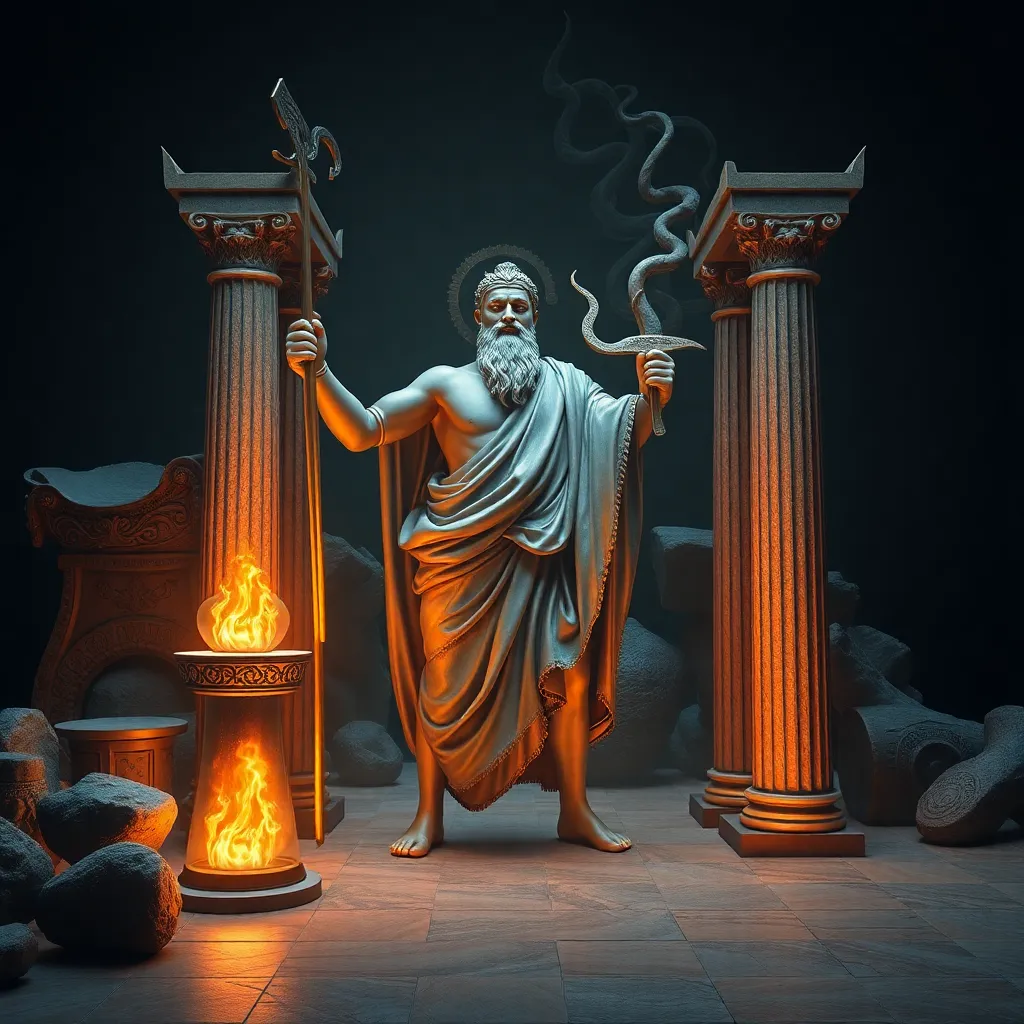
Hephaestus and His Inventions: The Intersection of Myth and Technology
I. Introduction
Hephaestus, the Greek god of fire, metalworking, and craftsmanship, stands as a pivotal figure in Greek mythology. Known for his exceptional skills in forging and inventing, Hephaestus embodies the intricate relationship between myth and technology. His significance lies not only in his divine abilities but also in the rich tapestry of stories that highlight human creativity and innovation.
This article explores how Hephaestus represents the intersection of myth and technological innovation, revealing the enduring influence of his character on humanity’s understanding of craftsmanship and invention.
II. The Mythological Background of Hephaestus
Hephaestus’s story begins with his birth, which, according to various myths, was marked by a dramatic twist. Often described as the son of Zeus and Hera, or, in some tales, merely of Hera alone, Hephaestus was cast from Olympus due to his physical deformities. This early rejection set the stage for his role as an outsider, working in the depths of volcanic mountains rather than in the company of other gods.
His relationships with other deities are equally significant. He was married to Aphrodite, the goddess of love and beauty, which created an intriguing dynamic between art and aesthetics, craftsmanship, and desire. Hephaestus also had notable interactions with gods such as Athena, who admired his skills, and Ares, who often competed for Aphrodite’s affection.
Throughout ancient literature, Hephaestus is depicted in various ways, from being a skilled craftsman to a misunderstood figure. His presence in works such as Homer’s “Iliad” and “Odyssey,” as well as Hesiod’s “Theogony,” demonstrates his multifaceted nature and the respect he commanded among the gods.
III. Hephaestus as the God of Innovation
Innovation, in the context of mythology, can be understood as the creation of new ideas, tools, or methods that significantly impact society. Hephaestus’s role as the god of innovation is illustrated through his ability to craft extraordinary items that not only serve practical purposes but also possess an inherent beauty.
Some of the divine tools and weapons he created include:
- The mighty thunderbolts of Zeus
- Poseidon’s trident
- The shield of Heracles
Compared to other mythological figures associated with technology, such as Athena, the goddess of wisdom and warfare, Hephaestus stands out for his practical approach to invention. While Athena represents strategic thought and battle tactics, Hephaestus embodies the tangible aspects of craftsmanship and creation.
IV. Iconic Inventions of Hephaestus
Hephaestus’s creations are not merely tools; they often carry significant symbolic weight in Greek mythology.
A. The Creation of Pandora and Her Significance
One of Hephaestus’s most famous inventions is Pandora, the first woman created by the gods. Fashioned from earth and water, Pandora was bestowed with gifts from various deities, including beauty and curiosity. However, her story serves as a cautionary tale about the consequences of curiosity, as she opened a jar, releasing evils into the world. This act symbolizes the dual nature of creation—bringing forth both beauty and chaos.
B. The Crafting of Achilles’ Armor
Another notable creation of Hephaestus is the armor of Achilles, commissioned by Thetis, Achilles’ mother. The armor was not only beautifully crafted but also imbued with divine protection. This highlights Hephaestus’s ability to blend artistry with functionality, showcasing how craftsmanship can transcend mere utility to achieve heroic significance.
C. The Golden Robots – Talos and Their Implications for Technology
Hephaestus also created Talos, a giant bronze automaton tasked with protecting Crete. Talos represents one of the earliest concepts of artificial intelligence and robotics in mythology, embodying the potential for technology to serve humanity. The implications of such creations resonate with contemporary discussions about automation and the ethical considerations surrounding technological advancements.
V. The Symbolism of Fire and Craftsmanship
Fire, as a symbol, holds a dual nature in mythology—it represents both destruction and creation. For Hephaestus, fire is the medium through which he transforms raw materials into sublime artifacts. The ability to wield fire signifies the mastery of nature, reflecting the innovative spirit of humanity.
Craftsmanship, in this context, is a testament to human ingenuity. Hephaestus’s work embodies the idea that through skill and creativity, one can shape the world. He serves as a symbol of the artisan and the laborer, emphasizing the value of hard work and dedication in society.
VI. The Influence of Hephaestus on Modern Technology
The legacy of Hephaestus extends far beyond ancient mythology into the realm of modern technology. Parallels can be drawn between his inventions and contemporary advancements, as the themes of innovation and craftsmanship remain relevant today.
Some examples of how mythological themes inspire modern engineering and design include:
- The development of robotics, echoing Hephaestus’s creation of Talos.
- Automated systems in manufacturing, reflecting the artisan’s spirit.
- Innovative materials and techniques, reminiscent of Hephaestus’s forge.
Case studies of inventions inspired by myth, such as robotics and automation, reveal how ancient narratives continue to influence modern technological progress.
VII. Critiques and Interpretations of Hephaestus
Hephaestus’s role in Greek mythology is often examined through various lenses, revealing deeper meanings within his narratives. Some critiques focus on his portrayal as a disabled god, examining societal views on disability and craftsmanship.
Feminist readings of Hephaestus explore his complex relationships with female figures, particularly with Aphrodite and Pandora. These relationships highlight themes of beauty, desire, and the consequences of creation, prompting discussions about gender dynamics in mythology.
Moreover, modern interpretations of Hephaestus in popular culture—ranging from literature to films—demonstrate his enduring relevance and the ways his story resonates with contemporary audiences.
VIII. Conclusion
In conclusion, Hephaestus’s significance in mythology and technology is profound. His role as the god of fire and craftsmanship embodies the spirit of innovation and creativity that drives humanity forward. The interplay between mythological narratives and technological progress underscores the timeless relevance of these ancient stories.
As we reflect on Hephaestus’s legacy, it becomes clear that understanding these mythological figures enriches our perspective on modern innovation. The myths of Hephaestus serve as a reminder of the intricate relationship between creativity, craftsmanship, and the transformative power of human ingenuity.