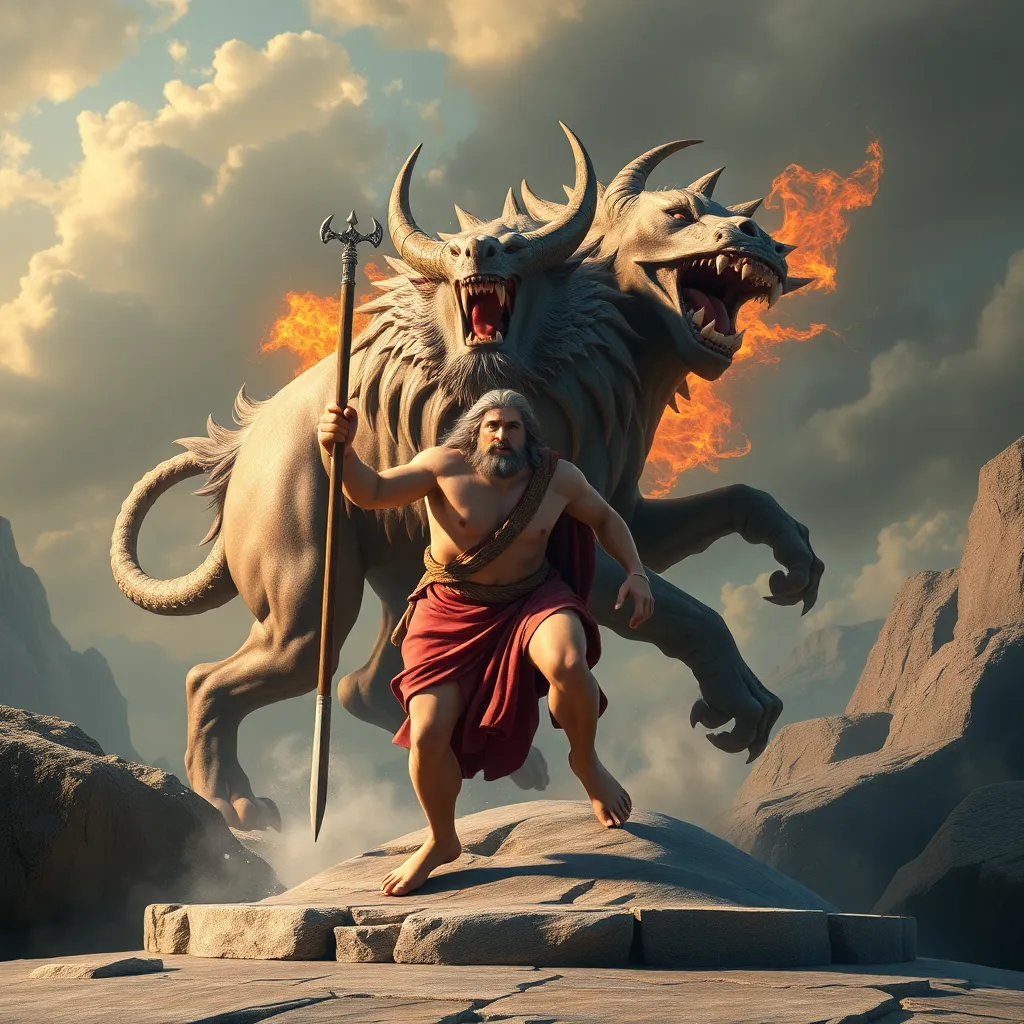
Heracles and the Capture of Cerberus: The Final Labor Unveiled
I. Introduction to Heracles and His Labors
Heracles, known to the Romans as Hercules, stands as one of the most revered heroes in Greek mythology. Renowned for his incredible strength and bravery, he is a figure who embodies the ideals of heroism and perseverance. His life is marked by a series of formidable challenges known as the Twelve Labors, which he undertook as penance for a grave sin. These labors not only tested his physical prowess but also his mental fortitude and moral character.
The Twelve Labors hold significant importance in Greek mythology, highlighting themes of redemption, struggle, and the hero’s journey. Each labor presented Heracles with unique challenges that required him to confront fierce monsters, treacherous landscapes, and even his own limitations. The final labor, the capture of Cerberus, is particularly notable as it represents the culmination of Heracles’ trials and a profound confrontation with death and the underworld.
II. The Origins of Cerberus
Cerberus, the fearsome three-headed dog, is one of the most iconic creatures in Greek mythology. Described as a monstrous beast with a serpent for a tail and a mane made of snakes, Cerberus serves as the formidable guardian of the Underworld, ensuring that the dead do not escape and the living do not enter without permission.
Myths surrounding Cerberus’s parentage vary, but he is often said to be the offspring of Echidna and Typhon, two of the most fearsome monsters in mythology. This lineage imbues Cerberus with an intimidating presence, symbolizing the terrifying aspects of death. His role as the guardian of the Underworld highlights the ancient Greeks’ beliefs about the afterlife and the importance of maintaining the boundary between the living and the dead.
III. The Context of the Final Labor
The assignment of capturing Cerberus stems from a complex web of events in Heracles’ life. After murdering his wife and children in a fit of madness instigated by Hera, Heracles sought redemption through the completion of the Twelve Labors, as decreed by King Eurystheus. Each labor served as a path to atonement, yet the capture of Cerberus was uniquely significant as it required Heracles to confront the very essence of death itself.
Heracles had faced numerous challenges leading up to this task, including battling the Nemean Lion, the Lernaean Hydra, and the Erymanthian Boar. Each labor prepared him for the final confrontation, emphasizing the progression of his character from a flawed man seeking redemption to a heroic figure capable of facing the most daunting of fears.
IV. Preparation for the Capture
Before embarking on his fateful journey to the Underworld, Heracles needed to prepare both mentally and physically. His descent into the realm of the dead would require not only strength but also cunning and bravery. The journey began with a visit to the Oracle of Delphi, who provided him with guidance on how to approach the task.
During his journey, Heracles encountered several mythological figures, including:
- Charon, the ferryman of the dead, who transported him across the Styx.
- Theseus and Pirithous, who were trapped in the Underworld for attempting to abduct Persephone.
Equipped with his club and wearing the Nemean Lion’s skin, Heracles also relied on his wits to devise strategies for subduing Cerberus. His determination and courage were crucial as he ventured into the dark and eerie realm of the dead.
V. The Confrontation with Cerberus
The encounter between Heracles and Cerberus unfolds in the chilling atmosphere of the Underworld. Upon arriving, Heracles faced the daunting sight of the three-headed beast, each head snarling and snapping, embodying the ferocity of death itself. The confrontation was not merely a physical battle; it was a symbolic struggle against fear and mortality.
To subdue Cerberus, Heracles employed a combination of brute strength and tactical skill. According to myth, he:
- Engaged the beast in combat, using his immense strength to grapple with it.
- Utilized his intelligence to calm Cerberus, ultimately managing to bind the creature with the strength of his grip.
- Refused to use weapons, relying solely on his physical prowess and courage, showcasing his respect for the guardian of the Underworld.
This struggle not only highlights Heracles’ physical capabilities but also emphasizes his growth as a hero. By confronting Cerberus, he faced his own fears and the inevitability of death, marking a pivotal moment in his journey.
VI. The Aftermath of the Capture
Upon successfully capturing Cerberus, Heracles returned to the mortal realm, leading the three-headed dog back to King Eurystheus. The sight of the fearsome beast instilled terror in the hearts of those who witnessed it, yet it also symbolized Heracles’ triumph over death itself.
The reactions to Heracles’ feat varied among gods and mortals. While some admired his bravery, others viewed it as a foolish act. Eurystheus, terrified of the creature, ordered Heracles to return Cerberus to the Underworld, signifying the enduring power of death and the boundaries that even heroes must respect.
In the mortal realm, Cerberus became a symbol of vigilance and protection, further entwining the myth with cultural themes of guardianship and the afterlife.
VII. The Legacy of the Final Labor
The capture of Cerberus marks a significant turning point in Heracles’ character development. It represents not just the completion of his labors, but also a deeper understanding of his place in the world. By confronting Cerberus, Heracles learned to embrace his fears, emerging as a more profound and introspective hero.
Cerberus himself has left an indelible mark on mythology and popular culture. He appears in various forms in later literature, art, and media, symbolizing the eternal struggle with death and the unknown. His legacy extends beyond ancient Greece, influencing modern storytelling and the depiction of monstrous guardians.
From this labor, several lessons and themes can be derived, including:
- The importance of facing one’s fears.
- The idea of redemption through personal struggle.
- The complexities of life and death as inseparable parts of existence.
VIII. Conclusion
Heracles’ journey culminates in the significant labor of capturing Cerberus, a task that challenges the hero to confront the very essence of mortality. This labor not only marks the end of his trials but also serves as a profound reflection on the nature of heroism, fear, and redemption.
The enduring legacy of Heracles and Cerberus continues to resonate in modern culture, illustrating timeless themes of struggle and transformation. As we reflect on this myth, we are reminded of the importance of confronting our fears and the growth that arises from such challenges. Ultimately, the story of Heracles and Cerberus serves as an inspiring testament to the human spirit’s capacity for courage and resilience.