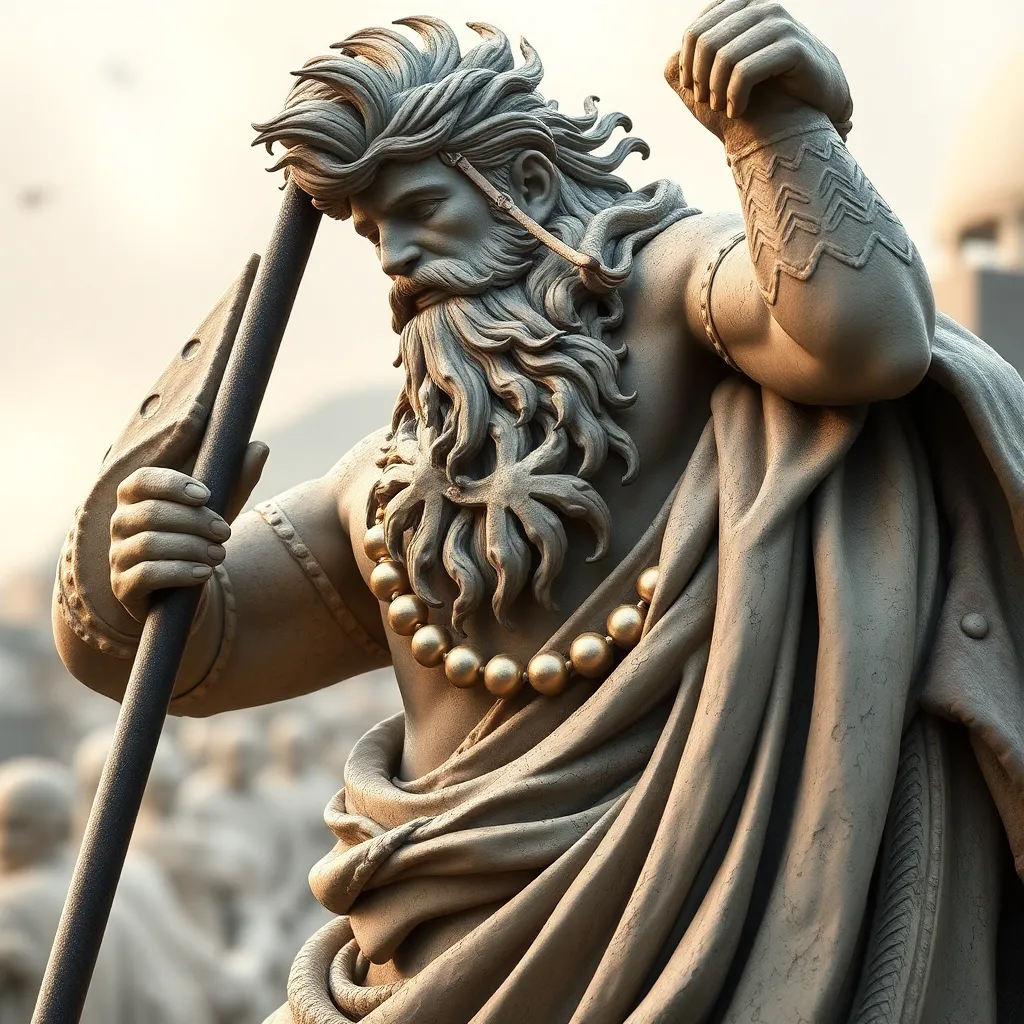
Heracles and the Concept of Courage in His Labors
I. Introduction
Heracles, known as Hercules in Roman mythology, stands as one of the most celebrated heroes in Greek mythology. His tales of incredible feats and adventures have captivated audiences for centuries. Heracles embodies not only strength and heroism but also a profound sense of courage that is woven into the very fabric of his legend.
Courage, defined as the mental or moral strength to persevere and withstand danger, fear, or difficulty, plays a significant role in mythology. It reflects the human spirit’s ability to confront challenges, making it a crucial theme in the stories of many heroes.
This article aims to explore how Heracles exemplifies courage through his labors, analyzing the essence of bravery in his myth and its implications for understanding courage in both ancient and modern contexts.
II. The Myth of Heracles: A Brief Background
Heracles was born to Zeus and Alcmene, a mortal woman, which set the stage for a life filled with extraordinary challenges and divine intervention. From an early age, Heracles exhibited remarkable strength and prowess, but he was also subjected to jealousy and spite from Hera, Zeus’s wife. This animosity would shape many of the trials he would face.
The prophecy surrounding Heracles foretold that he would perform great deeds, but it also hinted at the trials that would lead him to his destiny. The Twelve Labors of Heracles, a series of seemingly impossible tasks, were imposed on him as a penance for a crime driven by madness inflicted by Hera.
Throughout his journey, the role of fate and the gods was pivotal. Heracles often sought guidance from oracles and faced interventions from deities, illustrating the complex interplay between free will and divine influence in Greek mythology.
III. The Nature of Courage in Greek Mythology
Courage in Greek mythology is multifaceted, encompassing various interpretations that range from physical bravery to moral fortitude. Ancient texts often highlight different aspects of courage, showcasing its complexity.
- Physical Bravery: This is the most recognized form, exemplified by warriors in battle.
- Moral Courage: This involves standing up for what is right, even in the face of adversity.
Other mythological figures, such as Theseus and Achilles, also embody courage but in different contexts. While Theseus demonstrates moral courage in his quest for justice, Achilles showcases physical bravery in the Trojan War.
IV. Analysis of Heracles’ Labors
The Twelve Labors of Heracles serve as a framework for understanding his embodiment of courage. Each labor is a test that pushes Heracles to confront his fears and demonstrate his heroic qualities.
A. Overview of the Twelve Labors
- Slay the Nemean Lion
- Slay the Lernaean Hydra
- Capture the Golden Hind of Artemis
- Capture the Erymanthian Boar
- Clean the Augean Stables
- Slay the Stymphalian Birds
- Capture the Cretan Bull
- Steal the Mares of Diomedes
- Obtain the Girdle of Hippolyta
- Obtain the Cattle of Geryon
- Steal the Apples of the Hesperides
- Capture Cerberus
B. The Significance of Each Labor as a Test of Courage
Each labor represents not just a physical challenge, but also a test of Heracles’ mental and moral courage. Some notable labors include:
- Slaying the Nemean Lion: This labor required Heracles to confront a seemingly invincible beast, symbolizing the struggle against overwhelming odds.
- Battling the Lernaean Hydra: Facing this many-headed serpent taught Heracles about resilience, as each head he cut off led to two more growing back.
- Capturing the Golden Hind of Artemis: This task required both patience and respect for the divine, showing that courage is not only about conflict but also understanding.
V. Overcoming Fear and Doubt
Heracles’ challenges often brought him face-to-face with fear and doubt, psychological barriers that could deter even the strongest of heroes. Instances of fear were evident, such as when he faced the Hydra, where the fear of failure loomed large.
However, what sets Heracles apart is his ability to confront and overcome these fears. His evolution through trials reflects a deepening understanding of courage, transforming him from a mere warrior into a symbol of perseverance and strength.
VI. Courage as a Path to Redemption
Heracles’ past transgressions, driven by madness and manipulation, cast a shadow over his life. The Twelve Labors symbolize not only his quest for redemption but also his journey toward personal and moral courage.
Each labor represents an opportunity for Heracles to atone for his past and redefine his legacy. His courage in facing insurmountable challenges ultimately shapes his identity as a hero, leaving a lasting impact on mythology.
VII. Heracles’ Influence on Modern Concepts of Courage
Heracles has transcended ancient mythology to become a modern symbol of heroism. His story resonates with contemporary themes of courage and resilience, offering valuable lessons that remain relevant today.
- Symbol of Heroism: Heracles represents the archetype of the hero who faces adversity head-on.
- Lessons on Courage: His trials teach us that courage is not the absence of fear, but the determination to overcome it.
In discussions surrounding courage and resilience, Heracles serves as an enduring figure, reminding us that true bravery encompasses both physical and moral strength.
VIII. Conclusion
In summary, Heracles embodies courage through his labors, demonstrating that bravery is a multifaceted concept deeply rooted in mythology. His legacy endures as a powerful reminder of the importance of courage in facing life’s challenges.
Through the lens of Heracles, we gain insight into the complexities of courage, its role in redemption, and its relevance in our contemporary understanding of heroism.
Ultimately, the story of Heracles inspires us to confront our own fears and strive for personal growth, making courage an essential quality in our lives.