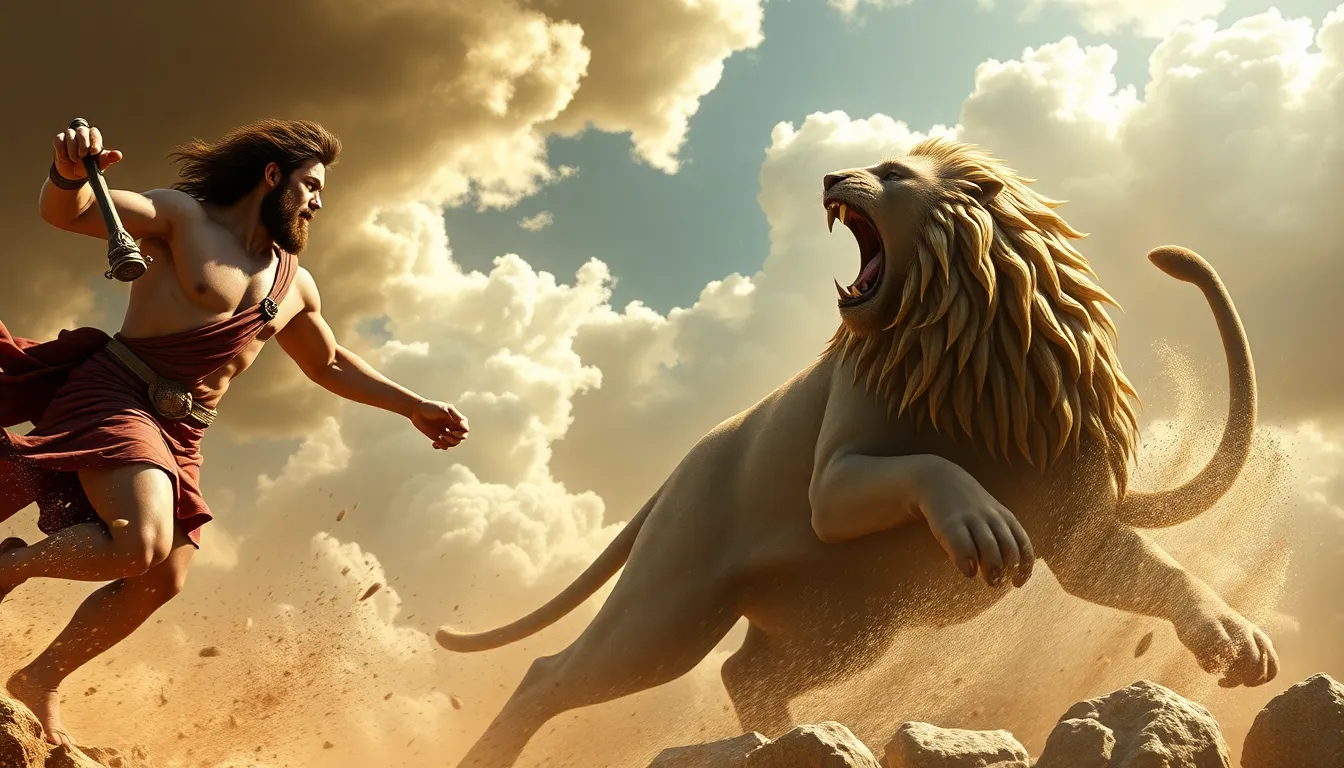
Hercules vs. the Nemean Lion: A Battle for Immortality
I. Introduction
Hercules, known as Heracles in Greek mythology, is one of the most celebrated heroes of ancient lore. His tales of strength, courage, and perseverance resonate through the ages, making him a symbol of heroism and virtue. Among his many trials, the battle against the Nemean Lion stands out as a significant event that not only tests his physical prowess but also his ingenuity and determination.
The Nemean Lion, a beast of terrifying strength and resilience, serves as a formidable foe in Hercules’ quest for glory. With impenetrable skin, the lion represents the insurmountable challenges that heroes must face. This article delves into the epic battle between Hercules and the Nemean Lion, exploring its implications for immortality and the legacy of these iconic figures.
II. The Legend of Hercules
A. Birth and early life of Hercules
Hercules was born to Zeus, the king of the gods, and Alcmene, a mortal woman. From the moment of his birth, he was destined for greatness, yet also for hardship. Hera, Zeus’ wife, was envious of Hercules and sought to make his life difficult. This rivalry would shape much of Hercules’ journey.
B. Overview of Hercules’ Twelve Labors
Hercules is best known for his Twelve Labors, a series of tasks he was required to complete as penance for a crime he committed under Hera’s influence. These labors include:
- Slaying the Nemean Lion
- Slaying the nine-headed Lernaean Hydra
- Capturing the Golden Hind of Artemis
- Capturing the Erymanthian Boar
- Cleansing the Augean Stables
- Slaying the Stymphalian Birds
- Capturing the Cretan Bull
- Stealing the Mares of Diomedes
- Obtaining the Girdle of Hippolyta
- Capturing the Cattle of Geryon
- Fetching the Apples of the Hesperides
- Bringing Cerberus from the Underworld
C. Significance of strength and heroism in his character
Hercules embodies the ideals of strength and heroism in Greek mythology. His unparalleled physical strength is matched only by his unwavering courage and moral integrity, making him a quintessential hero. The challenges he faces, including the battle with the Nemean Lion, serve to highlight his indomitable spirit.
III. The Nemean Lion: A Mythical Beast
A. Description of the Nemean Lion and its invulnerability
The Nemean Lion was a monstrous creature with a golden mane and skin that was impervious to weapons. Its ferocity and strength made it a fearsome predator, terrorizing the region of Nemea. The lion’s invulnerability posed a significant challenge for Hercules, as conventional weapons proved ineffective against its tough hide.
B. Origins of the Nemean Lion in mythology
According to mythology, the Nemean Lion was the offspring of Typhon and Echidna, two of the most formidable monsters in Greek mythology. Its reign of terror ended only when Hercules was tasked with slaying it as one of his Twelve Labors, setting the stage for one of the most iconic battles in Greek lore.
C. Symbolism of the lion in ancient Greece
The lion has deep symbolic resonance in ancient Greece, representing strength, bravery, and nobility. In many cultures, lions are seen as kings of the animal kingdom, and their presence in mythology often signifies a test of a hero’s power and resolve. The Nemean Lion, in particular, serves as a metaphor for the challenges that one must overcome to achieve greatness.
IV. The Context of the Battle
A. The circumstances leading to the encounter
Hercules’ encounter with the Nemean Lion was not merely a chance meeting; it was a pivotal moment in his journey of redemption and heroism. After being driven mad by Hera, Hercules unknowingly killed his own family and was subsequently tasked with completing the Twelve Labors as punishment. The first labor brought him face to face with the Nemean Lion.
B. The role of Hera and the challenges faced by Hercules
Hera’s relentless pursuit to undermine Hercules added layers of complexity to his challenges. Not only did he have to face the might of the Nemean Lion, but he also had to contend with the psychological burdens placed upon him by Hera. This made his feats not just physical challenges but also tests of mental fortitude.
C. The cultural significance of the battle
The battle against the Nemean Lion resonates beyond the tale itself; it represents the struggle between man and beast, the hero’s journey, and the quest for redemption. This struggle is a common theme in many cultures, reflecting humanity’s ongoing fight against adversity.
V. The Battle: Strategy and Strength
A. Hercules’ initial approach to defeating the lion
Upon arriving in Nemea, Hercules quickly realized that traditional weapons would not suffice against the lion’s impenetrable skin. Instead of giving in to despair, he devised a new strategy. Hercules initially tried to shoot arrows at the lion, but they bounced off its tough hide, proving ineffective.
B. The use of brute strength vs. clever tactics
Hercules, known for his physical strength, recognized that brute force alone would not win this battle. He began to think creatively, opting to use his strength in a different way. Instead of trying to pierce the lion’s skin, he decided to engage the lion in hand-to-hand combat.
C. The turning point in the battle
The turning point in the battle came when Hercules managed to trap the lion in a cave. Using his immense strength, he wrestled with the lion, ultimately managing to choke it to death. This act of using not just power but also strategy showcased Hercules’ growth as a hero.
VI. The Aftermath of the Victory
A. Hercules’ triumph over the Nemean Lion
Hercules’ victory over the Nemean Lion marked a significant milestone in his journey. He had faced a seemingly insurmountable challenge and emerged victorious, solidifying his status as a hero. This triumph was not only a testament to his strength but also to his ingenuity.
B. The crafting of the lion’s skin as a symbol of victory
After slaying the lion, Hercules skinned the beast and fashioned its hide into a cloak. This lion’s skin became a symbol of his strength and invincibility, providing him not only physical protection but also serving as a reminder of his triumph over adversity. The skin became one of Hercules’ defining attributes, often depicted in art and literature.
C. Impact on Hercules’ journey and reputation
The victory over the Nemean Lion set the tone for Hercules’ subsequent labors and adventures. It established him as a formidable hero capable of overcoming great odds. The lion’s death was not merely an end but a beginning, propelling Hercules into further challenges and solidifying his legacy in the annals of mythology.
VII. Themes of Immortality and Heroism
A. Exploration of what immortality means in the context of the myth
In Greek mythology, immortality often comes with a price. For Hercules, his journey was one of achieving a form of immortality through his deeds and legacy. The battle with the Nemean Lion was a step towards this, as it showcased his ability to confront and conquer death itself, symbolized by the lion’s ferocity.
B. The legacy of Hercules as a hero
Hercules’ legacy as a hero is marked by his trials