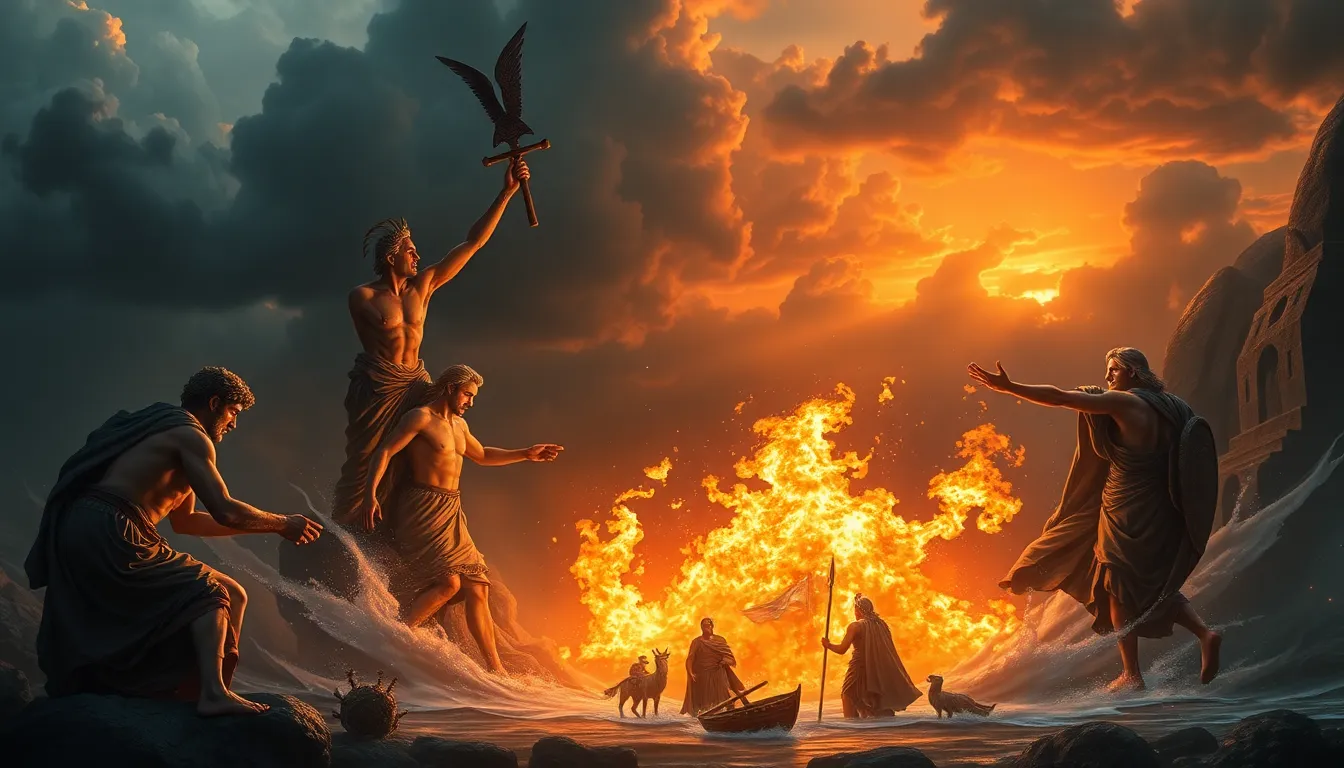
Heroic Sacrifices: The Ultimate Price Paid in Greek Mythology
I. Introduction
Heroic sacrifice in Greek mythology refers to the selfless actions taken by heroes that often involve giving up their own lives or well-being for a greater cause. This concept of sacrifice is fundamental in understanding the motivations and actions of mythological figures, as it epitomizes the tension between personal desires and the demands of honor, duty, and fate.
In Greek culture, sacrifice is deeply woven into the fabric of storytelling. It illustrates the values of courage, loyalty, and the willingness to endure great suffering for the sake of others. The narratives of these sacrifices resonate through time, teaching lessons on the nature of humanity and the complexities of moral choice.
This article will explore the concept of heroic sacrifice in Greek mythology, examining prominent figures who exemplified this theme, the moral implications of their choices, and the legacy of these sacrifices in modern culture.
II. The Concept of Sacrifice in Greek Mythology
In Greek mythology, sacrifice can be categorized into several types, each serving different purposes and reflecting various aspects of society:
- Personal Sacrifice: Actions taken by individuals for the benefit of others, often at great personal cost.
- Communal Sacrifice: Sacrifices made for the greater good of the community or society, often during religious ceremonies.
- Divine Sacrifice: Acts that involve appeasing the gods or fulfilling divine will, which can include both human and animal sacrifices.
The role of fate and destiny is pivotal in these narratives, as many heroes are portrayed as trapped in a web of predetermined outcomes that compel them to make sacrifices. Often, these choices highlight the moral complexities of their actions, raising questions about duty, honor, and the consequences of personal desires.
III. Prominent Figures Who Made Sacrifices
A. Achilles and his choice of honor over life
Achilles, the central character in Homer’s Iliad, embodies the archetype of the hero faced with the ultimate sacrifice. His choice to seek glory in battle rather than a long life of obscurity showcases the tension between personal desire and societal expectations.
When Achilles withdraws from battle due to a dispute with Agamemnon, he faces the wrath of fate. His beloved friend Patroclus ultimately dies, spurring Achilles to return to combat, where he seeks vengeance at the cost of his own life. The consequences of his sacrifice are profound, as it leads not only to his own demise but also to the downfall of many others.
B. Orpheus and the journey to the Underworld
Orpheus, the legendary musician and poet, sacrifices everything for love when he descends into the Underworld to retrieve his wife, Eurydice. His journey is fueled by the depth of his emotions and his belief in the power of love and music.
However, his tragic mistake—looking back at Eurydice before they reach the surface—results in her permanent loss. This tale emphasizes the notion that love can drive individuals to make monumental sacrifices, but it also serves as a cautionary tale about the consequences of doubt and impatience.
IV. The Sacrifice of Iphigenia
The story of Iphigenia is one of the most poignant examples of sacrifice in Greek mythology. Agamemnon, the leader of the Greek forces in the Trojan War, faces a dire situation when the winds refuse to carry his fleet to Troy. To appease the goddess Artemis, he is compelled to sacrifice his daughter, Iphigenia.
This narrative explores themes of duty, honor, and the heartbreaking nature of familial sacrifice. Agamemnon’s decision is framed as a necessary evil, highlighting the conflict between personal affection for one’s family and the responsibilities of leadership. The impact of Iphigenia’s sacrifice resonates throughout the Trojan War, casting a long shadow over Agamemnon’s fate and the events that follow.
V. The Heroic Sacrifice of Theseus
Theseus, a celebrated hero of Athens, is known for his bravery and cunning. His encounter with the Minotaur in the labyrinth presents a compelling narrative of self-sacrifice. To save the youth of Athens, he willingly enters the labyrinth, knowing the risks involved.
The labyrinth itself symbolizes the complexity of personal fears and challenges that one must navigate. Theseus’s ultimate victory over the Minotaur is not just a physical conquest but also a metaphorical triumph over his own doubts and the darkness within.
Theseus emerges as a model of courage and leadership, embodying the ideal of sacrificing oneself for the greater good, thus inspiring future generations with his tale.
VI. Women and Sacrifice in Greek Mythology
Women in Greek mythology also play crucial roles in sacrificial narratives, often showcasing the different dimensions of sacrifice. Female figures frequently embody loyalty, love, and resilience in the face of overwhelming odds.
- Alcestis: Known for her selfless act of dying in place of her husband, Admetus, Alcestis exemplifies the theme of marital devotion and the sacrifices made for loved ones.
- Penelope: Although not a sacrifice in the traditional sense, Penelope’s enduring loyalty to Odysseus during his long absence demonstrates a different kind of sacrifice—one of patience and fidelity.
These narratives reflect the gender dynamics of the time, wherein female sacrifices often underscore their roles within familial and societal contexts, while also revealing the strength and complexity of their characters.
VII. The Legacy of Heroic Sacrifices in Modern Culture
The themes of heroic sacrifice in Greek mythology have had a profound influence on contemporary literature, film, and art. Modern narratives often echo the struggles and moral dilemmas faced by these mythological figures, highlighting the enduring relevance of their stories.
- Influence on Literature: Many authors draw inspiration from mythological heroes, incorporating themes of sacrifice and heroism into their works.
- Film Adaptations: Modern films often reinterpret ancient myths, bringing the complexities of sacrifice to new audiences through visual storytelling.
- Universal Themes: The exploration of sacrifice resonates with modern audiences, as it taps into the timeless human experience of love, loss, and the pursuit of honor.
The legacy of these heroic sacrifices continues to shape our understanding of what it means to be courageous and selfless, making Greek mythology an enduring source of inspiration.
VIII. Conclusion
This exploration of heroic sacrifices in Greek mythology reveals the intricate tapestry of themes, figures, and moral dilemmas that define these ancient stories. From Achilles’s tragic choices to the selfless acts of women like Alcestis, these narratives offer profound insights into the nature of sacrifice and its implications for heroism.
The significance of sacrifice in shaping heroic identities cannot be overstated, as it reflects the values of honor, duty, and love that resonate through time. As we continue to engage with these myths, we find that their lessons remain relevant, illuminating the complexities of human experience in our modern world.