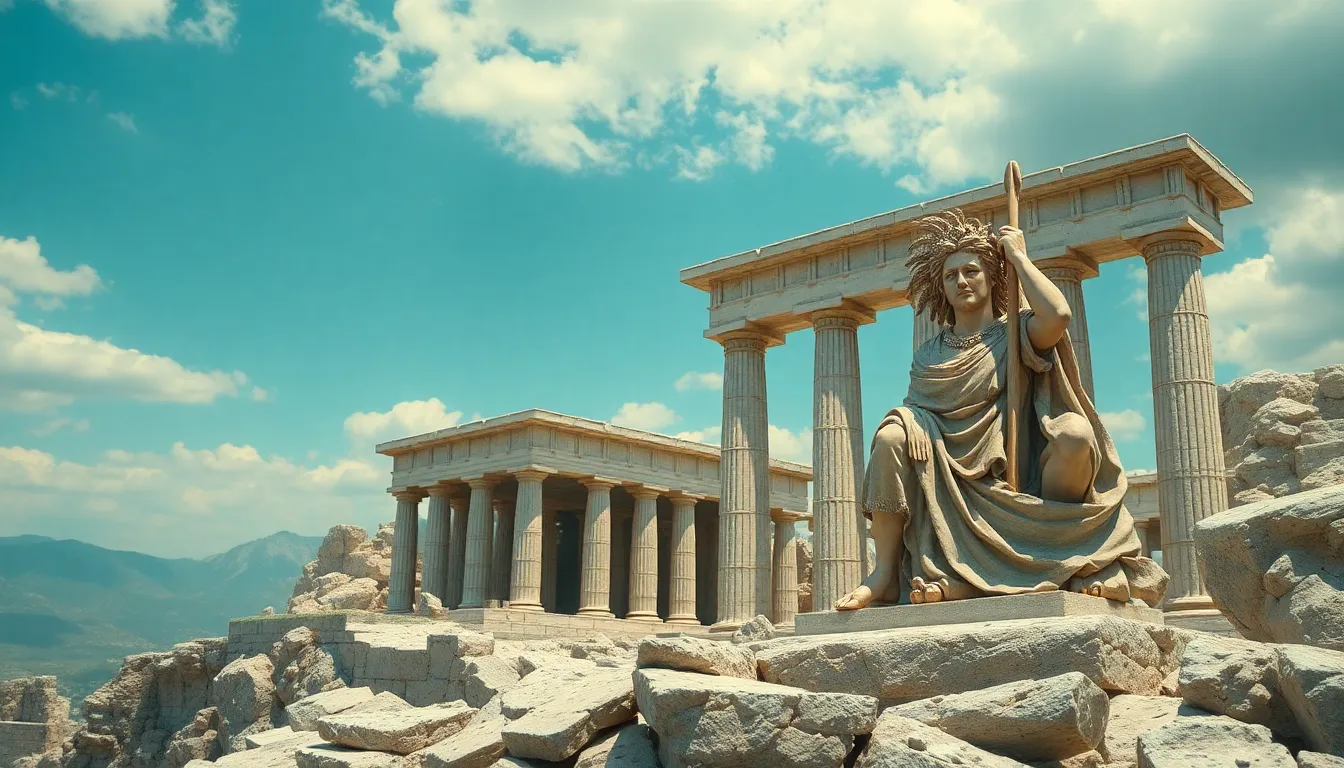
Hesiod vs. Homer: Who Truly Captured the Essence of Ancient Greece?
I. Introduction
In the realm of ancient Greek literature, two towering figures stand out: Hesiod and Homer. Both are foundational to the understanding of Greek culture and mythology, yet their works offer vastly different insights and narratives. Homer, known for his epic tales of heroism and adventure, and Hesiod, with his more didactic and moralistic approach, serve as the pillars upon which much of Western literature is built.
The importance of their contributions cannot be overstated. Homer’s “The Iliad” and “The Odyssey” explore the grand themes of fate, honor, and the human condition, while Hesiod’s “Theogony” and “Works and Days” provide a glimpse into the origins of the gods and the practicalities of everyday life in ancient Greece. This article aims to compare and contrast their works and impacts, ultimately questioning who truly encapsulates the essence of ancient Greek thought and culture.
II. Historical Context of Hesiod and Homer
A. Timeline of their lives and works
Homer is believed to have lived around the 8th century BCE, while Hesiod’s life is typically dated to the same period, though some scholars suggest he may have come slightly later. Their works were born in a time when oral tradition was paramount, and the transmission of stories was largely conducted through spoken word.
B. The socio-political landscape of ancient Greece during their time
The period in which Hesiod and Homer lived was characterized by a transition from tribal societies to more complex political structures, including city-states. This shift greatly influenced their writing, as the themes of heroic deeds and moral duties became intertwined with the emerging ideas of citizenship and civic virtue.
C. Influence of oral tradition on their storytelling
Both authors were products of a rich oral tradition. Their narratives were crafted to be recited aloud, which shaped their structure and style. The use of epithets, formulaic expressions, and rhythmic patterns were essential for memorization and performance, allowing these stories to endure through generations.
III. Key Works and Themes
A. Summary of Homer’s major works: “The Iliad” and “The Odyssey”
Homer’s “The Iliad” is an epic poem that recounts the events of the Trojan War, focusing on the hero Achilles and his rage against Agamemnon. Key themes include:
- Heroism: The concept of the hero is central to Homer’s work, presenting characters who embody bravery and honor.
- Fate: The inevitability of fate plays a crucial role, as characters often grapple with their destinies.
- The Human Condition: The struggles and triumphs of humans are explored deeply, reflecting on love, loss, and the quest for glory.
“The Odyssey,” on the other hand, follows Odysseus’s long journey home after the fall of Troy. It emphasizes themes such as:
- Perseverance: Odysseus’s determination to return to his family showcases resilience.
- Homecoming: The longing for home and the restoration of order is a significant motif.
- Intelligence and Cunning: Odysseus is celebrated not only for his strength but also for his wits.
B. Summary of Hesiod’s major works: “Theogony” and “Works and Days”
Hesiod’s “Theogony” serves as a genealogy of the gods, detailing their origins and relationships. Its themes include:
- Creation: The poem outlines the creation of the universe and the emergence of divine beings.
- Morality: Hesiod emphasizes the importance of justice and the consequences of hubris.
- Humanity’s Role: The relationship between gods and humans is a central concern, exploring how mortals navigate divine will.
“Works and Days” is a didactic poem that provides practical advice on farming and living a virtuous life. Key themes include:
- Agricultural Life: Hesiod details the agricultural calendar and the importance of hard work.
- Justice and Morality: The poem underscores the value of justice and ethical living.
- Human Experience: Hesiod reflects on the struggles of existence, advocating for a balanced and moral life.
IV. Literary Style and Techniques
A. Analysis of Homer’s epic poetry: meter, structure, and characterization
Homer’s works are characterized by their epic meter, known as dactylic hexameter. This rhythmic structure contributes to the grandiosity of his storytelling. His use of vivid imagery and similes brings characters and events to life, allowing readers to engage deeply with the narrative.
Characterization in Homer’s epics is complex, with heroes presented in multifaceted ways. Achilles, for example, is both a fierce warrior and a deeply flawed individual, grappling with his emotions and decisions.
B. Examination of Hesiod’s didactic approach: simplicity, moral lessons, and direct address
In contrast, Hesiod’s style is more straightforward and didactic. He often employs a direct address to the audience, offering moral lessons and practical advice. His language is accessible, making his themes of justice and hard work resonate with a broader audience.
Hesiod’s works reflect a concern for the moral fabric of society, emphasizing the importance of community and ethical living through simple yet profound language.
V. Philosophical and Ethical Perspectives
A. Homer’s portrayal of heroism and the nature of the gods
Homer’s portrayal of heroism is intricate, often highlighting the tragic elements of a hero’s journey. The gods in his narratives are capricious and deeply involved in human affairs, reflecting the unpredictability of life and fate. Characters navigate a world where divine intervention is commonplace, and their struggles often reflect the tension between human agency and fate.
B. Hesiod’s focus on justice, hard work, and the human experience
In contrast, Hesiod emphasizes the virtues of hard work, justice, and morality. His focus on the agricultural cycle serves as a metaphor for life’s challenges, advocating for a diligent and ethical approach to existence. The ethical framework he presents is grounded in the belief that virtuous living leads to a harmonious life.
C. How these perspectives reflect broader Greek values and beliefs
Together, the perspectives of Homer and Hesiod encapsulate the complexities of Greek values. Homer’s heroism reflects an admiration for strength and honor, while Hesiod’s focus on morality and labor underscores the significance of community and ethical living. These contrasting yet complementary views provide a comprehensive understanding of ancient Greek thought.
VI. Influence on Later Literature and Culture
A. Homer’s lasting impact on epic poetry and literature
Homer’s influence on literature is profound, shaping the epic genre and inspiring countless writers throughout history. His narrative techniques and themes have been emulated in works across cultures, establishing a legacy that endures to this day.
B. Hesiod’s influence on philosophy, ethics, and agricultural practices
Hesiod’s contributions extend beyond literature into the realms of philosophy and ethics. His reflections on justice and hard work have influenced thinkers from Aristotle to modern scholars. Additionally, his insights into agricultural practices have shaped farming techniques and ethical considerations in agriculture.
C. Comparative analysis of their reception through the ages
Throughout history, both Homer and Hesiod have been celebrated, though often in different contexts. Homer is frequently regarded as the quintessential epic poet, while Hesiod’s works have been revered for their moral teachings. Their reception reflects changing societal values and interests, with each being highlighted at different times in history.
VII. Modern Interpretations and Scholarly Debates
A. Overview of contemporary views on Hesiod and Homer
Modern scholars continue to explore the nuances of Hesiod and Homer’s works, debating their respective significance in ancient Greek culture. Some argue that Homer’s narratives reflect a more heroic and aspirational ethos, while others emphasize Hesiod’s practical and ethical insights as equally important.
B. Discussion of the debate over their respective significance in ancient Greek culture
The