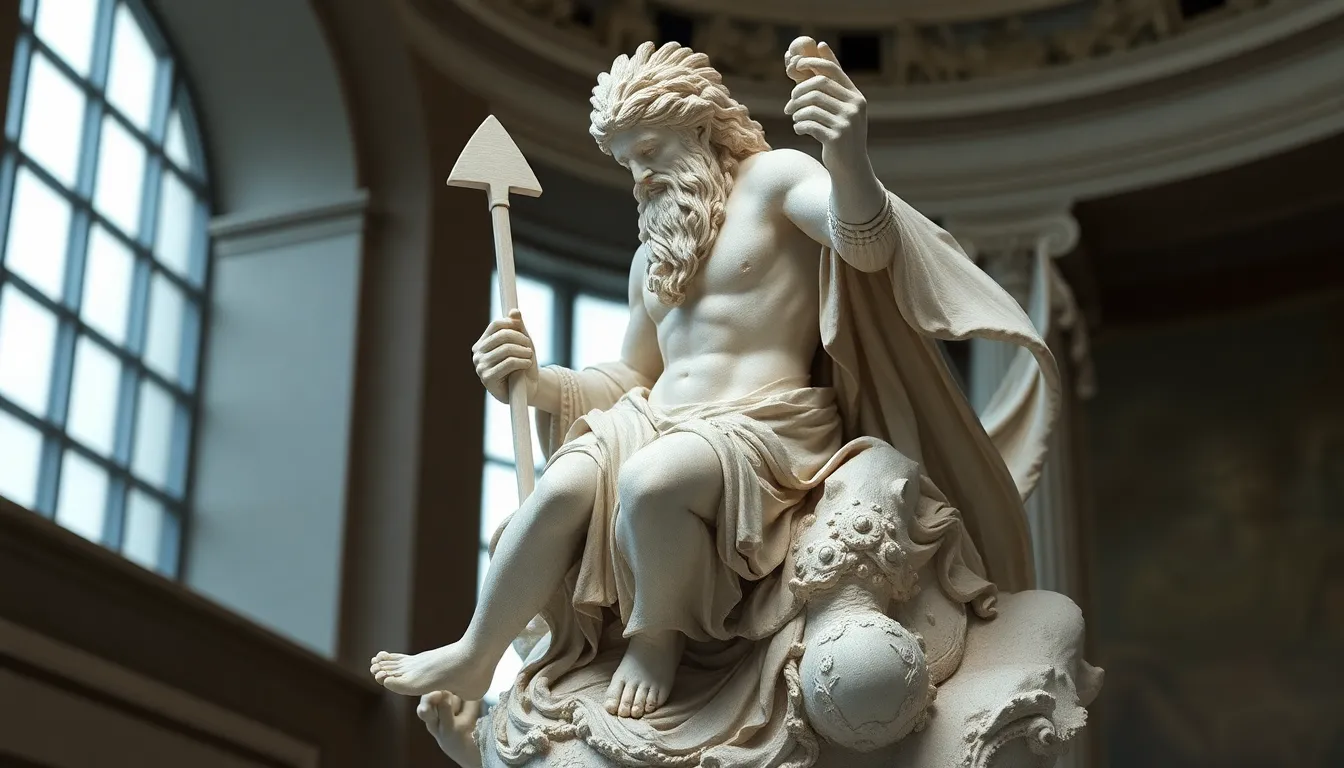
Myth and Matter: The Physicality of Greek Myths in Sculpture
I. Introduction
Greek mythology is a rich tapestry of stories that explains the origins of the world, the adventures of gods and heroes, and the moral lessons that they embody. These myths played a crucial role in the cultural and religious life of ancient Greece, influencing art, literature, and philosophy.
The relationship between myth and sculpture in ancient Greece is particularly significant. Sculptures served not only as artistic expressions but also as vessels of mythology, bringing to life the stories and characters that defined Greek culture.
This article aims to explore the physicality of Greek myths as represented in sculpture, examining the origins of these myths, the evolution of sculptural techniques, and the enduring legacy of mythological representations in art.
II. The Origins of Greek Mythology
Greek mythology has its roots in the oral traditions of ancient peoples, evolving over centuries into a complex system of beliefs and stories. These narratives were not merely fanciful tales but were deeply intertwined with the historical and cultural contexts of the time.
A. Historical context of Greek mythology
The origins of Greek mythology can be traced back to the Mycenaean civilization (circa 1600–1100 BC) and continued to develop through the subsequent Dark Ages and into the Archaic and Classical periods. Myths were passed down through generations, often evolving to reflect contemporary values and norms.
B. Key themes and deities in Greek myths
Greek myths feature a pantheon of gods and goddesses, each representing different aspects of life and nature. Key figures include:
- Zeus: The king of the gods and god of the sky.
- Hera: The queen of the gods and goddess of marriage.
- Athena: Goddess of wisdom and warfare.
- Poseidon: God of the sea and earthquakes.
- Hades: God of the underworld.
These deities often embody themes such as fate, heroism, love, and revenge, reflecting the complexities of human existence.
C. The role of myths in ancient Greek society
Myths served several key functions in ancient Greek society:
- They provided explanations for natural phenomena.
- They offered moral lessons and cultural values.
- They fostered a sense of community and shared identity.
- They were integral to religious practices and rituals.
III. The Evolution of Greek Sculpture
The evolution of Greek sculpture mirrors the changes in society, philosophy, and artistic techniques from the Archaic to the Hellenistic periods. Each era brought new styles and methods that reflected the cultural significance of mythology.
A. Overview of the major periods: Archaic, Classical, Hellenistic
The history of Greek sculpture can be divided into three main periods:
- Archaic (circa 800-480 BC): Characterized by rigid poses and stylized features, early sculptures often depicted gods, athletes, and heroes.
- Classical (circa 480-323 BC): Marked by a focus on naturalism, proportion, and idealized beauty, this period produced famous works such as the statues of the Parthenon.
- Hellenistic (circa 323-30 BC): Notable for its emotional intensity and dramatic compositions, Hellenistic sculpture depicted a wide range of subjects, including everyday life.
B. Techniques and materials used in Greek sculpture
Greek sculptors employed various techniques and materials to create their works:
- Materials: Common materials included marble, bronze, and terracotta.
- Techniques: Methods such as carving, casting, and modeling were used to create both large-scale statues and intricate reliefs.
- Tools: Sculptors utilized tools like chisels and hammers for stone and clay modeling tools for terracotta.
C. Influences of mythology on sculptural styles
Mythology heavily influenced sculptural styles, as artists aimed to capture the essence of gods and heroic figures. The stories behind the sculptures informed their poses, expressions, and attributes, creating a visual language that communicated complex narratives.
IV. Iconography in Greek Sculpture
Iconography refers to the visual images and symbols associated with a particular subject or theme. In Greek sculpture, iconography plays a vital role in conveying mythological narratives and character traits.
A. Common mythological themes represented in sculpture
Several recurring themes can be found in Greek mythological sculptures:
- Heroic feats and battles.
- Divine interactions with mortals.
- Transformation and metamorphosis.
- Mythical creatures and their significance.
B. Analysis of specific mythological figures and their depictions
Key figures from mythology were often depicted in specific ways to convey their characteristics:
- Athena: Often shown with armor, a helmet, and a shield, symbolizing wisdom and warfare.
- Hercules: Frequently portrayed with his club and lion skin, representing strength and heroism.
- Venus (Aphrodite): Depicted in various poses, often emphasizing beauty and sensuality.
C. Symbolism and meaning behind the physical attributes of sculptures
The physical attributes of sculptures often carry deeper meanings:
- Posture: The stance of a figure can convey confidence, power, or vulnerability.
- Facial expressions: These elicit emotional responses and convey the nature of a character.
- Attributes: Objects held by figures (e.g., a trident for Poseidon) signify their divine powers and roles.
V. Case Studies of Notable Sculptures
Several iconic sculptures exemplify the interplay between Greek mythology and artistic expression. Here are some notable case studies:
A. The Parthenon Sculptures: A reflection of myth and democracy
The Parthenon, dedicated to Athena, features an array of sculptures that depict mythological battles and the birth of Athena herself. These sculptures embody the values of democracy and civic pride in ancient Athens, making them a powerful symbol of Greek identity.
B. The Venus de Milo: Beauty and mythology intertwined
The Venus de Milo, a stunning representation of Aphrodite, showcases the ideal of beauty in Greek art. The statue’s graceful form and missing arms evoke a sense of mystery, illustrating the timeless allure of mythological figures.
C. The Laocoön Group: Emotion and physicality in mythological narratives
The Laocoön Group depicts the Trojan priest Laocoön and his sons being attacked by sea serpents. This sculpture captures intense emotion and dynamic movement, illustrating the dramatic narratives found in Greek mythology.
VI. The Role of Sculpture in Religious and Civic Life
Sculpture played a significant role in both religious and civic life in ancient Greece. The placement and purpose of these works were deeply intertwined with the culture’s values and beliefs.
A. Sacred spaces and temples: The placement of mythological sculptures
Mythological sculptures were often placed in temples and sacred spaces to honor the deities. These statues served as focal points for worship and rituals, reinforcing the connection between the divine and the physical world.
B. How sculptures served as storytelling devices in public and private contexts