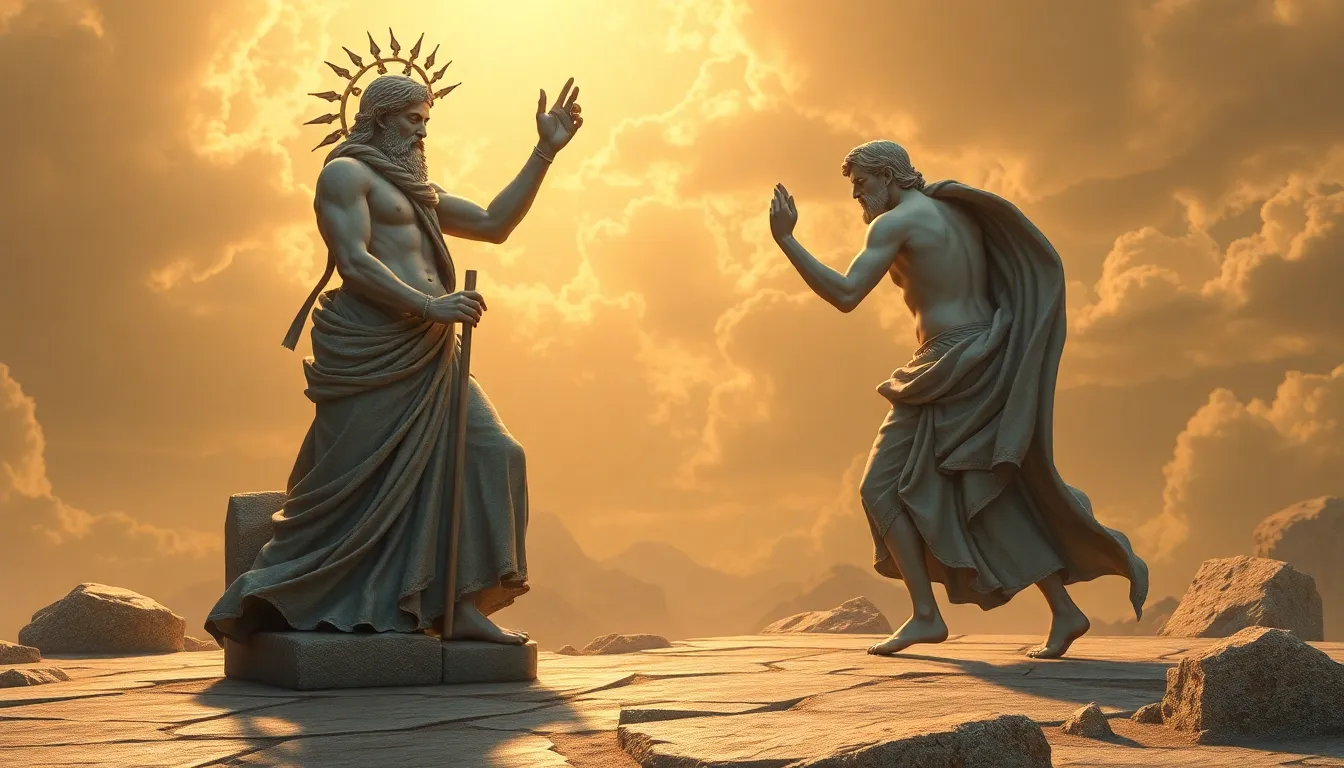
Mythological Interpretations of the Human Condition in Greek Thought
I. Introduction
Mythological interpretations serve as frameworks through which societies understand the complexities of life, existence, and the human condition. In Greek thought, myths were not just stories; they were profound narratives that conveyed moral lessons, cultural values, and insights into the nature of humanity. This article explores how Greek mythology reflects and shapes our understanding of human experiences, values, and the existential dilemmas we face.
The relevance of Greek thought to the human condition is timeless, as it addresses fundamental questions about our existence, our relationships with the divine, and the moral and ethical choices we confront. Through an examination of myth, we can glean insights into ancient perspectives that continue to resonate in contemporary discussions of identity, morality, and destiny.
This article aims to delve into the role of myth in Greek culture, explore major Greek myths and their themes, examine the concepts of fate and free will, discuss the heroic ideal, analyze the influence of philosophy on these interpretations, and consider modern interpretations of Greek mythology.
II. The Role of Myth in Greek Culture
Greek mythology has played a central role in shaping the cultural and societal landscape of ancient Greece. It provided a shared narrative that united people through common beliefs and values.
A. Historical context of Greek mythology
Emerging in a time when oral traditions were paramount, Greek myths were passed down through generations, evolving into complex tales that incorporated the values and struggles of the people. From the epic poems of Homer to the tragedies of Sophocles, myths became a primary means of storytelling and cultural transmission.

B. Myths as a reflection of societal values and beliefs
- Myths often embody the ideals of heroism, honor, and fidelity.
- They reveal societal norms, such as the importance of hospitality (xenia) and the consequences of hubris.
- Through their narrative arcs, myths articulate the struggles between human desires and divine will.
C. The function of myth in explaining the human experience
Myths served to explain natural phenomena, the human condition, and the moral order of the universe. They provided answers to profound questions such as: Why do we suffer? What happens after death? How do we find purpose? In this way, myths acted as a bridge between the known and the unknown, offering comfort and understanding to the human experience.
III. Major Greek Myths and Their Themes
Greek myths encompass a wide array of themes that resonate with the human condition. They explore creation, morality, love, and power dynamics.
A. The creation myths and the origins of humanity
Creation myths, such as those found in Hesiod’s “Theogony,” narrate the origins of the gods and humanity. The chaos that precedes creation symbolizes the primordial state of existence, reflecting humanity’s search for order and meaning in a chaotic world.
B. Tales of gods and mortals: Hubris and humility
The interaction between gods and mortals often highlights the themes of hubris—excessive pride—and humility. Stories like that of Icarus, who flew too close to the sun, illustrate the consequences of overstepping boundaries. Conversely, figures such as Odysseus embody the balance of intellect and humility, demonstrating that wisdom often lies in recognizing one’s limitations.
C. Myths of love, fate, and the struggle for power
Myths such as the tragic love story of Orpheus and Eurydice explore the depths of human emotion and the inevitability of loss. Similarly, the tales of the Trojan War delve into the complexities of power, loyalty, and betrayal, showcasing the fragility of human relationships in the face of ambition and conflict.
IV. The Concept of Fate and Free Will
The duality of fate and free will is a central theme in Greek mythology, raising questions about human agency and destiny.
A. The role of the Moirai (Fates) in determining human destiny
The Moirai, or Fates, are three sisters who control the thread of life. They symbolize the inescapable nature of fate, representing the idea that certain aspects of life are predetermined. This notion leads to a significant philosophical inquiry: to what extent do humans have control over their destinies?
B. The tension between predestination and personal agency
Greek myths often illustrate the struggle between predetermined fate and the exercise of free will. Characters like Oedipus grapple with their fates, attempting to escape prophecies only to find themselves ensnared by them. This tension reflects the complexities of human choice and the consequences of our actions.
C. Case studies: Oedipus and Prometheus as examples
Oedipus, a tragic figure, is doomed to fulfill a prophecy despite his efforts to change his fate. His story serves as a cautionary tale about the limits of human agency. In contrast, Prometheus challenges the gods by stealing fire for humanity, symbolizing the struggle for knowledge and enlightenment against divine authority. His punishment exemplifies the conflict between individual will and cosmic order.
V. The Heroic Ideal and the Human Condition
The concept of the hero is pivotal in Greek mythology, serving as a lens through which we can understand human potential and limitations.
A. Definition of the Hero in Greek mythology
Heroes in Greek mythology are often demigods or mortals who exhibit extraordinary abilities and undertake epic journeys. They embody virtues such as bravery, loyalty, and sacrifice, often facing insurmountable odds.
B. The journey of the hero: Trials, tribulations, and personal growth
The hero’s journey is a narrative arc that includes:
- Call to adventure: The hero is summoned to leave their ordinary world.
- Trials: The hero faces challenges that test their character and resolve.
- Transformation: The hero undergoes personal growth and gains new insights.
- Return: The hero returns to their community, transformed and often bringing knowledge or a boon.
C. The impact of heroic narratives on Greek views of human potential
Heroic narratives inspired individuals to aspire to greatness, emphasizing that through courage and resilience, one could achieve remarkable feats. They reinforced the belief in human potential and the pursuit of excellence, shaping cultural ideals that celebrated personal achievement and virtue.
VI. The Influence of Philosophy on Mythological Interpretations
The transition from mythological explanations of the world to philosophical interpretations marked a significant evolution in Greek thought.
A. The transition from mythos to logos: Key philosophical figures
Philosophers such as Socrates, Plato, and Aristotle began to question the truths presented in myths, seeking rational explanations for existence and morality. This shift from mythos (narrative) to logos (reason) laid the groundwork for modern philosophical inquiry.
B. Plato’s Allegory of the Cave: A philosophical myth
In “The Republic,” Plato presents the Allegory of the Cave, where prisoners mistake shadows for reality. This myth serves as a powerful metaphor for human ignorance and the journey toward enlightenment, emphasizing the importance of education and self-discovery.
C. Aristotle’s take on tragedy and catharsis
Aristotle’s analysis of tragedy, particularly in his work “Poetics,” highlights how tragic narratives evoke emotions of pity and fear, leading to catharsis. This understanding of emotional response to mythic narratives reflects the deeper psychological engagement with stories that probe the human condition.
VII. Modern Interpretations and Relevance of Greek Myths
In contemporary society, Greek mythology continues to captivate audiences and influence various fields, from literature to psychology.
A. The resurgence of interest in Greek mythology in contemporary culture
Films, literature, and art often draw inspiration from Greek myths, reinterpreting ancient stories for modern audiences. This resurgence indicates the lasting appeal of mythological narratives that explore timeless themes.
B. Psychological interpretations: Jungian archetypes and myth
Psychologist Carl Jung identified archetypes present in myths that resonate with universal human experiences. For instance, the Hero, the Mother, and the Shadow are archetypes that can be found throughout various cultures’ mythologies, including Greek myths. These archetypes provide a framework for understanding human behavior and motivation.
C. Lessons from Greek mythology for the modern human condition
Greek myths offer valuable lessons on resilience, the complexity of human relationships