Olympians Rise: The Epic Struggle Against the Titans
I. Introduction
In the rich tapestry of Greek mythology, the story of the Olympians and Titans is one of the most compelling narratives, filled with drama, conflict, and the eternal struggle for power. This tale unfolds in a realm where gods and titans vie for supremacy, shaping the very fabric of the cosmos.
The Olympians, a generation of deities led by Zeus, emerged from the shadows of their predecessors, the Titans, to establish a new order in the divine hierarchy. These mythological figures represent the evolving nature of power, authority, and the human condition, making their saga not just a story of gods, but a reflection of human struggles.
This article aims to explore the rise of the Olympians, the epic conflict against the Titans, and the lasting legacy of these mythological beings in art, literature, and contemporary culture.
II. The Titans: Powerful Beings of the Ancient World
A. Origins of the Titans in Greek mythology
The Titans were the primordial deities who ruled during the Golden Age of Greek mythology. They were the offspring of Gaia (Earth) and Uranus (Sky) and represented various aspects of the natural world. The Titans were known for their immense strength and power, embodying forces of nature and the cosmos.
B. Key figures among the Titans and their attributes
- Cronus: The leader of the Titans, known for his role in the prophecy that foretold his overthrow by his own son.
- Rhea: Cronus’s sister and wife, she was the mother of the Olympian gods.
- Oceanus: God of the ocean, he represented the vast waters that surrounded the earth.
- Tethys: The goddess of the nourishing flow of water, wife of Oceanus.
- Hyperion: Titan of light, he was associated with heavenly bodies and was the father of the sun, moon, and dawn.
C. The Titans’ rule and the Golden Age of mythology
During the Golden Age, the Titans ruled with a sense of stability and order, fostering an era of prosperity and abundance. Humanity lived without fear, suffering, or hardship under their reign. However, this era was not to last, as the ambitions and actions of the Titans would eventually lead to their downfall.
III. The Olympians: The Next Generation of Deities
A. Introduction to the Olympian gods and their lineage
The Olympian gods are the new generation of deities who arose from the union of Cronus and Rhea. Disguised as helpless infants, they were hidden from Cronus, who devoured his children to prevent the prophecy of being overthrown. The youngest, Zeus, escaped and later led the revolt against the Titans.
B. Notable Olympians and their unique powers
- Zeus: King of the gods, god of the sky and thunder. He wielded the thunderbolt and was known for his authority and justice.
- Hera: Queen of the gods and goddess of marriage and family. She was known for her jealousy and protective nature.
- Poseidon: God of the sea and earthquakes, he carried a trident and was known for his temperamental nature.
- Athena: Goddess of wisdom and warfare, she was born from Zeus’s head fully armored and was known for her strategic skills.
- Apollon: God of the sun, music, and prophecy, he represented harmony and enlightenment.
C. The emergence of Olympians as challengers to the Titans
The Olympians, led by Zeus, began to challenge the Titans’ authority, fueled by the desire for freedom from their father’s tyrannical rule. This rising tension set the stage for a monumental conflict that would change the course of mythological history.
IV. The Prelude to Conflict: Rising Tensions
A. The prophecy and the fear of Titan retaliation
According to prophecy, Cronus would be overthrown by one of his children. This fear drove Cronus to consume his offspring, but it also sowed the seeds of rebellion among the Olympians. The foreboding prophecy loomed over the Titans, creating a palpable tension between the two generations of gods.
B. The role of Prometheus and the shift in loyalty
Prometheus, a Titan who sided with the Olympians, played a crucial role in the shift of loyalty. He defied Cronus by stealing fire from the gods and giving it to humanity, which further fueled the anger between the Titans and Olympians. His actions symbolized the quest for knowledge and power, often at a great cost.
C. Key events leading to the Titanomachy
As tensions rose, several key events unfolded:
- The birth of Zeus and his secret upbringing by Rhea.
- Zeus’s revolt against Cronus after freeing his swallowed siblings.
- The gathering of allies among the Olympians, including the Cyclopes and Hecatoncheires, who would later aid in the war.
V. The Titanomachy: The Great War
A. Description of the epic battle between Olympians and Titans
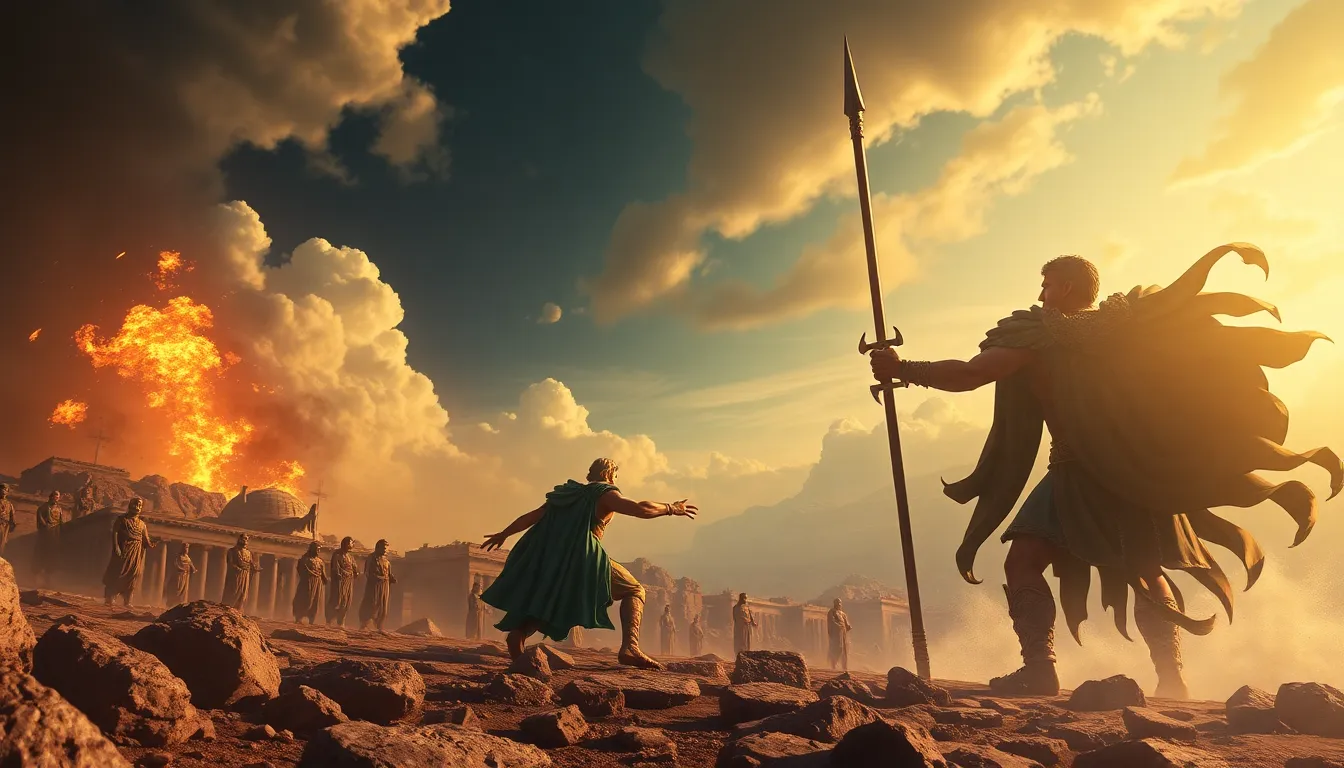
The Titanomachy was a ten-year-long war that pitted the Olympians against the Titans. The battlefield was Mount Olympus, a symbol of divine power, where the very foundations of the cosmos quaked under the fury of the gods. The clash involved not only brute strength but also cunning strategies and alliances.
B. Strategies and alliances formed during the conflict
The Olympians, realizing they were outnumbered, sought alliances with various beings in the cosmos:
- The Cyclopes provided Zeus with thunderbolts, Poseidon with a trident, and Hades with a helmet of invisibility.
- The Hecatoncheires, with their hundred arms, joined the Olympians, providing immense strength and combat skills.
C. Key battles and turning points in the war
Several significant battles marked the Titanomachy:
- The initial confrontations saw the Titans using their brute force, but the clever tactics of the Olympians began to shift the tide.
- The turning point came when Zeus unleashed his thunderbolts, causing chaos among the Titans.
- Ultimately, the combined efforts of the Olympians and their allies led to the capture of Cronus and the other Titans.
VI. Aftermath of the Titanomachy: The Fall of the Titans
A. Consequences of the war for the Titans
The aftermath of the Titanomachy was devastating for the Titans. Most were imprisoned in Tartarus, a deep abyss used as a dungeon of torment and suffering. Their reign was over, and they were no longer able to challenge the authority of the Olympians.
B. The establishment of the Olympian reign
With the Titans defeated, the Olympians established themselves as the new rulers of the cosmos. Zeus took his place as the king, and the pantheon of gods began to take shape, each deity assuming domains that reflected their powers and personalities.
C. Changes in the balance of power among the gods
The balance of power shifted dramatically, with the Olympians embodying a more human-like approach to governance, characterized by a blend of compassion and wrath. The gods formed a council, with Zeus at the helm, ensuring that the mistakes of the Titans would not be repeated.
VII. Legacy of the Olympians and the Titans
A. Cultural impact on art, literature, and religion
The legacy of the Olympians and Titans has left an indelible mark on Western culture. Their stories have inspired countless works of art, literature, and philosophy. From the epic poems of Homer to modern adaptations in film and literature, these myths continue to resonate.
B. The enduring themes of conflict and power struggles
The struggle between the Olympians and Titans encapsulates timeless themes of conflict, power, and the cyclical nature of authority. These narratives serve as allegories for human experiences, reflecting the complexities of leadership,