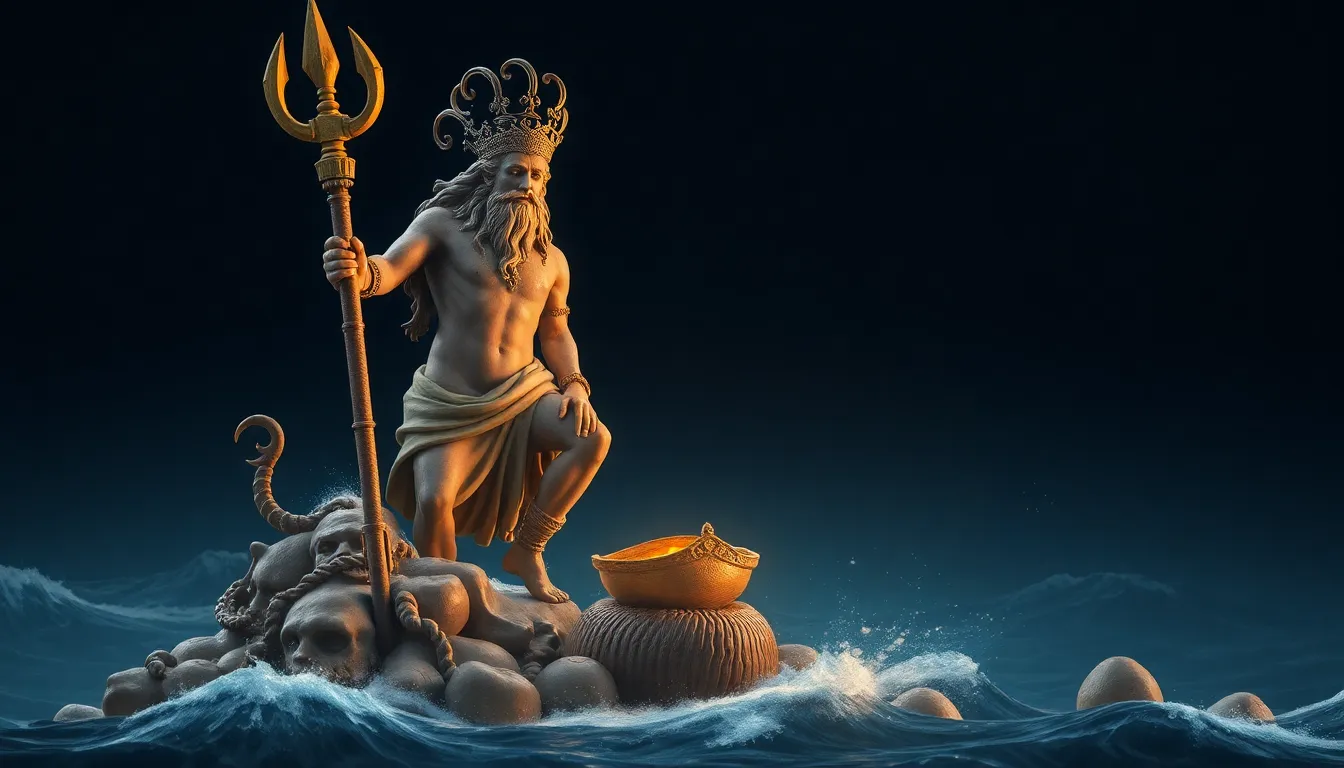
Sacrifices of the Sea: Myths of Poseidon and Ocean Offerings
I. Introduction
In the rich tapestry of Greek mythology, Poseidon stands out as one of the most formidable deities, often associated with the vast and unpredictable sea. As the god of the ocean, earthquakes, and horses, Poseidon embodies the duality of nature—capable of bestowing life and nourishment as well as unleashing chaos and destruction. The ancient Greeks revered the sea not only as a source of sustenance but also as a powerful force that demanded respect and reverence.
The importance of the sea in ancient cultures cannot be overstated; it served as a critical avenue for trade, exploration, and communication. Given its central role in daily life, it was only natural that the people turned to their gods, particularly Poseidon, seeking favor through sacrifices and offerings. This article delves into the significance of Poseidon, the ocean, and the rituals that defined the relationship between mortals and the sea.
II. The Role of Poseidon in Greek Mythology
A. Attributes and symbolism of Poseidon
Poseidon, often depicted with a trident, symbolizes not just the sea but also its tempestuous nature. His attributes include:
- Trident: A symbol of power and control over the oceans.
- Horses: Believed to be the creator of horses, linking him to both land and sea.
- Earthquakes: Known as the “Earth-shaker,” he embodies the destructive forces of nature.

B. Poseidon’s relationships with other gods and mortals
Poseidon held a complex relationship with other deities, often characterized by rivalry and competition. His most notable rival was Athena, with whom he contended for the patronage of Athens, leading to the city’s ultimate favoring of Athena. Furthermore, Poseidon’s interactions with mortals were equally impactful, as numerous heroes sought his favor or faced his wrath.
C. Influence of Poseidon on ancient Greek society
The influence of Poseidon extended beyond mythology into everyday life. Coastal cities, such as Corinth and Athens, held festivals in his honor, while sailors invoked his blessings before embarking on voyages. His presence was felt in art, literature, and even in the political sphere, as leaders sought to align themselves with his power.
III. The Significance of the Ocean in Ancient Civilizations
A. The sea as a source of sustenance and trade
The ocean provided ancient Greeks with food, trade routes, and a means of transportation. Fish, shellfish, and other marine resources were staples in their diet, while the sea enabled merchants to exchange goods with distant lands. The prosperity of cities often depended on their maritime capabilities.
B. Cultural beliefs surrounding the ocean
Beyond its practical benefits, the sea was shrouded in cultural beliefs. It was seen as both a giver and taker of life, a source of inspiration for countless myths and legends. The ocean represented the unknown, a realm inhabited by both beneficial and malevolent forces.
C. How the ocean influenced mythology and religion
The ocean’s vastness and mystery inspired the creation of numerous myths and rituals. The Greeks believed that the sea was home to various creatures and deities, necessitating offerings to appease them. The stories of sailors encountering sea monsters and divine interventions added to the reverence of the ocean.
IV. Types of Offerings Made to Poseidon
A. Rituals and ceremonies associated with ocean offerings
Rituals dedicated to Poseidon varied widely, often influenced by regional customs. Common ceremonies included:
- Processions: Participants would march to the sea, carrying offerings.
- Festivals: Celebrations such as the Panathenaea included sacrifices to honor Poseidon.
- Vows: Sailors often made vows to Poseidon before setting out to sea, promising offerings in return for safe passage.
B. Common types of sacrifices (e.g., animals, precious items)
Offerings varied from simple to elaborate, often including:
- Animals: Common sacrifices included bulls, goats, and fish, often thrown into the sea.
- Precious items: Jewelry, coins, or other valuables were sometimes cast into the ocean as a sign of devotion.
- First fruits: The first catches or harvests were offered as gratitude for Poseidon’s blessings.
C. The significance of these offerings in relation to maritime safety and prosperity
Offerings to Poseidon were vital for ensuring safe voyages and bountiful catches. Mariners believed that by honoring the god, they could mitigate the dangers of storms, shipwrecks, and other maritime perils. The act of sacrifice was seen as a direct line of communication with the divine, fostering a sense of security in their ventures.
V. Myths Involving Poseidon and Sacrifices
A. Key myths that illustrate sacrifices to Poseidon
Numerous myths involving Poseidon highlight the importance of sacrifices and the repercussions of neglecting them. Notable stories include:
1. The story of Theseus and the Minotaur
In this myth, King Minos of Crete failed to honor Poseidon, leading to the birth of the Minotaur, a monstrous creature. In a bid to appease Poseidon, Minos was forced to send tributes of Athenian youths to the labyrinth. This tale illustrates the dire consequences of neglecting sacrifices to the sea god.
2. The tale of Odysseus and the wrath of Poseidon
Odysseus’ journey home was marked by Poseidon’s anger after Odysseus blinds his son, the Cyclops Polyphemus. This act of hubris enraged Poseidon, leading to numerous trials and tribulations for Odysseus. His eventual realization of the need to appease Poseidon serves as a critical lesson in humility and respect for the divine.
B. Analysis of the moral lessons conveyed through these myths
These myths convey essential moral lessons about respect, humility, and the importance of honoring divine forces. The Greeks believed that neglecting the gods led to misfortune, while observance of their rituals could result in protection and prosperity.
VI. The Consequences of Neglecting Ocean Offerings
A. Historical accounts of natural disasters linked to Poseidon’s anger
Historical records and myths often attribute natural disasters such as earthquakes and storms to the wrath of Poseidon. These events were interpreted as direct consequences of human actions, particularly the failure to offer due respect to the sea god.
B. Cultural repercussions of failing to honor ocean deities
Neglecting ocean deities had significant cultural repercussions. Communities would often face social unrest, economic decline, and a loss of morale. The belief in Poseidon’s power reinforced the need for unity in worship and sacrifice.
C. The psychological impact on sailors and coastal communities
The psychological impact of neglecting ocean offerings was profound. Sailors lived in constant fear of Poseidon’s wrath, leading to rituals designed to appease him. These practices fostered a deep-seated respect for the sea and its unpredictable nature.
VII. Modern Interpretations and Legacy
A. Influence of Poseidon in contemporary culture (literature, film, etc.)
Poseidon continues to influence contemporary culture, appearing in literature, films, and art. From Rick Riordan’s “Percy Jackson” series to various Hollywood adaptations, the character of Poseidon resonates with modern audiences, symbolizing the enduring fascination with the sea.
B. The continuing relevance of ocean offerings in modern spiritual practices
While traditional rituals may not be as prevalent today, the concept of offering respect to the ocean persists. Many coastal communities engage in environmental conservation, viewing it as a form of homage to the sea.
C. Environmental considerations and respect for the sea
In light of contemporary environmental challenges, there is a renewed focus on respecting the ocean. Efforts to reduce pollution and protect marine life reflect a modern understanding of the interconnectedness of humanity and the sea, echoing the ancient beliefs surrounding Poseidon.</