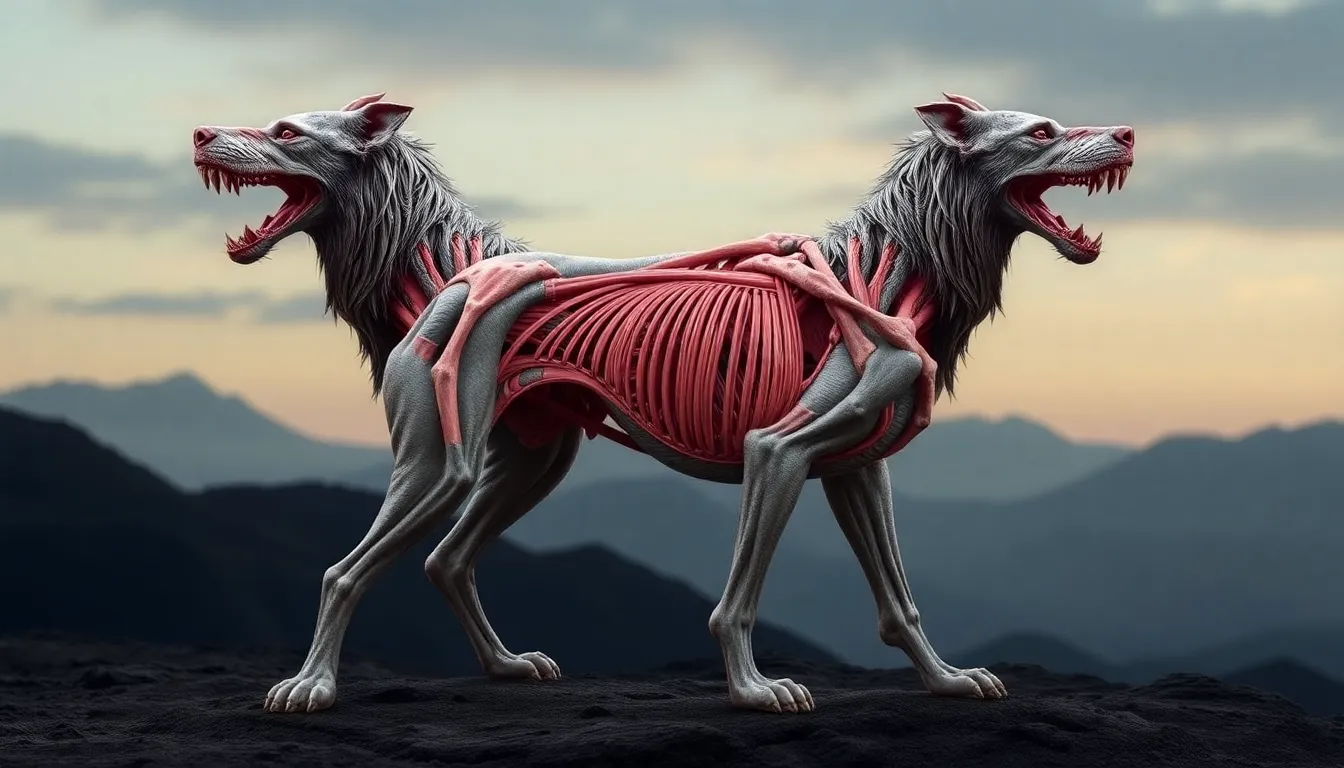
The Anatomy of Cerberus: What Makes the Three-Headed Dog Unique?
I. Introduction
Cerberus, the legendary three-headed dog of Greek mythology, is one of the most fascinating creatures in ancient lore. Often depicted as a monstrous guardian, Cerberus embodies both the fear and awe associated with the underworld. This article explores the unique aspects of Cerberus, shedding light on his origins, physical characteristics, symbolism, and enduring legacy in both ancient and modern cultures.
In Greek culture, Cerberus served as an important figure, representing the boundary between the living and the dead. His role as the guardian of the Underworld highlights the significance of death in Greek mythology, where the afterlife was a realm to be respected and feared.
The purpose of this article is to delve into the mythological, physical, and cultural dimensions of Cerberus, providing a comprehensive understanding of this iconic figure.
II. Mythological Origins of Cerberus
A. Historical References in Ancient Texts
Cerberus is mentioned in various ancient texts, including the works of Homer and Virgil. In Homer’s “The Iliad,” he is noted as a fearsome creature guarding the gates of the Underworld. Virgil’s “Aeneid” also describes Cerberus as a monstrous guardian, emphasizing his role in preventing the escape of souls.
B. Parents and Lineage of Cerberus
Cerberus is traditionally considered the offspring of the monsters Echidna and Typhon, both formidable beings in their own right. Echidna, often referred to as the “Mother of All Monsters,” and Typhon, a giant storm deity, contributed to Cerberus’s fearsome nature and strength.
C. Role in the Underworld and Association with Hades
As the guardian of the Underworld, Cerberus was tasked with preventing the dead from leaving and ensuring that the living did not enter without permission. He is closely associated with Hades, the god of the Underworld, who kept Cerberus by his side as both a companion and protector.
III. Physical Characteristics of Cerberus
A. Description of the Three Heads
One of Cerberus’s most distinctive features is his three heads, each of which represents different aspects of his personality:
- Ferocity: The first head is characterized by its aggressive nature, often depicted as snarling and ready to attack.
- Intelligence: The second head is often portrayed as more cunning, reflecting a level of awareness and understanding.
- Compassion: The third head, while still fearsome, is sometimes shown as more empathetic, representing a protective instinct.
B. Body Structure and Size
Cerberus is typically described as a massive creature, often depicted as larger than a lion. His muscular build enables him to perform his duties as a guardian effectively, instilling fear in all who approach the gates of the Underworld.
C. Distinctive Features (e.g., Tail, Fur, Claws)
In addition to his three heads, Cerberus is characterized by several other notable features:
- Fur: His fur is often described as dark and shaggy, enhancing his menacing appearance.
- Tail: Cerberus is sometimes depicted with a serpent for a tail, adding to his monstrous persona.
- Claws: His claws are sharp and formidable, capable of inflicting serious damage to intruders.
IV. Symbolism and Representation
A. Cerberus as a Guardian Figure
Cerberus’s primary role as a guardian symbolizes the protection of sacred spaces, particularly the boundary between life and death. He represents the idea that death is not to be taken lightly and that the afterlife is a domain that must be respected.
B. Interpretation of the Three Heads
The three heads of Cerberus can symbolize various dualities in life, such as:
- Past, Present, and Future
- Life, Death, and Rebirth
- Fear, Understanding, and Acceptance
C. Cerberus in Art and Literature
Cerberus has been a popular subject in art and literature throughout history. He appears in numerous ancient sculptures, paintings, and literary works, often depicted in scenes that illustrate his role as a guardian of the Underworld. His image continues to inspire modern artists and writers who draw upon his rich symbolism.
V. Cerberus in Modern Culture
A. Influence on Popular Media (Films, Books, Video Games)
In contemporary culture, Cerberus has made appearances in various forms of media:
- Films like “Harry Potter and the Sorcerer’s Stone,” where a three-headed dog guards a secret chamber.
- Books such as Rick Riordan’s “Percy Jackson” series, which reimagines Greek mythology for a modern audience.
- Video games like “God of War,” where Cerberus serves as both a foe and a significant element of the storyline.
B. Cerberus as a Symbol in Contemporary Society
Today, Cerberus is often used as a symbol of loyalty and protection. His image can be found in various merchandise, tattoos, and even company logos, representing the idea of guarding what is valuable.
C. Comparisons to Other Mythological Creatures
Cerberus is sometimes compared to other mythological guardians, such as:
- Chimera: A fire-breathing monster with a lion’s head, a goat’s body, and a serpent’s tail.
- Fenrir: A monstrous wolf from Norse mythology, also associated with the end of the world.
- Anubis: The Egyptian god of the afterlife, often depicted with a canine head.
VI. The Role of Cerberus in the Underworld
A. Duties as a Guardian of the Underworld
Cerberus’s primary duty was to guard the entrance to the Underworld, ensuring that no souls could escape and no living beings could enter without authorization. He is often depicted as sitting at the gates, ready to challenge anyone who dares approach.
B. Cerberus’s Interactions with Souls
While Cerberus is known for his ferocity, he also exhibits a level of intelligence that allows him to interact with souls in the Underworld. Some myths describe him as allowing souls to enter but never leave, reflecting his role in maintaining the balance of life and death.
C. Myths and Stories Involving Cerberus and Heroes
Several myths involve heroes who encounter Cerberus, including:
- Heracles (Hercules): One of the Twelve Labors involved capturing Cerberus and bringing him to the surface, showcasing his bravery and strength.
- Orpheus: The musician who charms Cerberus with his music to retrieve his wife, Eurydice, from the Underworld.
VII. The Legacy of Cerberus
A. Cerberus in Modern Mythology
Today, Cerberus continues to be a subject of fascination, often appearing in discussions of mythology and its relevance to contemporary issues. His legacy remains strong, influencing various artistic and cultural expressions.
B. Impact on Contemporary Symbolism and Psychology
Cerberus’s dual role as a guardian and fearsome creature resonates with psychological themes of protection, fear, and the unknown. He serves as a metaphor for the human experience of confronting mortality and the boundaries between life and death.
C. Educational and Cultural Importance
Studying Cerberus offers insights into ancient Greek beliefs, cultural values, and the human condition. His story serves as a bridge between ancient and modern worlds, encouraging exploration of mythology’s role in understanding human experiences.
VIII. Conclusion
Cerberus, with his unique features and multifaceted role in mythology
https://www.youtube.com/watch?v=7x7MNbdeyJI