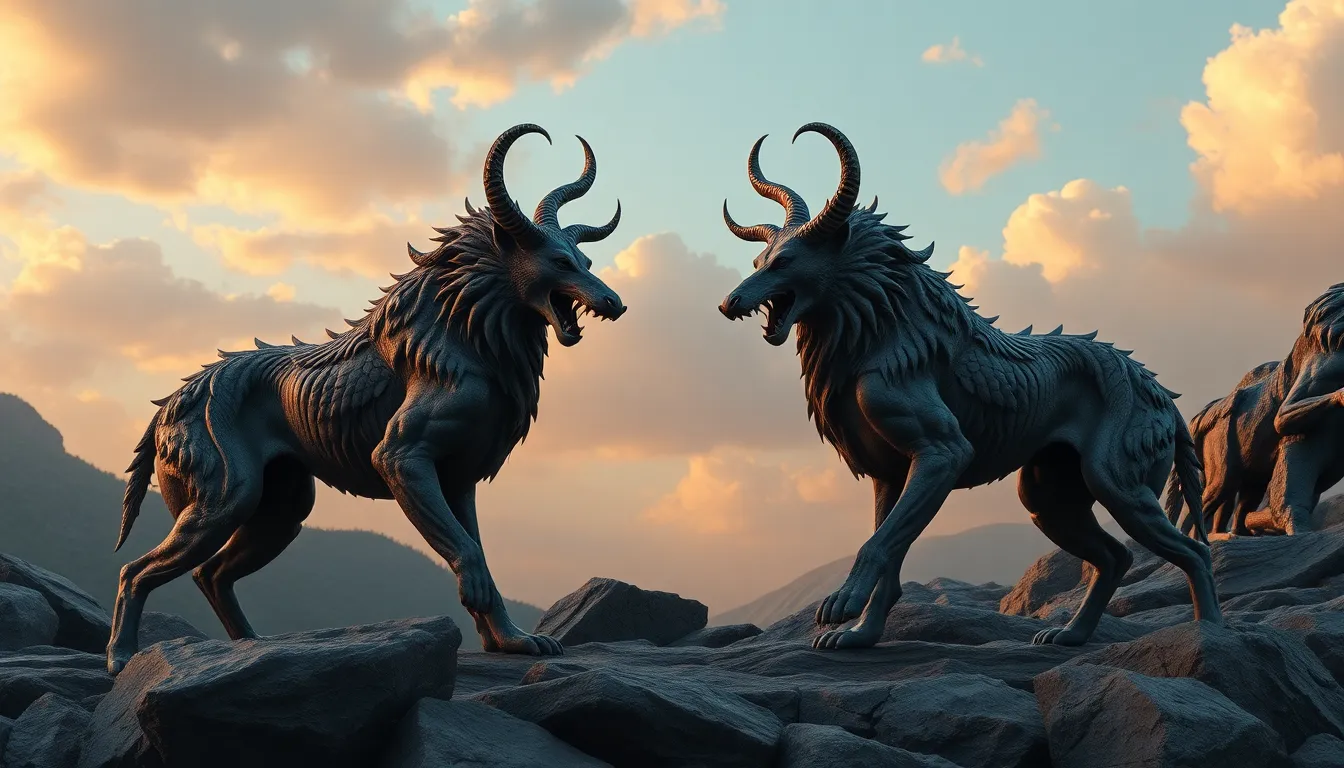
The Connection Between Cerberus and Other Mythological Beasts
I. Introduction
In Greek mythology, Cerberus is one of the most iconic creatures, often depicted as a monstrous, three-headed dog guarding the entrance to the Underworld. This fearsome beast is not only a symbol of the afterlife but also serves as a critical figure in various mythological narratives. Mythological beasts like Cerberus play a vital role in cultural storytelling, representing various themes such as loyalty, fear, and the boundary between life and death.
This article aims to explore the connections between Cerberus and other mythological beasts, examining their roles, characteristics, and the symbolic meanings they convey across different cultures.
II. Cerberus: The Guardian of the Underworld
Cerberus is often described as a large, fearsome dog with three heads, a serpent for a tail, and multiple snakes protruding from his back. His primary duty is to prevent the dead from escaping the Underworld while ensuring that the living cannot enter without permission.
In Greek mythology and literature, Cerberus appears in various stories, most notably in the Twelve Labors of Heracles, where he was captured and brought to the surface as part of Heracles’ tasks. This highlights his role as a guardian who maintains the balance between the living and the dead.
The symbolism of Cerberus as a guardian figure is profound. He represents the protector of the threshold between life and death, embodying the fear and respect that ancient cultures held for the afterlife.
III. The Role of Other Three-Headed Beasts in Mythology
Three-headed beasts are not exclusive to Greek mythology; they appear in various cultures around the world. In many traditions, these creatures symbolize power, protection, and the complexity of existence. Here are some notable examples:
- Hinduism: The goddess Durga is often depicted riding a lion or tiger, and while not a three-headed beast, her multiple forms can symbolize the multifaceted nature of divinity.
- Slavic Mythology: The three-headed dragon Zmey Gorynych is a fearsome creature that represents chaos and destruction.
- Chinese Mythology: The three-headed demon known as the Sanjiao is associated with various aspects of life and death.
When comparing these three-headed beasts to Cerberus, we find both similarities and differences. While Cerberus serves primarily as a guardian of the Underworld, other cultures often portray their three-headed creatures as embodiments of chaos or destruction.
IV. Cerberus and Chimeric Creatures
Chimeric creatures in mythology are those that possess traits from multiple animals, often symbolizing the merging of different aspects of life. Cerberus, with his three heads and serpentine features, is a prime example of a chimeric entity.
The connection between Cerberus and other chimeras, such as the Chimera of Lycia, is significant. The Chimera, often depicted with the body of a lion, the head of a goat, and a serpent’s tail, symbolizes the unpredictable nature of life. Both creatures represent the blending of various animal traits, which signifies the complexity and duality of existence.
Analyzing these hybrid traits, we see that they often serve to illustrate the themes of transformation and the coexistence of different forces within a single entity.
V. The Symbolism of Dogs in Mythology
Dogs have long been associated with loyalty and protection in various mythologies. In the case of Cerberus, he embodies these traits as a guardian of the Underworld. His fierce loyalty to Hades is matched by his terrifying demeanor, creating a complex symbol of guardianship.
When we compare Cerberus to other mythological dogs, such as Fenrir from Norse mythology, we see an interesting duality. Fenrir is a wolf prophesied to bring destruction during Ragnarök, while Cerberus serves to protect the boundaries of the Underworld. This contrast showcases the varied roles that dogs play in myth: as both guardians and harbingers of chaos.
This duality illustrates the multifaceted nature of dogs in mythology, highlighting their roles as protectors and symbols of loyalty, while also serving as reminders of the potential for destruction.
VI. Cerberus in Popular Culture
In modern storytelling, Cerberus has been represented in various forms of literature, film, and video games. His iconic image as a three-headed dog has made him a staple in depictions of the Underworld and has influenced numerous narratives.
- Literature: Cerberus appears in works such as Dante Alighieri’s “Inferno,” where he guards the gluttonous souls.
- Film: Movies like “Hercules” and “Harry Potter and the Sorcerer’s Stone” feature Cerberus, introducing him to new audiences.
- Video Games: In games like “God of War” and “Dante’s Inferno,” Cerberus serves as a formidable boss character.
The influence of mythological beasts, including Cerberus, on modern storytelling is profound. Themes derived from these creatures often explore the boundaries of life and death, loyalty, and the nature of fear, resonating with audiences across generations.
VII. Cross-Cultural Influences and Adaptations
Cerberus has not only influenced Greek mythology but has also found resonance in various cultures around the world. This cross-cultural presence highlights the universal themes surrounding death, the afterlife, and guardianship.
Examples of adaptations include:
- In Japanese mythology, the three-headed dog Shishi symbolizes protection and is often seen in temple iconography.
- In modern fantasy literature, authors often draw inspiration from Cerberus to create their versions of multi-headed guardians.
The evolution of Cerberus and similar beasts over time reflects changing cultural attitudes towards death and the afterlife, illustrating how mythological connections can adapt and thrive across different contexts.
VIII. Conclusion
In summary, the connections between Cerberus and other mythological beasts illustrate the rich tapestry of cultural narratives surrounding these creatures. From guardian figures to chimeras, the role of mythological beasts in storytelling serves to convey complex themes of loyalty, protection, and the mysteries of the afterlife.
The enduring legacy of these creatures in human storytelling speaks to our fascination with the unknown and the boundaries that separate life from death. Understanding these connections not only enriches our appreciation of mythology but also deepens our insights into the cultures that created them.
Ultimately, the significance of mythological connections lies in their ability to reflect human experiences, fears, and aspirations, reminding us of the timeless stories that continue to shape our understanding of the world.