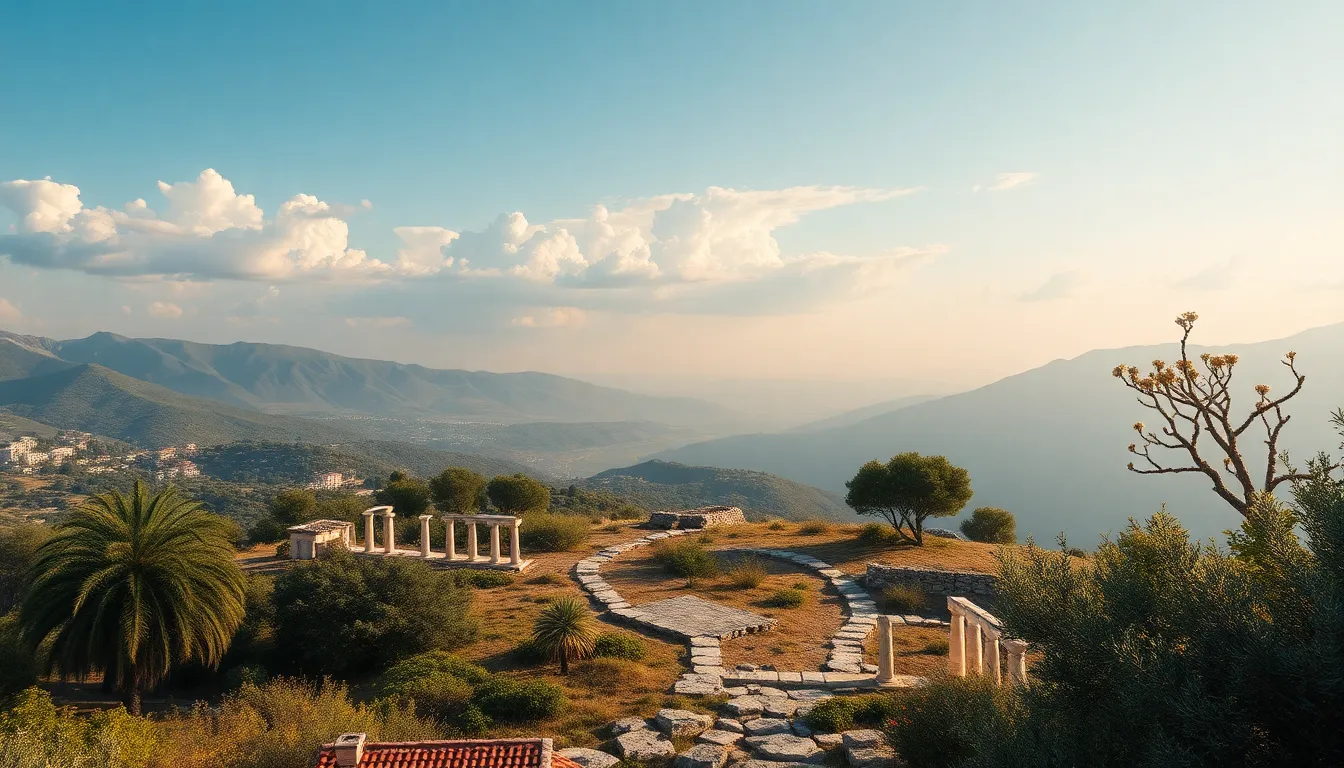
The Connection Between Gaia and the Greek Landscape
I. Introduction
In Greek mythology, Gaia is revered as the personification of the Earth, a primordial deity who embodies the very essence of the natural world. As the mother of all life, she plays a crucial role in the creation myths of ancient Greece, representing fertility, nurturing, and the interconnectedness of all living beings. The Greek landscape, with its dramatic mountains, fertile valleys, and vast coastlines, is steeped in cultural significance, reflecting both the physical and spiritual dimensions of existence for the ancient Greeks.
This article explores the interrelationship between Gaia and the Greek landscape, revealing insights into the beliefs and environmental perspectives of ancient civilizations. By examining various aspects of their connection, we can better understand how the natural world shaped Greek mythology and society.
II. Gaia: The Personification of Earth
Gaia, often referred to as Mother Earth, has her origins deeply rooted in ancient Greek cosmology. She is one of the primordial deities, emerging from Chaos, the void of existence. As the Earth itself, Gaia is not merely a figure in mythology; she represents the fertile ground that nurtures life and sustains all beings.
In creation myths, Gaia is depicted as the mother of the Titans, the Cyclopes, and many other beings. Her significance to the ancient Greeks is profound, as they viewed her as a source of life and abundance. Gaia’s symbolism as a nurturing force reflects the ancient Greeks’ deep reverence for nature and its cycles.
III. The Physical Landscape of Greece
The geography of Greece is characterized by its diverse and stunning landscapes, including:
- Majestic mountains such as the Pindus range
- Fertile plains like Thessaly
- Picturesque coastlines dotted with islands
This varied topography significantly influenced ancient Greek civilization and culture. The mountains served as natural barriers, fostering the development of independent city-states, while the plains supported agricultural practices. The sea, abundant with resources, enabled trade and cultural exchange.
The relationship between the natural environment and local mythology is evident in the numerous tales that feature specific geographical features. Many myths explain the origins of hills, rivers, and valleys, suggesting a deep connection between the people and their landscape.
IV. Mythological Landscapes: Sacred Sites and Their Significance
Throughout ancient Greece, various sacred sites are intricately linked to Gaia. Some key locations include:
- Delphi: Believed to be the center of the world, Delphi was home to the Oracle, where people sought guidance from the divine.
- Olympia: Known as the birthplace of the Olympic Games, this site was dedicated to Zeus but also honored Gaia as the earth that sustains all life.
- Knossos: The Minoan palace complex, which showcased early connections between the earth and maternal figures in mythology.
These sites played a significant role in worship and rituals, where offerings were made to Gaia, reflecting gratitude for the earth’s gifts. The physical landscape of these sacred sites embodies Gaia’s influence, merging the divine with the natural world.
V. Gaia as a Symbol of Fertility and Abundance
Gaia’s connection to agriculture is profound, as she symbolizes fertility and the bounty of the earth. The ancient Greeks recognized the importance of nurturing the land to ensure successful harvests. Key aspects of this connection include:
- Rituals and festivals, such as the Thesmophoria, which celebrated the fertility of the earth and honored Demeter, Gaia’s daughter.
- The agricultural calendar, which was closely aligned with seasonal changes, showcasing the Greeks’ reverence for the cycles of nature.
- The cultivation of staple crops, such as olives and grapes, rooted in the rich soil nourished by Gaia.
The landscape’s fertility played a crucial role in the abundance of resources, reflecting the symbiotic relationship between the people and their environment.
VI. The Interplay of Nature and Myth in Greek Literature
The connection between Gaia and the Greek landscape is also evident in ancient literature. Notable literary works that depict this relationship include:
- Hesiod’s “Theogony”: This epic poem outlines the origins of the gods and the creation of the earth, portraying Gaia as a central figure in the cosmos.
- Homer’s “Iliad” and “Odyssey”: These epic tales frequently reference the natural world, emphasizing the landscapes that shaped human experiences and interactions with the divine.
- Pindar’s Odes: The poet often celebrates the beauty of the Greek landscape and its connection to divine favor and human achievement.
These works reflect how nature was intricately woven into the fabric of Greek thought, demonstrating the significance of Gaia and the landscape in shaping cultural identity.
VII. Modern Interpretations of Gaia and the Greek Landscape
In contemporary discussions, Gaia has emerged as a powerful symbol in environmental movements. Modern interpretations of Gaia highlight:
- Ecological perspectives that emphasize the interconnectedness of all living beings and the importance of protecting the Earth.
- The influence of Greek landscapes on modern art and literature, inspiring countless artists and writers to draw on the themes of nature and mythology.
- The relevance of Gaia in current ecological movements, advocating for sustainable practices and a deeper appreciation of the natural world.
These interpretations reflect a growing awareness of the lessons from ancient wisdom, urging society to recognize the intrinsic value of the environment.
VIII. Conclusion
Through this exploration of Gaia and the Greek landscape, we have uncovered the profound connections between mythology, nature, and culture. Gaia, as the personification of the Earth, symbolizes the nurturing force that sustains life, while the diverse landscapes of Greece serve as a canvas for ancient beliefs and practices.
The enduring legacy of Gaia reminds us of the importance of appreciating and protecting our natural world. As we reflect on the wisdom of the ancients, let us strive to honor Gaia by fostering a sustainable relationship with the environment that sustains us all.