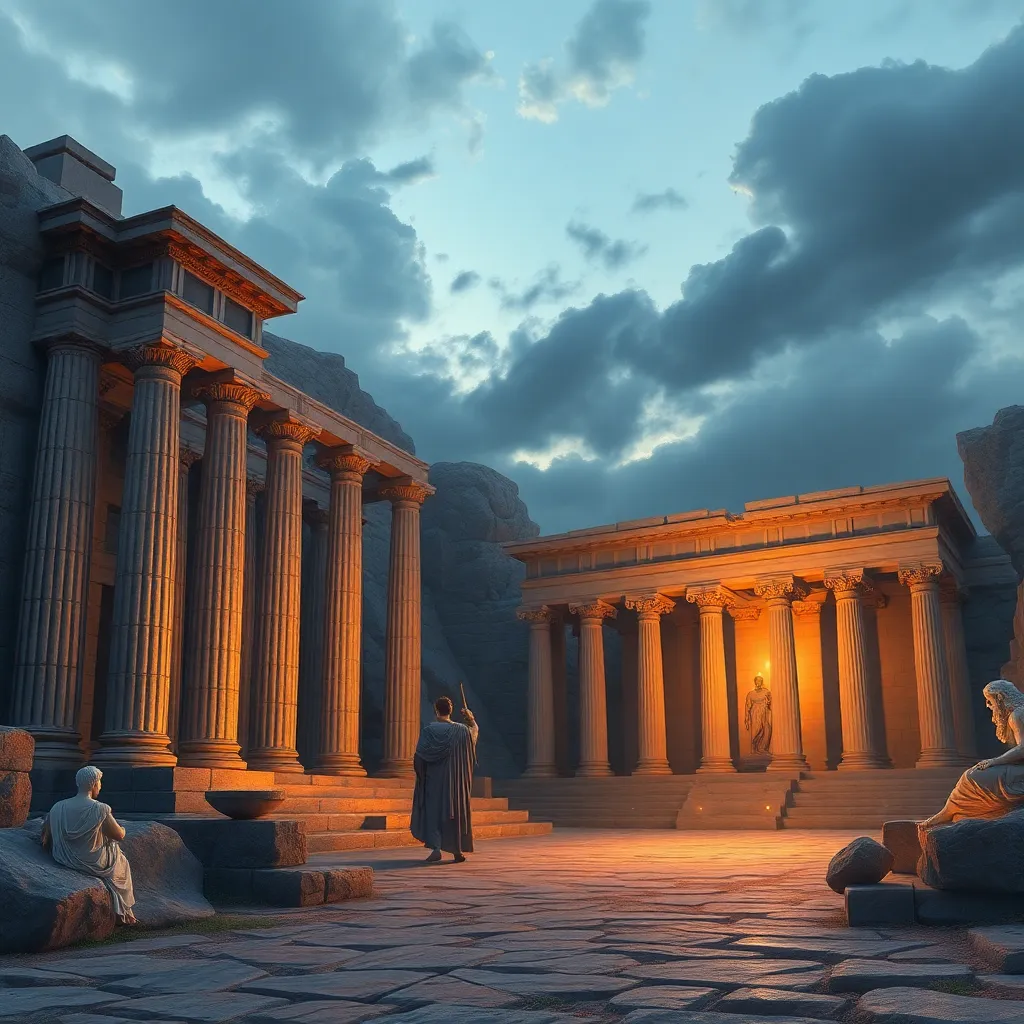
The Connection Between Theseus and the Eleusinian Mysteries
I. Introduction
Theseus is one of the most celebrated heroes in Greek mythology, revered for his adventurous spirit and significant contributions to Athenian culture. He is known for various feats, including the slaying of the Minotaur and his participation in the Argonauts’ quest. In parallel, the Eleusinian Mysteries stand as one of the most important religious rites of ancient Greece, centered around the myth of Demeter and Persephone, which embodies themes of life, death, and rebirth. This article aims to explore the profound connections between Theseus and the Eleusinian Mysteries, highlighting their shared themes of transformation, heroism, and the human condition.
II. The Legend of Theseus
The myths surrounding Theseus are numerous and varied, showcasing his heroism and the moral lessons intertwined in his adventures. Key myths include:
- The slaying of the Minotaur in the labyrinth of Crete.
- His journey to the Underworld to rescue Persephone.
- His role in the founding of Athens and the establishment of democracy.
Theseus is often viewed as a cultural symbol, embodying the ideals of bravery, intelligence, and civic responsibility. His journey to the Underworld, in particular, holds significant thematic weight, as it reflects the hero’s confrontation with death and the unknown, paralleling the experiences encountered in the Eleusinian Mysteries.
III. The Eleusinian Mysteries: An Overview
The Eleusinian Mysteries were ancient initiation ceremonies held annually in honor of Demeter and Persephone. They are rooted in agricultural traditions and symbolize the cycle of life and death. Key aspects of the Mysteries include:
- Historical Background: The origins of the Mysteries can be traced back to the Neolithic period, evolving into a complex religious system by the time of classical Greece.
- Importance: The Mysteries offered initiates a deeper understanding of life and death, promising rewards in the afterlife.
- Key Figures: Demeter, the goddess of agriculture, and her daughter Persephone, whose abduction by Hades symbolizes the seasonal cycle of growth and decay, are central to the Mysteries.
Rituals included sacred rites, fasting, and the revelation of secret knowledge, all aimed at connecting participants with the divine and facilitating personal transformation.
IV. Theseus and the Underworld: A Parallel with the Mysteries
The journey of Theseus to the Underworld is a critical episode in his mythos, echoing the themes of the Eleusinian Mysteries. This journey represents:
- Confrontation with Death: Theseus’s descent into the Underworld symbolizes the hero’s encounter with mortality and the unknown.
- Death and Rebirth: Both narratives explore themes of death and rebirth, as initiates in the Mysteries sought to transcend their earthly existence.
- Initiation and Transformation: The trials faced by Theseus mirror the transformative experiences of initiates in the Mysteries, highlighting the journey from ignorance to enlightenment.
Through his descent, Theseus not only seeks to rescue Persephone but also undergoes a profound personal transformation, paralleling the initiatory process of the Mysteries.
V. Symbolism of the Minotaur and the Eleusinian Mysteries
The Minotaur, a creature born of chaos, serves as a potent symbol in Theseus’s narrative and connects to the Eleusinian Mysteries in several ways:
- Chaos and Disorder: The Minotaur represents societal chaos, which Theseus must confront and overcome, similar to how initiates confront their inner turmoil.
- The Labyrinth: The labyrinth symbolizes the complex journey of self-discovery. Navigating through it parallels the spiritual journey of initiates in the Mysteries.
- Initiation Process: Just as Theseus’s victory over the Minotaur signifies a rite of passage, the Eleusinian Mysteries served as a transformative initiation for participants.
Thus, the Minotaur’s defeat symbolizes the triumph over chaos, resonating deeply with the themes of order and enlightenment found in the Mysteries.
VI. The Role of Demeter and Persephone
Demeter and Persephone play pivotal roles in both Theseus’s narrative and the Eleusinian Mysteries, with their stories echoing themes of heroism and sacrifice:
- Demeter’s Influence: As the goddess of agriculture, Demeter’s grief over Persephone’s abduction reflects the cyclical nature of life, influencing Theseus’s quest and the Mysteries.
- Persephone’s Connection: Persephone’s dual existence as both the goddess of spring and the queen of the Underworld embodies the themes of life and death central to both Theseus’s journey and the Mysteries.
- Parallels of Heroism: Both Theseus and the figures of Demeter and Persephone exemplify heroism through their respective journeys, emphasizing the importance of courage in facing adversity.
Their interconnected stories remind us of the enduring cycle of life, death, and renewal.
VII. Cultural Impact and Legacy
The intertwined narratives of Theseus and the Eleusinian Mysteries have significantly shaped Greek culture and beyond:
- Shaping Greek Culture: Theseus’s adventures and the Mysteries influenced Athenian society, celebrating heroism and the divine.
- Influence on Philosophy: The themes of transformation and the afterlife found in these myths have influenced later philosophical and religious thought, inspiring numerous interpretations.
- Modern Interpretations: Today, Theseus and the Eleusinian Mysteries continue to resonate, representing the eternal human quest for meaning and understanding in the face of life’s uncertainties.
Their legacy persists, inviting contemporary audiences to explore the depths of these timeless themes.
VIII. Conclusion
In exploring the connections between Theseus and the Eleusinian Mysteries, we uncover profound themes of transformation, heroism, and the cycle of life and death. Both narratives offer valuable insights into the human experience, emphasizing the importance of courage and the quest for understanding. Theseus’s legendary journey and the sacred rites of the Eleusinian Mysteries remain significant, reminding us of the enduring power of myth in navigating the complexities of existence.