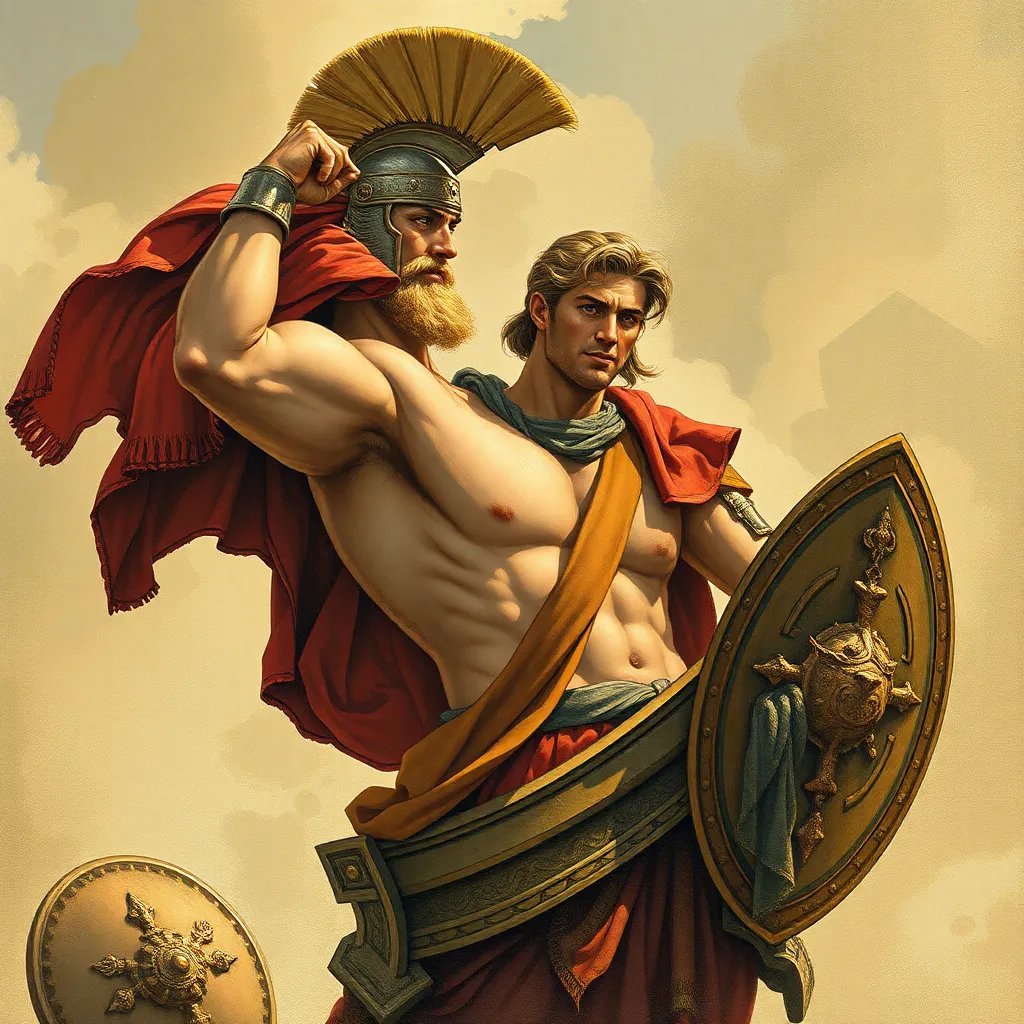
The Cultural Impact of Achilles in Art and Literature
I. Introduction
Achilles, one of the most renowned figures in Greek mythology, stands as a paragon of heroism and complexity. His story, primarily narrated in Homer’s Iliad, has resonated through the ages, influencing countless works of art and literature. The significance of Achilles extends beyond his mythological origins; he embodies themes of rage, mortality, and the human condition. This article aims to explore the enduring legacy of Achilles, tracing his impact across various artistic and literary forms throughout history.
II. The Mythological Origins of Achilles
Achilles is famously known as the mightiest warrior of the Greek army during the Trojan War. According to mythology, he was the son of the mortal king Peleus and the sea nymph Thetis. His invulnerability, save for his heel, was a result of his mother dipping him in the River Styx. Achilles’ narrative is rich with themes that resonate deeply with the human experience:
- Heroism: Achilles is the quintessential hero, embodying the qualities admired in ancient Greek culture.
- Rage: His wrath, particularly against Agamemnon, serves as a central theme in the Iliad.
- Mortality: Despite his strength, Achilles’ fate highlights the inevitability of death.
The Iliad plays a crucial role in establishing Achilles as a cultural icon, setting the stage for his portrayal in various artistic expressions and literary works that followed.
III. Achilles in Ancient Art
In ancient Greece, Achilles was a popular subject in pottery and sculpture. His representation in art provided insights into the ideals and values of Greek society. Key forms of artistic expression include:
- Vases: Many black-figure and red-figure vases depict scenes from the Trojan War, showcasing Achilles in battle.
- Statues: Classical sculptures, such as those from the Hellenistic period, illustrate the physical prowess and heroic stature of Achilles.
- Frescoes: Wall paintings in tombs and villas often feature Achilles alongside other mythological figures, emphasizing his importance.
The symbolism of Achilles in visual arts goes beyond mere representation; it reflects societal values, ideals of masculinity, and the glorification of heroism that was prevalent in ancient Greece.
IV. The Influence of Achilles in Classical Literature
Beyond the Iliad, Achilles appears in various ancient texts, often explored through different lenses:
- Virgil: In the Aeneid, Achilles is portrayed with a focus on his legacy and impact on subsequent events in the Trojan War.
- Ovid: In his Metamorphoses, Ovid presents Achilles’ story, highlighting his relationships and emotional struggles.
The portrayal of Achilles has evolved over time, with later writers adapting his character to reflect contemporary themes and societal values. This evolution illustrates how Achilles serves as a mirror to the changing perceptions of heroism and morality.
V. Achilles in the Renaissance and Neoclassical Periods
The Renaissance marked a revival of interest in classical themes, including the stories of Achilles. Artists and writers sought to reconnect with ancient ideals, leading to notable works such as:
- Paintings: Artists like Peter Paul Rubens and Jacques-Louis David created powerful representations of Achilles, focusing on his emotional depth and heroic qualities.
- Plays: The story of Achilles inspired theatrical works, exploring themes of love, war, and honor.
Achilles’ impact during the Renaissance also contributed to the ideals of humanism, emphasizing individual achievement and the exploration of human emotions.
VI. Modern Interpretations of Achilles
In contemporary literature and film, Achilles has been reimagined to reflect modern themes:
- Literature: Novels such as Madeline Miller’s The Song of Achilles provide a fresh perspective on his character, exploring themes of identity and love.
- Film: Movies like Troy depict Achilles as a complex figure, grappling with personal conflicts and the consequences of his rage.
This reimagining of Achilles allows for a deeper exploration of themes such as trauma, vulnerability, and the challenges of masculinity, making his story relevant to contemporary discussions.
VII. Cultural Symbolism of Achilles Today
Achilles has transcended his mythological origins to become a cultural symbol in various contexts:
- Metaphor: He represents the archetype of the tragic hero, whose strengths are often coupled with fatal weaknesses.
- Popular Culture: Achilles is frequently referenced in sports, where athletes are likened to him for their strength and competitive spirit.
- Media: The character continues to appear in literature, video games, and television, reflecting the ongoing fascination with his legacy.
The enduring interest in Achilles speaks to the universal themes of heroism, vulnerability, and the human experience, ensuring his relevance in modern society.
VIII. Conclusion
Achilles’ cultural impact has spanned centuries, influencing art, literature, and popular culture. From his mythological origins in the Iliad to modern reinterpretations, Achilles embodies the complexities of heroism and the human condition. Preserving and interpreting his legacy remains significant in understanding our own values and societal ideals.
As we reflect on the relevance of Achilles today, it is clear that his story continues to resonate, encouraging discussions about identity, trauma, and the nature of heroism in contemporary discourse.