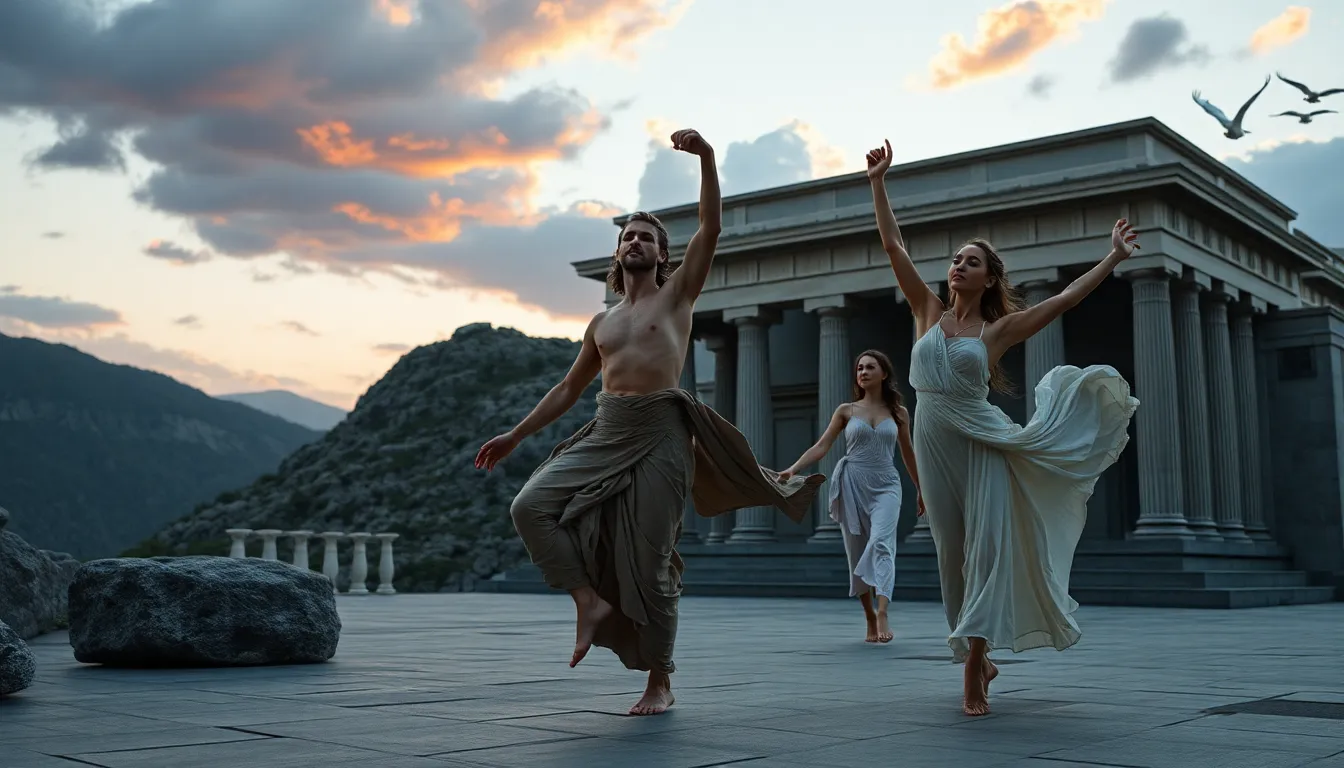
The Cultural Impact of Greek Myths on Modern Dance
I. Introduction
Greek mythology, a rich tapestry of stories involving gods, heroes, and mythical creatures, has significantly influenced various aspects of culture, art, and literature throughout history. These ancient tales convey timeless themes of love, betrayal, heroism, and tragedy, making them relevant even in contemporary society.
Modern dance, an artistic expression that emphasizes creativity and physicality, serves as a compelling medium to explore and reinterpret these age-old myths. Through movement, choreographers can convey complex narratives and emotions that resonate with audiences today.
This article aims to explore the profound connection between Greek myths and modern dance, examining how these ancient stories continue to inspire and shape the art form in contemporary performance.
II. Historical Context of Greek Myths
A. Brief summary of key Greek myths and their themes
Greek mythology includes a vast array of stories, each with distinct characters and themes. Key myths include:
- The Iliad – Explores themes of honor, revenge, and the human condition through the Trojan War.
- The Odyssey – Focuses on themes of perseverance and the quest for home, following Odysseus’s journey.
- The Myth of Persephone – A tale of life, death, and rebirth, symbolizing the changing seasons.
- The Tragedy of Oedipus – Delves into fate, free will, and the consequences of one’s actions.

B. Influence of Greek culture on art and performance in ancient times
In ancient Greece, mythology played a crucial role in the arts, particularly in theatre and dance. The Greeks celebrated their myths through dramatic performances, often incorporating dance as a vital component. Festivals such as the Dionysia honored Dionysus, the god of wine and festivity, through theatrical performances that included choruses and dance routines, blending storytelling with physical expression.
C. Relevance of mythological narratives in contemporary storytelling
Today, the narratives of Greek mythology continue to resonate with modern audiences, serving as archetypes that explore fundamental human experiences. The themes of love, conflict, and transformation are universal, allowing contemporary artists and storytellers to draw parallels with today’s societal issues, making these ancient stories feel fresh and relevant.
III. Elements of Greek Myths in Modern Dance
A. Common themes from Greek mythology reflected in modern dance
Many modern dance pieces incorporate themes from Greek mythology, such as:
- Heroism and Sacrifice: Dances that reflect the struggles of legendary figures like Achilles or Prometheus.
- Fate and Destiny: Works that explore the inexorable nature of fate, as seen in the stories of Oedipus or Cassandra.
- Transformation: Choreographies that embody the metamorphoses of characters like Daphne or Narcissus.
- Love and Betrayal: Dances that depict the tumultuous relationships of gods and mortals, such as those between Zeus and Hera.
B. Iconic figures and stories that inspire choreography
Iconic figures from Greek mythology frequently serve as inspiration for choreographers. For example:
- Orpheus: The tragic love story and his descent into the Underworld have inspired numerous ballets and contemporary dance pieces.
- Medusa: Her transformation and the themes of beauty and monstrosity have been represented in various dance interpretations.
- Theseus and the Minotaur: The labyrinthine dance sequences symbolize the struggle against inner demons and societal challenges.
C. Use of symbolism and allegory in dance performances
Symbolism plays a significant role in modern dance, allowing choreographers to use movement to express complex ideas. For instance:
- Costumes and Props: Often designed to evoke the essence of mythical characters, enhancing the narrative.
- Spatial Dynamics: The use of space can symbolize the vastness of the Underworld or the confinement of a labyrinth.
- Movement Quality: Different styles of movement can reflect the traits of characters—fluid movements may represent gods, while sharp, staccato movements may embody conflict.
IV. Notable Choreographers and Works
A. Exploration of choreographers who draw from Greek mythology
Numerous choreographers have drawn inspiration from Greek myths, infusing their works with rich narratives and emotional depth. Notable figures include:
- Martha Graham: Her work “Clytemnestra” explores themes of vengeance and power through dynamic movement and expressive choreography.
- George Balanchine: His ballet “Orpheus” combines classical ballet with the story of Orpheus and Eurydice, emphasizing the emotional journey through movement.
- Robert Wilson: His avant-garde approach to storytelling often incorporates mythological elements, transforming ancient narratives into modern visual spectacles.
B. Analysis of landmark performances and productions
Landmark performances continue to showcase the influence of Greek mythology in modern dance:
- Martha Graham’s Clytemnestra: A powerful depiction of the vengeful queen, blending movement with striking visual design to explore themes of betrayal and revenge.
- Pina Bausch’s The Seven Deadly Sins: Incorporates elements of myth and morality, using dance to express the internal struggles of human nature.
C. The role of music and visual design in enhancing mythological themes
Music and visual design are integral to dance performances, often heightening the connection to mythology. Composers such as Igor Stravinsky and contemporary musicians have created scores that resonate with the themes of Greek myths, while visual designers employ costumes and sets to evoke the ancient world.
V. Cultural Significance and Interpretation
A. How modern dance reinterprets Greek myths for contemporary audiences
Modern dance serves as a lens through which ancient myths are reinterpreted, allowing audiences to connect with the material in new ways. By placing these stories in a contemporary context, choreographers address modern issues such as identity, gender, and power dynamics.
B. The role of dance as a medium for cultural commentary
Dance can act as a powerful medium for cultural commentary, using mythological narratives to critique societal norms and expectations. For example, reinterpretations of figures like Medusa can challenge traditional notions of beauty and power, offering a feminist perspective on her story.
C. Audience reception and engagement with mythological narratives
The engagement of audiences with these performances often reveals their relevance, as viewers find personal connections to the themes presented. This interaction fosters a deeper understanding of both the myths and the contemporary issues they reflect, highlighting the enduring nature of these stories.
VI. Cross-Cultural Influences
A. Comparison of Greek myth influences in other dance forms
Greek mythology has also influenced various other dance forms, including ballet and contemporary styles. Elements such as thematic storytelling and character-driven movement can be seen across genres, showcasing the universal appeal of these narratives.
B. Global interpretations of Greek myths in various cultural contexts
Different cultures interpret Greek myths through their unique lenses, often blending local traditions with classical themes. This cross-cultural dialogue enriches the understanding of the myths and showcases the versatility of their narratives.
C. The fusion of traditional Greek dance elements with modern styles
The fusion of traditional Greek dance elements with modern styles creates a dynamic interplay between old and new. Choreographers may incorporate folk dance techniques into contemporary performances, creating a dialogue between the past and present.
VII. Educational and Community Outreach
A. Incorporating Greek myths into dance education programs
Educational programs increasingly incorporate Greek mythology into dance curricula, helping students understand the narratives behind the movements. Workshops that focus on specific myths encourage creativity and exploration in choreography.
<h3